




A Fragile Peace in the Persian Gulf: Inside the High-Stakes Diplomacy and Global Economic Ramifications of the Looming US-Iran Accord
The Truth Social Declaration and the Race to Reopen Hormuz
                   STRAIT OF HORMUZ CHOKEPOINT
                  [ 20% of Global Liquified Natural Gas ]
                  [ 20% of Global Petroleum Supplies   ]
                                 |
 =================================================================
[ WASHINGTON ]  <--->  [ ISLAMABAD ]  <--->  [ TEHRAN (Cautionary]
(Urgent Sunday)       (Mediator & Host)       (Timeline Delay)
 =================================================================
                                 |
                ===================================
               [    GLOBAL FINANCIAL MARKETS       ]
               [ - Oil & LNG Supply Chains Reopen  ]
               [ - Bitcoin & Risk Assets Relieved  ]
               [ - Spot ETF Outflows ($315M) Stemmed]
                ===================================
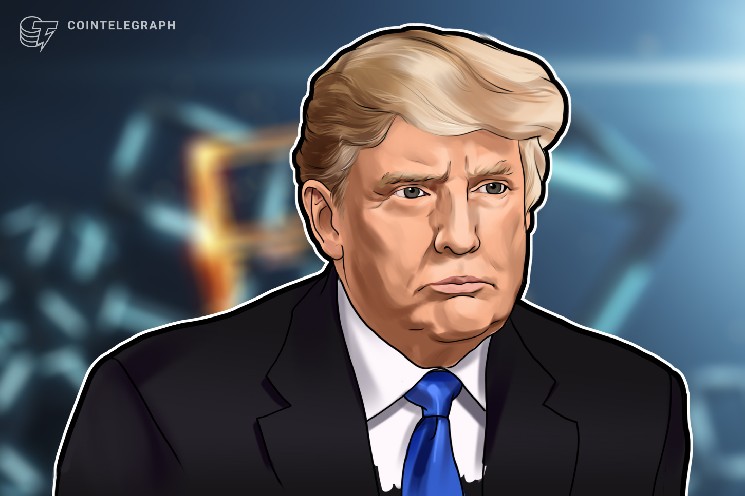
In a weekend development that has sent ripples of cautious optimization across international diplomatic circles and global financial markets, United States President Donald Trump announced via his social media platform, Truth Social, that a historic memorandum of understanding designed to bring an immediate halt to kinetic hostilities between the United States and the Islamic Republic of Iran is scheduled for a definitive signing. Writing with his characteristic urgency on Saturday, the American head of state proclaimed that the agreement was set for formalization on Sunday, asserting that once the signatures are dried, the strategically vital Strait of Hormuz will be instantly reopened to international maritime commerce. The announcement marks a critical juncture in a high-stakes geopolitical standoff categorized by intense naval skirmishes, escalating proxy conflicts, and a crippling maritime blockade that has severe economic consequences worldwide. For months, the specter of an all-out war in the Middle East has suppressed global investment appetites and injected severe volatility into vulnerable commodity markets, making the prospect of a negotiated detente a watershed moment for the transition of American foreign policy. Trump’s declarative posture, however, immediately set off a complex diplomatic dance, as Washington’s ambitious timeline ran headlong into the more deliberate, calculated machinery of Iranian diplomacy, highlighting the immense difficulties of coordinating a lasting peace under the pressure of intense public scrutiny and legacy geopolitical grievances.
Islamabad as the Bridge: The Geopolitical Choreography of Mediated Peace
The architectural backbone of this sudden diplomatic breakthrough is anchored not in direct Western communication channels, but in Islamabad, where Pakistani Prime Minister Shehbaz Sharif and his foreign policy establishment have spent weeks quietly brokering terms between the two historic adversaries to avert a catastrophic regional escalation. Confirming the imminent closing of the diplomatic gap, Sharif utilized his official communication channels to signal that the signing of a comprehensive Memorandum of Understanding (MoU) could comfortably occur within a 24-hour window, elevating Pakistan’s status as a preeminent neutral mediator in South Asian and Middle Eastern affairs. The proposed deal establishes a critical 60-day stabilization window, acting as an elongated ceasefire during which both nations pledge to halt provocative military maneuvers while executing the technical protocols required to secure the unconditional reopening of the Strait of Hormuz. According to Pakistani officials, the immediate focus is a localized electronic signing of the peace framework to establish an operational baseline, which will be quickly followed up by extensive, face-to-face technical-level negotiations in a neutral capital next week to address highly complex maritime security coordination, sanctions relief parameters, and long-term enforcement mechanisms. By successfully positioning Pakistan as the facilitating bridge between Washington’s demands for immediate operational freedom in the Gulf and Tehran’s insistence on national sovereignty, Prime Minister Sharif has engineered a diplomatic off-ramp that offers both leaderships a face-saving, statistically verifiable victory while systematically cooling a theater of war that threatened to draw in global superpowers.
Tehran’s Calculated Silence and the Friction of Unilateral Timelines
Despite the triumphant declarations emanating from both Washington and Islamabad, the diplomatic reality on the ground in Iran presents a far more guarded, strategically ambiguous picture, as Iranian officials systematically downplay the immediate Sunday timeline in a classic exhibition of Persian diplomatic maneuvering designed to resist American-dictated terms. Iranian Foreign Ministry spokesperson Esmaeil Baghaei explicitly tempered international expectations during a state media briefing in Tehran, clarifying that while a comprehensive memorandum of understanding is actively being processed and remains highly viable in the coming days, a formal signing would absolutely not occur on Sunday. This deliberate divergence in scheduling highlights the deep-seated skepticism and domestic political pressures weighing on Iranian leadership, who are highly sensitive to appearing hurried into an agreement under pressure from American threats or foreign social media proclamations. For Tehran, the negotiation process is as much about projecting domestic strength and maintaining regional leverage as it is about securing economic relief; consequently, Baghaei’s statements serve to signal to hardline domestic factions and international allies alike that Iran remains in complete control of its sovereign decision-making process. Navigating these conflicting narratives requires international observers to look past the superficial diplomatic posturing, as the underlying consensus indicates that while the exact date of execution remains fluid, the fundamental structural elements of the peace deal are largely finalized, leaving only the performative staging of the signing ceremony to be resolved.
Unstrangling the Global Energy Artery: Reopening the Strait of Hormuz
THE HORMUZ TRANSIT GAPTotal Global Maritime Oil & LNG Shipments
+—————————————————————–+
| [========= BLOCKED / HIGH INSURANCE RISK (20%) =========] |
| |
| [==================== OPEN TRANSIT (80%) =====================] |
+—————————————————————–+
^
|
US-Iran Peace Accord Aims
to Safely Restore this 20%
Global Energy Supply Chain.
To fully comprehend the seismic nature of these peace talks, one must analyze the catastrophic economic implications of the ongoing naval blockade in the Strait of Hormuz, a maritime chokepoint through which approximately one-fifth of the world’s petroleum and liquefied natural gas (LNG) supplies must pass daily. The militarization of this narrow strip of water has effectively choked off vital energy supply chains, sparking a severe inflationary shock across global energy sectors, driving maritime insurance premiums to astronomical levels, and clouding the macroeconomic horizon with extreme uncertainty. When international tankers are routinely threatened, redirected, or seized, the resulting surge in shipping costs and raw energy prices functions as an aggressive tax on global economic output, depressing consumer sentiment and forcing central banks to rethink their interest rate normalization schedules. International energy analysts estimate that the prolonged closure has severely disrupted transport scheduling for European and Asian industrial hubs, triggering a cascade of secondary supply chain failures that have pressured everything from manufacturing processes to agricultural distribution. The prospect of an immediate, verified reopening of the Strait of Hormuz under the auspices of a US-Iran peace deal therefore represents a massive decompression event for the global economy, promising to rapidly restore displaced energy supplies, drive down crude volatility, and restore a measure of stability to global asset prices that have been battered by months of localized geopolitical fear.
Risk Assets Under Siege: The Hidden Corridor Between War and Crypto
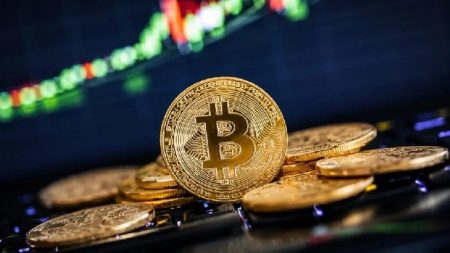
While the broader macroeconomic damage of the Middle Eastern naval blockade is easily measured in oil barrels and shipping rates, its secondary impacts on highly sensitive, risk-on financial markets—specifically the cryptocurrency ecosystem—reveal a fascinating correlation between geopolitical crises and modern digital capital flight. The structural stress of the blockade has acted as a persistent headwind for digital assets, a reality underscoring the deep sensitivity of modern cryptocurrency portfolios to global liquidity trends and macroeconomic rate projections. According to data compiled by major digital asset management firms, including insights shared by CoinShares head of research James Butterfill, spot Bitcoin exchange-traded funds (ETFs) recorded a staggering $315.84 million in net outflows during the week concluding on Friday, marking a bleak, fifth consecutive weekly contraction for these highly publicized investment vehicles. Butterfill and other seasoned market researchers argue that this relentless capital flight was driven almost exclusively by geopolitical anxieties, as the unstable security situation between the United States and Iran cast a dark shadow over the Federal Reserve’s projected monetary policy, stoking fears that energy-driven inflation would force central banks to keep interest rates higher for longer. Consequently, institutional capital systematically retreated from transparently volatile assets like Bitcoin to park reserves in protective, risk-off havens, compounding capital pressures on the crypto market even as Bitcoin demonstrated localized resilience, trading at around $64,491 with a modest 1.5% intraday gain as traders began pricing in the potential for a diplomatic resolution.
The Post-Blockade Renaissance: Anticipating the Liquidity Tsunami
LIQUIDITY FLOW MODEL[ Geopolitical De-escalation ] —> [ Maritime Chokepoint Opens ]
| |
v v
[ Inflation Scenarios Eased ] —> [ Fed Rate Confidence Returns ]
| |
+—————–+——————-+
|
v
[ Capital Flows into Risk Assets ]
- Spot Bitcoin ETF Inflows Resume
- Global Institutional Asset Allocation
As the international community awaits the official finalization of the peace agreement, financial analysts and cryptocurrency strategists are actively Preparing for what could be an unprecedented post-conflict market recovery, fueled by a massive redeployment of sidelined global liquidity back into risk-tolerant financial instruments. Renowned market analyst Michaël van de Poppe has argued that a verifiable peace deal between Washington and Tehran will serve as a powerful catalyst for a sustained upward trajectory in Bitcoin, pointing to the high likelihood of a rapid reversal in spot ETF outflows once the geopolitical premium is removed from the inflation outlook. In Van de Poppe’s view, the resolution of the conflict will eliminate the primary driver of market anxiety, prompting institutional asset managers to confidently pivot away from defensive positions and aggressively re-allocate capital toward digital assets. This impending shift in investor sentiment is expected to coincide with a broader normalization of global liquidity, as capital that had been occupied by major liquidity-absorbing events—such as high-profile initial public offerings like SpaceX—is freed up to seek yield in highly liquid, high-performing digital asset markets. Ultimately, if the electronic signatures are successfully secured by Pakistan’s diplomatic coordinators and the naval blockades are systematically dismantled, the resulting era of maritime stability will do much more than lower the price of crude oil; it will fundamentally reshape the risk profiles of global investment portfolios, potentially paving the way for a historic capital influx that could elevate the digital asset ecosystem to unprecedented heights of maturity and valuation.