






The Macro Battle for $70,000: How Federal Reserve Uncertainty and Wall Street ETF Giants Are Redefining Bitcoin’s Future
The Tug-of-War Between Bitcoin’s Bullish Ambitions and Federal Reserve Hawks
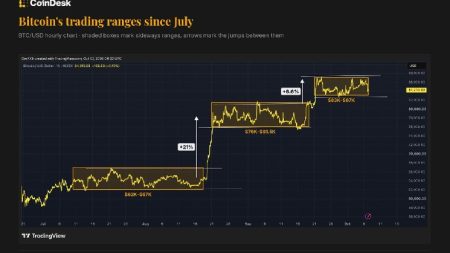
The global cryptocurrency market is currently locked in a high-stakes psychological war, with retail and institutional investors positioning themselves for a breakout that could propel Bitcoin (BTC) past the momentous $70,000 threshold. On-chain analytics and capital dynamics indicate that high-net-worth market participants have established a formidable accumulation floor, reflecting deep-rooted confidence in the digital asset’s long-term utility and scarcity. However, this hard-fought bullish foundation is facing an intense battle against macroeconomic realities, specifically the unpredictable monetary policies of the United States Federal Reserve. As inflationary pressures stubbornly persist and labor market data yields conflicting signals, the central bank’s upcoming interest rate decisions have cast a shadow of uncertainty over risk-on assets. This macroeconomic friction has constrained Bitcoin’s upward momentum, forcing the premier digital currency into a tight trading corridor where any signs of aggressive monetary tightening spark sudden liquidations, while whispers of a policy ease catalyze explosive, albeit short-lived, rallies.
Deciphering the Federal Reserve’s Policy Matrix and Cryptosphere Volatility
At the heart of the current market stagnation is a stark divergence of opinions on Wall Street regarding the Federal Reserve’s next policy moves and their downstream impact on the broader financial system. While the overarching market consensus has leaned toward a cautious holding pattern or a gradual reduction in borrowing costs, certain institutional powerhouses, including Citadel, have raised the possibility of a surprise interest rate hike to permanently tame persistent price pressures. Bloomberg ETF analyst James Seyffart highlights this delicate macroeconomic balance, noting that while hawkish outliers keep the market on edge, the majority of traders are pricing in either a prolonged pause or a dovish pivot. If the Federal Reserve adopts a moderate, accommodative tone in its upcoming meetings, it could serve as the ultimate catalyst to break Bitcoin out of its consolidation phase and push it past local resistance levels. Conversely, if Chairman Jerome Powell signals that rates must remain elevated for a longer duration, the resulting liquidity squeeze will likely increase volatile swings across the digital asset space, punishing leveraged traders and forcing capital back into the yield-bearing safety of short-term government bonds.
The Institutional Migration: How Spot ETFs are Overhauling Wealth Distribution
While macroeconomic variables dictate short-term price movements, a deeper, structural transformation is sweeping through the cryptocurrency ecosystem, led by the rapid expansion of the spot ETF market. According to exhaustive industry analyses by Bloomberg ETF experts James Seyffart and Eric Balchunas, the meteoric rise of spot cryptocurrency exchange-traded funds is exerting unprecedented competitive pressure on traditional digital asset exchanges. Historically, retail and institutional participants had to navigate the complexities of native exchanges, dealing with high transaction costs, self-custody vulnerabilities, and fragmented regulatory environments. Today, the highly regulated, low-friction structure of spot ETFs has successfully bridged the gap between legacy Wall Street infrastructure and public blockchain networks. This institutional migration is capturing massive liquid capital flows that would have otherwise gone directly to spot exchanges, fundamentally shifting market liquidity and pricing power into the hands of traditional fund managers and institutional custodians.
Fee Wars and Fee Compression: Wall Street’s Aggressive Playbook for Digital Assets
The battle for dominance in the digital asset management sector has triggered a highly competitive fee war among some of the world’s largest financial institutions, permanently altering the economics of crypto investing. A prime example of this aggressive race to the bottom is Morgan Stanley’s strategic market positioning, characterized by its decision to set management fees for its newly anticipated spot Ethereum and Solana exchange-traded funds at an incredibly low 0.14%, or 14 basis points. This move toward deep fee compression mirrors the historical pricing patterns observed in index funds during the late twentieth century, where legacy fund providers were forced to slashed pricing to remain competitive against agile, low-cost options. By lowering the cost of entry to a fraction of a percent, investment banking giants are making it nearly impossible for high-fee trusts and native crypto platforms to retain asset custody, forcing the entire industry to adapt to thinner commercial margins in exchange for unprecedented scale.
Robo-Advisors and the Long-Term Inflow of Mainstream Capital
This systematic reduction in administrative costs is not merely a temporary promotional tactic; rather, it is a deliberate, long-term play targeting passive wealth management pipelines, specifically robo-advisors and automated portfolio management platforms. James Seyffart emphasizes that these automated advisory systems, which manage trillions of dollars in retirement and long-term savings accounts, operate on highly sensitive cost-benefit algorithms that prioritize low-expense-ratio instruments. As premier spot products featuring fee structures run by blue-chip institutions become widely available, algorithmic asset allocators will naturally begin funneling steady, programmatic investment streams into diversified digital asset allocations. This shift from hot, speculative retail money to quiet, automated, and long-term capital accumulation will likely build a permanently rising price floor for major cryptocurrencies, insulating the spot market from the panic-induced liquidations that historically characterized early crypto market cycles.
The Road Ahead: Navigating Volatility in a New Era of Financial Convergence
Looking closely at the horizon, the digital asset ecosystem is entering an era of unprecedented maturity, defined by the convergence of decentralized technology and traditional monetary systems. While near-term price projections remain highly sensitive to key macroeconomic indicators, the structural infrastructure of the market has never been more resilient. Investors are no longer merely wagering on speculative retail hype; instead, they are navigating a multi-faceted marketplace shaped by sovereign debt crises, central bank liquidity updates, and the institutionalization of on-chain wealth. As the Federal Reserve moves closer to resolving its monetary policy dilemma, the sustained inflow of institutional capital through low-cost spot ETFs suggests that the temporary roadblocks holding Bitcoin back from the $70,000 range are merely prelude to a broader, structurally supported expansion. For market participants, the key to navigating this landscape lies in understanding the complex connection between short-term monetary policy shifts and the unstoppable, long-term adoption of digital assets by the global financial mainstream.