




Bitcoin Braces for Turning Point as Fed Rate Decision and Clarity Act Loom
Bitcoin has entered one of the most closely watched 48-hour windows of the year, with the cryptocurrency market caught between two forces that could reshape its near-term path: the Federal Reserve’s latest interest rate decision and the ongoing legislative journey of the Clarity Act. During the newest edition of the Macro Monday program, a weekly panel discussion that brings together macro strategists, analysts, and market participants, experts laid out competing scenarios for Bitcoin while also mapping out the broader risks brewing in global markets. The message that opened the program was direct: Bitcoin’s next major move could take shape within two days, and the Clarity Act may serve as a critical catalyst for the entire crypto sector. With traders closely watching both Washington and the central bank, the discussion quickly turned to the uncomfortable reality that the Fed may no longer have much room to maneuver. Market expectations for a rate increase have jumped to between 80 and 90 percent, and that sort of conviction tends to create its own consequences. The conversation on Macro Monday underscored how a single policy announcement, combined with a meaningful regulatory development, could tilt the balance for risk assets everywhere — and perhaps break Bitcoin out of the tight relationship it has developed with stocks and other speculative investments.
Fed Reaches ‘Point of No Return’ as Rate Hike Probability Climbs
The first major theme of the program centered on the Federal Reserve and the remarkably high probability that markets have assigned to an interest rate hike. Veteran macro analyst Jim Bianco delivered a stark assessment, arguing that the Fed has effectively been backed into a corner. With the market pricing in an 80 to 90 percent chance of a rate increase, Bianco said the central bank has reached a point of no return. In nearly three decades of studying the Federal Reserve, he told the program, he could not recall a single instance where the central bank failed to deliver a rate hike after market pricing climbed above 80 percent. That historical tendency, he argued, could force the Fed to raise rates by 25 basis points even if policymakers privately prefer to keep policy steady. Bianco supported that view by pointing to the dramatic shift in the bond market over the past two years. When the Fed began cutting interest rates, the yield on the 10-year Treasury was hovering around 3.60 percent. Today, that yield has climbed to roughly 5 percent. According to Bianco, that is the first time in six decades that long-term interest rates have risen while the central bank was in the middle of a rate-cutting cycle. He described this as the bond market’s way of telling the Fed that monetary policy has been too loose for too long. He also highlighted a striking inflation statistic: core inflation in the United States has not remained below 2 percent for 65 consecutive months. In his view, that persistence is evidence that low interest rates have overstimulated the economy and created conditions that cannot be reversed simply by waiting for inflation to fade on its own. Paradoxically, Bianco suggested that if the Fed finally begins to raise rates, long-term bond yields may actually hit a peak, because the market would finally see a central bank willing to defend its credibility.
Energy Shocks and Fiscal Math Complicate the Inflation Picture
But Bianco’s hawkish view did not go unchallenged. Several other panelists pushed back, arguing that higher interest rates may be a blunt tool when inflation is being driven by supply-side shocks rather than runaway demand. The discussion quickly zeroed in on global energy markets, which have become a serious source of upward price pressure. Ukraine’s attacks on Russian refineries are having a far larger global impact than many investors realize, according to the panel. The program noted that 34 of Russia’s 39 refineries have been struck, and roughly 60 percent of the country’s refining capacity has been disabled. That disruption has sent shockwaves through the global supply of refined products. After Russia halted diesel exports to Europe, the continent was forced to find alternative sources of supply, and a significant portion of that replacement demand landed on the United States. As a result, diesel prices have climbed sharply. The panel highlighted that the United States exports approximately 2 million barrels of diesel per day, making it one of the most important suppliers in a suddenly much tighter market. Rising energy costs are not just an inflation problem, however; they are also a political problem. With elections approaching, the panelists warned that higher fuel prices could put intense pressure on Washington to respond, potentially pushing policymakers toward interventions that may create even more market distortions. At the same time, the fiscal angle cannot be ignored. If the Fed resumes raising interest rates, the cost of servicing the U.S. federal debt will climb even faster, expanding an already massive deficit. The conversation illustrated the essential dilemma facing policymakers: the same tool that can cool demand also has the potential to deepen fiscal stress, and it cannot directly solve shortages caused by disrupted refineries or trade shifts. For Bitcoin, this macro turbulence matters because the digital asset has increasingly moved in step with traditional financial markets, especially when liquidity conditions tighten or inflation surprises to the upside.
Bitcoin Experts Split as McGlone Warns of Market ‘Clean-Up’
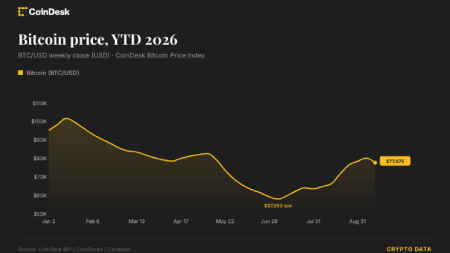
When the conversation turned specifically to Bitcoin, the disagreement among experts became even more pronounced. Bloomberg Intelligence strategist Mike McGlone took the cautious side, warning that Bitcoin’s recent rally may be less convincing than it looks. McGlone pointed to Bitcoin’s persistent correlation with equities as a major vulnerability, and he also raised concerns about the rapidly expanding universe of cryptocurrencies. In his view, Bitcoin is not simply competing with traditional assets; it is also competing with millions of other digital currencies, many of which continue to attract attention and capital. The market as a whole, he argued, is burdened by oversupply, overexpectations, and a heavy reliance on the direction of the stock market. If equities enter a sustained decline, McGlone warned that cryptocurrencies could face a much larger “clean-up,” and only after that shakeout would investors find more attractive buying levels. Interestingly, McGlone did acknowledge that the technical outlook for Bitcoin has improved. He noted the strong recovery from the $60,000 region and admitted that the asset is showing resilience. But he also pointed out that Bitcoin remains stuck at a key technical level, struggling around the weekly 50-day moving average and forming a lower peak. That combination, according to McGlone, should keep bears alert. Until Bitcoin can produce a new high, followed by sustained closes above the weekly 50-day moving average, the possibility that this is simply a bear-market rally cannot be dismissed. His cautious tone offered a sharp contrast to the more enthusiastic predictions shared by other panelists, and it highlighted just how uncertain the market’s next direction has become.
Optimists Bet on AI, Tokenization, and Bitcoin’s Asymmetric Upside
On the other side of the debate, panelist Jordy Visser presented a much more optimistic view, arguing that Bitcoin’s future will be shaped less by Federal Reserve decisions and more by structural changes in the global financial system. Visser tied Bitcoin’s next phase to the continued expansion of artificial intelligence and the growing market for tokenized assets. As AI agents begin to play a larger role in investment decisions, he said, assets with long track records and strong network effects could become even more valuable. Bitcoin, which has delivered extraordinary performance since its inception relative to almost every other asset class, stands out as a candidate for that kind of support. If AI-driven systems begin making capital allocation choices based on historical data and algorithmic signals, their assessment of Bitcoin may differ sharply from human judgment, which is often clouded by short-term fear and greed. Visser also expressed particularly strong expectations for tokenization, predicting that significant growth in the tokenized asset market is almost inevitable within the next year. In his view, the development of crypto infrastructure will be essential if AI agents are to play an increasingly important role in finance, and Bitcoin could benefit even if its share of the total cryptocurrency market declines. The panel also explored Bitcoin’s long-term upside potential in terms that were truly striking. Describing Bitcoin as a type of asymmetric option, some participants suggested that if the most bullish scenarios materialize, the price could reach roughly 15 to 20 times current levels, theoretically approaching the monetary value of gold. That scenario would take a massive shift in global asset allocation and investor conviction, but it underscores the kind of upside that keeps long-term holders engaged. The experts were quick to add, however, that such a path would likely be accompanied by extremely high volatility and periodic drawdowns severe enough to test even the most committed believers.
Clarity Act: Symbolic for Bitcoin, Structural for the Entire Crypto Market
The final chapter of the discussion focused on the Clarity Act, the proposed U.S. regulatory framework that is rapidly becoming one of the most important narratives in the crypto world. The panelists were careful to distinguish between the Clarity Act’s symbolic importance to Bitcoin and its potentially transformational impact on the broader cryptocurrency ecosystem. While the legislation is often framed as a positive development for Bitcoin, the experts argued that its most significant effects would likely be felt in stablecoins, tokenization, and the wider digital-asset market in the United States. By offering clearer legal classifications and a more predictable operating environment, the Clarity Act could unlock institutional capital that has remained on the sidelines because of regulatory uncertainty. During the program, Bitcoin was trading back above $78,000, and the panelists noted that some breaks have started to appear in the cryptocurrency’s recent correlation with other risk assets. If that decoupling continues, Bitcoin might gradually evolve into a distinct macro asset rather than a high-beta technology stock. Still, the overall tone of the discussion was one of cautious anticipation rather than euphoria. The next 48 hours are expected to test the market’s conviction, and traders are bracing for potential sharp moves in either direction. With the Fed facing an increasingly difficult policy decision, energy prices continuing to complicate the inflation outlook, and the Clarity Act adding a fresh layer of regulatory momentum, Bitcoin is navigating one of its more complex moments in recent history. Regardless of whether the next move leads to new highs or another period of consolidation, one thing appears clear: the combination of monetary policy and regulatory clarity will play a central role in defining the cryptocurrency market’s next chapter. As always, this analysis is not intended as investment advice.