





Bitcoin Surges to Record Heights Amid US-Iran De-Escalation
In the volatile world of cryptocurrency, few assets have captured the imagination quite like Bitcoin. Early this morning, the digital gold standard shattered expectations, climbing past $82,800 in what appeared to be a direct response to thawing tensions in the Middle East. As global risk appetite rebounded, traders watched intently as the price edged closer to the psychologically significant $83,000 mark. This rally wasn’t just about momentum; it was fueled by tangible geopolitical shifts that hinted at a new era of stability in fraught international waters. Investors, long weary of the unpredictable dance between superpowers, found solace in signs of dialogue, injecting fresh optimism into the crypto markets. Yet, beneath the euphoria, seasoned observers cautioned that this surge could be a mere ripple in a larger storm, urging caution amid unresolved macroeconomic headwinds.
The catalyst for Bitcoin’s ascent can be traced back to diplomatic maneuvers between the United States and Iran. President Donald Trump announced a temporary halt to the US Navy’s Strait of Hormuz escort missions, part of the contentious Project Freedom operation, citing “significant progress” in ongoing negotiations with Tehran. This decision came as a surprise to many, signaling a willingness to de-escalate in a region notorious for its chokehold on global oil supplies. For context, the Strait of Hormuz serves as a vital artery for about 20% of the world’s crude oil, making any instability there a flashpoint for energy markets and, by extension, financial assets like Bitcoin. Traders reacted swiftly, interpreting the pause as a vote of confidence in riskier bets, as geopolitical flare-ups have historically sent safe-haven assets soaring. But this wasn’t just a knee-jerk reaction; it reflected a broader trend of US foreign policy pivots under heightened global scrutiny, where economic repercussions often outpace political rhetoric.
Iran’s response added layers to the narrative, painting a picture of cautious optimism rather than outright capitulation. Tehran indicated that reopening the strait could unfold in measured stages, prioritizing maritime access rights in initial talks before broaching thornier subjects like sanctions or weapons sales. In a statement that reverberated through naval and financial circles, the Islamic Revolutionary Guard Corps (IRGC) vowed to ensure “safe, stable passage” through the strait, claiming that American threats had been effectively neutralized. Intriguingly, the IRGC hinted at new protocols that might bar ships ferrying arms to US military forces, a direct nod to ongoing naval rivalries. This was underscored by a recent post on X, formerly Twitter, where the IRGC’s naval command thanked ship captains and owners for adhering to Iran’s regulations, framing it as a collective effort toward regional security. Such pronouncements didn’t just calm choppy waters; they emboldened crypto enthusiasts, who drew parallels between eased geopolitical risks and the freedom inherent in decentralized finance. It’s a reminder that Bitcoin, born from the chaos of 2008’s financial meltdown, often thrives when traditional power structures appear vulnerable.
Relay the thrill of the market’s heartbeat, and you’ll understand why Bitcoin’s price rocketed from around $79,000 over the weekend to surpassing $82,500 this morning. Analysts pointed to $83,000 as the next major hurdle, with some bullish forecasters dreaming of climbs toward $90,000 or even $100,000 should that barrier fall. Bitcoin’s dominance in the cryptocurrency space also ticked past 61%, a sign that capital was increasingly consolidating around the pioneer token. This wasn’t isolated; other cryptocurrencies benefited from the spillover, with Zcash and Toncoin leading the charge in broader market gains. Toncoin, in particular, drew attention for its ties to messaging platforms like Telegram, while Zcash’s privacy features resonated with investors wary of surveillance amid international tensions. The resurgence underscored Bitcoin’s role as a hedge against uncertainty, much like gold has been for centuries, but with the added allure of digital scarcity and borderless accessibility. Yet, the joyride came with caveats—traders debated whether this was sustainable or merely a temporary uptick driven by headline news, a classic trap in the fast-moving world of crypto.
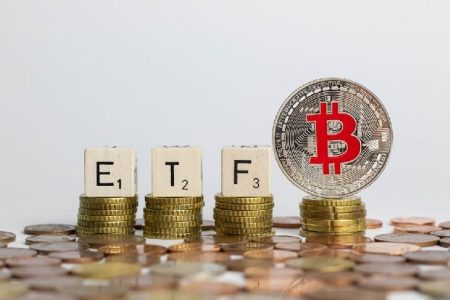
Institutional money, often the lifeblood of sustained rallies, poured back into the fold, reinforcing the upward trajectory. Spot Bitcoin exchange-traded funds (ETFs) in the US raked in approximately $1 billion in net inflows this week alone, according to data from Farside Investors. Wednesday stood out, with a staggering $467 million flooding in, propelled by giants like BlackRock’s IBIT and Fidelity’s FBTC. These weren’t passive buyers; fund managers at these firms have increasingly positioned themselves as key players in democratizing crypto access for everyday investors. Meanwhile, Ethereum-based ETFs captured $159 million over the past two days, hinting at a revived interest in smart contract platforms beyond Bitcoin’s shadow. This influx signaled maturing confidence, as institutional adoption has historically preceded major bull runs—think the 2017 surge that mirrored early ETF enthusiasm. However, experts warned that while inflows were a positive sign, over-reliance on these products could expose the market to regulatory swings, especially as ETFs become subject to stricter oversight. For many, it was a sign that Wall Street was finally embracing what Main Street had discovered years ago: crypto as a legitimate asset class.
The broader cryptocurrency landscape mirrored this bullish fervor, with the total market capitalization leaping 2% to $2.8 trillion in just 24 hours. Zcash and Toncoin weren’t outliers; they epitomized a shift toward utility-driven tokens that offer real-world applications amid global flux. Zcash’s privacy tech appeals to an era where data breaches are routine, while Toncoin’s integration with social apps positions it as a bridge between Web2 and Web3. This growth came at a time when retail participation was surging, driven by user-friendly apps and educational campaigns. But beneath the surface, analysts from firms like QCP highlighted muted signals in derivatives markets, where implied volatility hovered at 41% and short-dated options eased on defensive skew. It suggested a cautious optimism, with investors buying protection against downturns even as prices climbed—a strategy akin to hedging bets in uncertain geopolitical waters. Macro risks loomed large too: persistent inflation, soaring energy costs, and elevated sovereign bond yields painted a challenging backdrop. Japan, with its weakening yen and rising intervention risks, emerged as a potential trigger for volatility, capable of rippling through global asset prices. In this tapestry of ups and downs, Bitcoin’s ascent was a compelling chapter, but one that demanded vigilance as the world navigated uncharted diplomatic territory.