






A New Era for Sovereign Finance: Treasury Secretary Scott Bessent Urges Congress to Pass the Groundbreaking Clarity Act This Summer
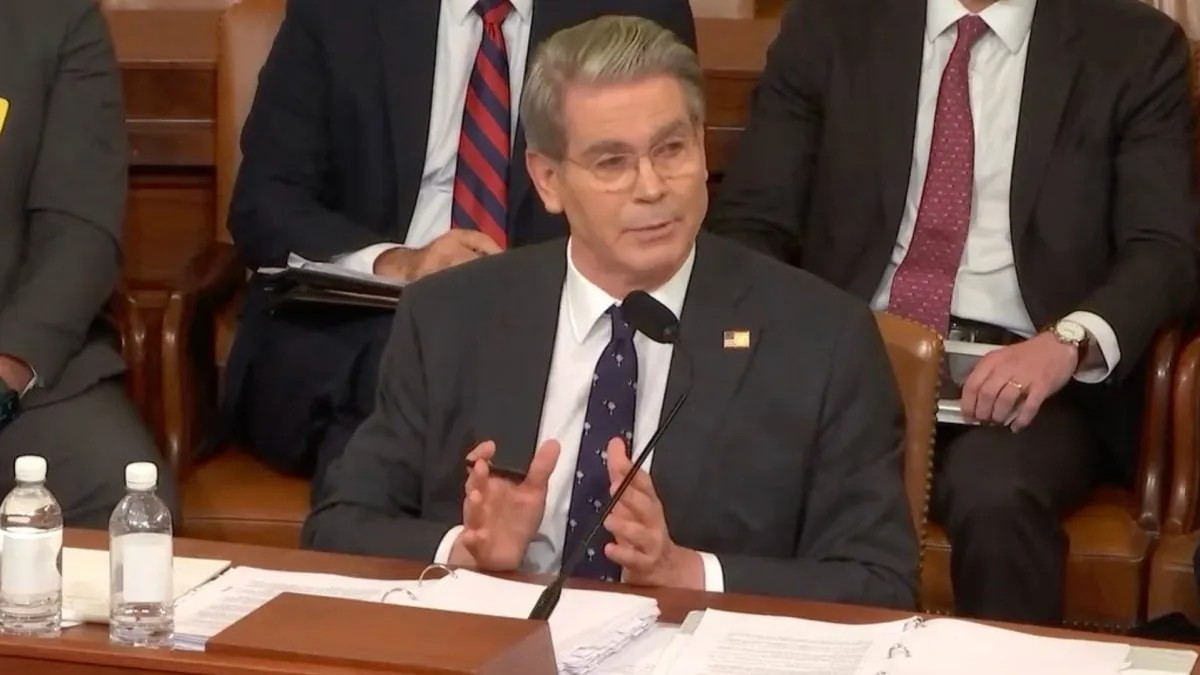
In a high-stakes legislative atmosphere charged by the shifting dynamics of global macroeconomics, Treasury Secretary Scott Bessent took the podium before the Senate Finance Committee on Wednesday to deliver a stark message: the United States must immediately codify its digital asset regulations or risk losing its competitive edge on the global stage. Speaking during a pivotal hearing focused on the federal government’s ambitious 2027 budget, Bessent urged lawmakers to transcend partisan divisions and throw their full legislative weight behind the Clarity Act—a monumental piece of market-structure legislation designed to bring comprehensive federal oversight to the rapidly expanding cryptocurrency sector. The Treasury Secretary did not mince words, actively pushing for a definitive vote before the summer recess while declaring that the establishment of a robust regulatory architecture is a matter of paramount national interest. According to Bessent, bringing institutional best practices onshore is not merely a bureaucratic preference but a strategic imperative to secure the domestic financial ecosystem. By formalizing clear legal frameworks for digital asset custody and market participation, the administration seeks to transform the United States into the undisputed global capital of financial innovation, providing the institutional guardrails necessary to attract trillions of dollars in legitimate capital while systematically weeding out bad actors who have long exploited regulatory ambiguities.
Navigating the Capitol Hill Gridlock: The Complex Roadblocks Stalling Global Market Reform
Despite the Treasury’s aggressive rhetoric and the clear appetite from institutional Wall Street for standardized rules of the road, the Clarity Act remains frustratingly ensnared in a web of legislative gridlock on Capitol Hill. While a previous iteration of the landmark bill successfully cleared the floor of the House of Representatives with notable bipartisan support last year, its momentum ground to a screeching halt upon entering the upper chamber of Congress, where senators have clashed over a series of highly sensitive policy provisions. The primary sticking points stalling the bill center on the operational treatment of stablecoin rewards, the scope of liability protections afforded to open-source software developers, and—perhaps most contentiously—how the federal government should mitigate potential conflicts of interest stemming from President Donald Trump’s highly publicized private business ventures in the Web3 space. Critics and proponents alike are locked in fierce debates over whether stablecoin-yielding mechanisms should be classified under existing bank-like deposit regulations or treated as traditional investment securities, while civil liberties advocates warn that overly broad developer liabilities could end up criminalizing the writing of foundational code. These intricate debates are further compounded by intense ethical scrutiny surrounding the executive branch’s personal financial interests in decentralized finance protocols, creating a highly politicized bottleneck that threatens to derail years of meticulous, bipartisan negotiations.
The Political Countdown: Why a Narrowing Legislative Window Puts Digital Innovation at Risk
The window of opportunity for lawmakers to break this regulatory logjam is rapidly closing as the heavy gravity of the political calendar takes hold of Washington, D.C. With the heat of summer giving way to autumn, the focus on Capitol Hill is inevitably shifting toward mandatory year-end appropriations and crucial federal budget battles, leaving precious little time on the legislative docket for complex, highly technical regulatory overhauls. Adding to the urgency are the fast-approaching midterm elections in November, a political reality that historically paralyzes major legislative initiatives as lawmakers return to their home states to launch grueling re-election campaigns. If Congress fails to pass the Clarity Act before the summer recess, the bill risks being quietly shelved, a setback that would force the digital asset industry to endure another prolonged period of regulation-by-enforcement under disjointed regulatory bodies. This persistent policy vacuum not only stifles domestic technological growth but also actively drives American entrepreneurs and venture capital to friendlier jurisdictions abroad, such as the European Union under its newly implemented MiCA framework, or financial hubs in Singapore and Dubai that have already established clear, predictable regulatory paths.
Unlocking the Sovereign Ledger: Inside the White House’s Push for a Strategic Bitcoin Reserve
While Congress grapples with the slow, incremental mechanics of policy drafting, the executive branch is actively forging ahead with its own paradigm-shifting initiative: the creation of a pioneering strategic bitcoin reserve. Backed by a historic executive order signed by President Trump during his first few months in office, this unprecedented sovereign digital asset stockpile represents a fundamental evolution in how the United States conceives of national wealth and fiscal defense in the twenty-first century. Rather than relying on taxpayer funds to purchase digital assets on the open market, the Treasury Department is strategically leveraging assets the government already owns—specifically, the vast quantities of cryptocurrency seized during federal criminal investigations and civil forfeitures. By reorganizing these multi-billion-dollar law enforcement seizures into a permanent, highly secure national reserve, the administration aims to establish a sovereign financial shield that could eventually hedge against inflation, diversify the national balance sheet, and match the parallel digital asset acquisition strategies currently being explored by geopolitical adversaries.
Pursuing ‘Deliberate Speed’: The Technological and Operational Realities of Sovereign Asset Custody
Addressing the sheer administrative and technological complexity of managing a state-level cryptocurrency reserve, Secretary Bessent clarified that the Treasury is proceeding with “all deliberate speed” to ensure that the operational foundation of this reserve is both secure and legally bulletproof. Managing billions of dollars in highly volatile, decentralized assets requires an unprecedented level of institutional sophistication, encompassing state-of-the-art cold storage solutions, multi-signature approval matrices, and stringent internal audit protocols designed to mitigate the threat of state-sponsored cyberattacks. Bessent emphasized that while the administration is eager to establish this reserve as a cornerstone of its forward-looking economic policy, they are deeply committed to avoiding hasty implementations that could compromise the integrity of the national treasury or leave the reserve vulnerable to future legislative reversals. The goal, according to Treasury officials, is to build a highly resilient custody apparatus that utilizes industry-leading best practices, establishing a durable administrative structure that can withstand shifting political winds, outlast successive presidential administrations, and serve as a blueprint for other sovereign nations looking to integrate digital-native assets into their central bank systems.
Anticipation Builds on Wall Street: The Impending Policy Breakthrough on the Digital Horizon
The global financial community is now watching Washington with bated breath, as the convergence of legislative action and executive execution sets the stage for a dramatic transformation of the domestic economic landscape. This heightened anticipation was further amplified in April by Patrick Witt, the executive director of the President’s Council of Advisors for Digital Assets, who teased a “big announcement” slated for the coming weeks regarding the concrete operational steps for the strategic bitcoin reserve. As the broader market braces for this historic policy shift, the dual-track efforts of Secretary Bessent’s Treasury Department highlight a profound realization within the halls of American power: the future of global financial hegemony belongs to the nation that can successfully bridge the gap between traditional fiscal authority and decentralized digital technologies. Whether through the direct legislative passage of the Clarity Act or the historic implementation of a sovereign digital reserve, the United States is poised to fundamentally redefine the nature of money, statecraft, and economic sovereignty for the modern digital era.