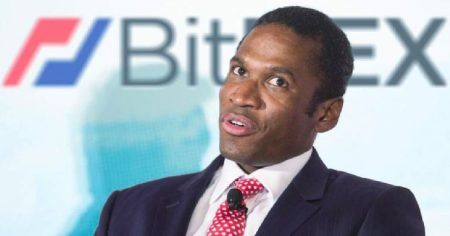



Arthur Hayes’ Crypto Pivot: From “Holy Trinity” Cheerleader to $22.28M Sell-Off
Subhead: A tale of soaring tokens, sudden exits, and the on-chain sleuths calling out the BitMEX co-founder’s timing
The Zcash breakout that turned heads
The cryptocurrency market has never been short on drama, but few stories in recent months have gripped traders quite like the whiplash around Arthur Hayes. The BitMEX co-founder and chief investment officer of the family office Maelstrom has long been one of digital assets’ most vocal personalities, and his decision to unwind a substantial chunk of his directional trading book has sent ripples through the industry. Nowhere was that divergence more striking than in Zcash. According to on-chain data, Hayes reportedly sold his ZEC position near $390 — and then watched from the sidelines as the privacy-focused token climbed to $1,220 in the comparison period. That represents a gain of more than 200 percent, the kind of move that can define a bull market cycle. Worldcoin, meanwhile, offered a quieter but still meaningful surprise: WLD rose from $0.41 to $0.58, a roughly 40 percent appreciation that underscored the market’s continued appetite for identity-focused crypto projects. These numbers matter not only because they illustrate missed upside, but because they reveal a recurring pattern that has become impossible to ignore: Hayes makes a bold call, the market reacts, and the exits that follow often leave retail traders scrambling for answers.
The “holy trinity” and the $150 target that lasted three days
Among Hayes’ recent calls, Hyperliquid stands out as the most dramatic reversal. On June 1, the investor confidently argued that HYPE would outperform every cryptocurrency in the top 10 by market capitalization before the end of the year. He went a step further, offering followers a specific price objective: $150 by August. The statement was classic Hayes — bold, public, and unapologetically directional. But just three days later, on June 4, Hayes announced that his entire position in HYPE had been closed. The whiplash was breathtaking, even by crypto standards. To make matters more complicated, the timeline around his broader portfolio tells an even more striking story. On May 22, Hayes described HYPE, ZEC, and NEAR as the “holy trinity” of the cryptocurrency market, a phrase that immediately circulated through trading circles on social media. By June 5, all three positions were gone. Whether this was risk management, a change of heart, or something else entirely, the sheer speed of the reversal left many observers questioning whether the public confidence had ever matched the private conviction.
A privacy flaw, a sell-off, and the problem with technical risk
The Zcash position was not closed without reason. According to reports, the sell-off was triggered by a security vulnerability discovered in Zcash’s Orchard privacy pool — a core component of the network’s shielded transaction system. For a cryptocurrency whose entire value proposition rests on the promise of untraceable, private transfers, a flaw in that cryptographic layer is more than just a bug. It strikes at the foundation of user trust. Following the disclosure, ZEC’s price experienced a sharp decline, and Hayes moved quickly to liquidate, citing technical risks. On its face, that reasoning sounds prudent: stay away from assets with compromised security. Yet the sequence of events — the emphatic endorsement, the swift exit, and the token’s subsequent recovery to fresh highs — has caused more than a few analysts to wonder whether the vulnerability was genuinely the trigger or simply a convenient excuse to reduce exposure at a favorable moment. In the opaque world of whale trading, motive is often as difficult to trace as the funds themselves.
Worldcoin, SpaceX, and the exit-liquidity accusation
A similar contradiction unfolded with Worldcoin. Hayes publicly stated that he intended to hold WLD through the highly anticipated IPO process of SpaceX, a remark that suggested strong conviction in the project’s long-term trajectory. The very next day, he sold. The abrupt turnaround did not go unnoticed by the crypto community’s most diligent trackers. On-chain researcher ZachXBT stepped in with a pointed accusation: Hayes was using his substantial social media following as exit liquidity. In plain terms, that means broadcasting bullish narratives to retail investors while quietly selling into the resulting buy pressure. The charge is serious, precisely because it is difficult to prove and difficult to disprove. What is beyond dispute is the contradiction between the tone of Hayes’ public communications and the timing of his private trades. While there is nothing illegal about changing one’s mind, the pattern has fueled a broader conversation about accountability in crypto, where influential figures are not bound by the same fiduciary obligations that govern traditional financial advisors. When a prominent investor can move markets with a single post, the line between analysis and market manipulation becomes dangerously thin.
The $2 million repurchase that complicated the narrative
Just when the narrative seemed settled, the story took another turn. On-chain sleuths identified a wallet linked to Hayes that repurchased approximately $2 million worth of HYPE on June 8 — at a price of roughly $59 per token. If the earlier exits suggested a loss of conviction, the repurchase hinted at something far more calculated: a trader who sells into strength, steps back, waits for the pullback, and re-enters at a lower cost basis. The move proved well-timed. By September, HYPE had climbed to $97.96, representing a substantial gain from the repurchase level and reigniting public debate about the investor’s trading acumen. Was this strategic mastery, or simply the privilege of a seasoned whale with access to liquidity that retail traders can only dream of? The answer likely lies somewhere in between. What is clear is that the repurchase complicates the characterisation of Hayes as a straightforwardly bearish skeptic. He is an active participant in the market — a trader who makes bold statements, takes bold positions, and, crucially, behaves like a trader rather than a committed long-term holder. For those who follow his calls, the lesson is less about a specific coin and more about the nature of the game itself.
October’s retreat: Ethereum, Ethena, Uniswap, and the road ahead
The most recent chapter came on October 24, when Hayes confirmed that Maelstrom had closed all positions across its entire directional trading portfolio. The transactions, valued at roughly $22.28 million, featured Ethereum, Ethena, and Uniswap as the largest components, with ETH, ENA, and UNI absorbing the bulk of the liquidation. In explaining the decision, Hayes cited a familiar combination of macroeconomic uncertainty and geopolitical risk, stating that he believed the market could fall again before it ultimately rises. It is a defensible position: global markets remain jittery, and crypto has shown an uncomfortable tendency to correlate with broader risk-off sentiment during periods of stress. Yet the timing once again invites scrutiny. ETH and ENA are currently hovering near the levels at which the recent sell-off occurred, meaning it is far too early to determine whether Hayes is exiting at the right moment or leaving future gains on the table. As the crypto community continues to dissect his every move, one lesson remains clear: in an industry driven by sentiment and spectacle, the exit door is often the most watched position of all. Whether Hayes proves to be a risk-averse genius or a professional contrarian who occasionally miscalculates, his influence over the market is unlikely to fade — and neither will the questions surrounding the gap between what he says and what he sells.
This article is for informational purposes only and does not constitute investment advice.