

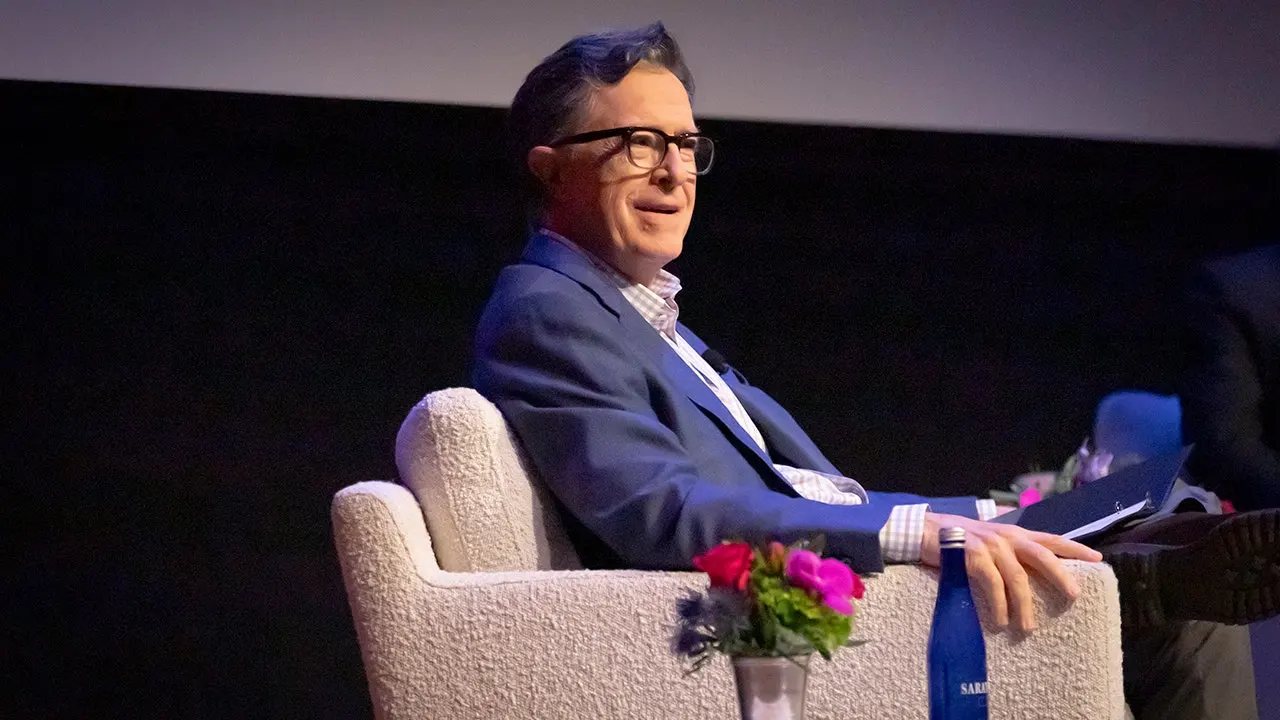
On a cool Cambridge evening in late autumn, the streets around Harvard’s storied Sanders Theatre were unusually loud. The chants of roughly fifty graduate student workers, drumbeats, and the sharp blare of air horns filled the air, a rhythmic protest that stood in stark contrast to the genteel academic setting. Inside, a sold-out audience had gathered for “Arts for Life’s Sake,” a conversation between two beloved figures: Stephen Colbert, the comedian who turned late-night television into a nightly ritual for millions, and Yo-Yo Ma, the cellist whose warmth on stage rivals his extraordinary musicianship. The event promised a thoughtful hour and a half about beauty, meaning, and the human spirit. But outside, a different story was unfolding: members of the Harvard Graduate Students Union—on strike since late October—were urging Colbert and Ma not to cross their picket line. The union had reached out to both artists in advance, through their respective labor organizations, SAG-AFTRA and the Boston Musicians’ Association, asking them to cancel, postpone, or move the event in solidarity with workers fighting for better pay and safer conditions. Neither star withdrew. And then, roughly forty minutes into the evening, a fire alarm blared, forcing the audience, Colbert, and Ma out of the theater. The discussion never resumed. It was a strange, almost symbolic ending: an evening meant to celebrate the arts was interrupted by a moment of collective disruption, leaving questions hanging in the air like the fading echo of an alarm no one could explain.
To understand why the moment mattered so deeply, you have to understand the quiet desperation behind the strike. The Harvard Graduate Students Union, representing thousands of teaching fellows and research assistants, had walked off the job after months of contract negotiations stalled. Their demands were not extravagant. They asked for an annual salary of $55,000 for research assistants and roughly $45,000 for teaching fellows on ten-month appointments, along with small annual increases or cost-of-living adjustments. In a city like Cambridge, where the cost of living has climbed relentlessly, these numbers barely felt like luxuries; they felt like the difference between one job and two, between a shared apartment with four roommates and a bedroom of one’s own, between a constant undercurrent of financial dread and a modest sense of stability. Graduate students at Harvard are the invisible engine of the university’s research machine. They teach introductory courses, grade essays, run experiments, co-author papers, and mentor undergraduates. Yet many struggle to pay rent, put food on the table, or afford the medical care they need. The union’s broader demands reflected this precarity: a meaningful grievance process for harassment and discrimination, legal fee assistance for Title IX cases, and financial support for those who need to leave unsafe laboratory environments. For the strikers, this was not a political stunt. It was a last resort, a desperate attempt to be seen, heard, and valued by an institution that spoke often about caring for its community but, in their view, negotiated like a corporation.
The union’s appeal to Colbert and Ma was especially pointed because of Colbert’s own history. In 2023, when the Writers Guild of America went on strike, Colbert walked the picket line alongside striking Hollywood writers, publicly declaring his solidarity. He understood, better than most, what it meant to withhold one’s labor for a fairer future. The union hoped he would extend that same understanding to the graduate workers at Harvard. In a statement, the union said they had repeatedly urged the two performers to avoid crossing their picket line, including through their labor unions. But the men did not cancel, postpone, or relocate. They continued with the event inside the theater, apparently indifferent to the picket line outside. For the striking workers, it was a bitter irony: the man who had once stood shoulder to shoulder with writer-workers in Los Angeles now walked past graduate student workers in Cambridge. The union made their disappointment unmistakable. “They continued the event inside without regard for the picket line, and refused to speak with union members as they left the event,” they said. “In other words—they crossed our picket line.” The words landed with the weight of a betrayal, not because Colbert and Ma were villains, but because their presence felt like a missed opportunity to model the very solidarity the arts so often celebrate.
The contrast with author John Green made the incident even more poignant. Green had been scheduled to appear at Harvard as well, but when he learned about the graduate student strike, he made what he called an easy decision. He moved his event online, away from the physical campus, so that he would not cross the picket line. “They’re on strike and I had to move a thing to not cross a picket line,” he said in a video shared by the union. “Which was an easy decision… it was not a hard decision for me.” He also donated the proceeds from his event to the union. Green’s gesture was small in monetary terms perhaps, but enormous in symbolic terms. It said to the strikers: I see you. Your struggle is legitimate. I will sacrifice a little to stand with you. In an era when so many public figures speak eloquently about justice but rarely inconvenience themselves on its behalf, Green’s simple act stood out like a candle in a dark room. It also raised the implicit question about Colbert and Ma: if an author with no direct history of labor activism could figure it out so easily, why couldn’t two artists who have built careers on empathy, creativity, and human connection? Perhaps they believed that an event about the arts transcended politics, or that their presence was a gift to the audience. But for the workers outside, the theater represented more than a venue—it was a wall between the privileged and the precarious.
The fire alarm that cut the event short added a surreal layer to an already tense situation. Around forty minutes into the conversation, the alarm blared, sending the audience and performers out onto the street. The union quickly denied any involvement, stating, “The alarm was unrelated to HGSU’s picketing activity and we have no knowledge of its cause.” They expressed relief that no one inside was at risk. The cause remains unclear, perhaps a malfunction, perhaps a coincidence, perhaps something else entirely. But the symbolism was impossible to ignore. A discussion about art and life was literally interrupted by a call to evacuate, to pause, to leave the comfortable auditorium and step into the cold air. For the picketing workers, it was almost too fitting: the show could not go on forever, and the real life outside the theater—the sticky, difficult, demanding negotiations over pay and dignity—was still waiting. The event did not resume. Audience members drifted home, the performers left, and the union members packed up their drums and signs. But the questions remained. What is the point of art, after all, if not to remind us of our shared humanity? And how can we celebrate art’s importance while ignoring the material conditions of the people who teach, research, and create around us every day?
This incident is about more than two famous men and a fire alarm. It is about the ongoing struggle of academic labor in America, and about the choices that public figures make when their values are tested by real-world inconvenience. The Harvard Graduate Students Union’s demands are not radical; they are the basic building blocks of a decent professional life. Yet the university has resisted, and the workers have had to strike, drag a picket line through the most prestigious academic corridors in the nation, and ask celebrities to reconsider a single evening of their time. Colbert and Ma have given millions of people moments of joy, reflection, and solace. No one can take that away from them. But this episode revealed a difficult truth: solidarity is not a performance. It is not a tweet or a statement. It is showing up, making the hard phone call, moving the event, and accepting the cost. For one evening at least, Stephen Colbert and Yo-Yo Ma chose the stage over the picket line. John Green chose the picket line. And the fire alarm, for all its noise and confusion, reminded everyone that disruption—whether from a striking worker or a mechanical failure—can force us to see what we were trying to ignore. The show is over now, but the strike goes on. And somewhere between the music and the comedy and the chants, the real question lingers: what does it mean to truly value the people who make our institutions and our art possible? On that evening, in the glow of a theater that could not hold everyone, the answer felt farther away than ever.