



Headline: The Bitcoin Boiler: How Finland Is Turning Crypto Mining Into a Home Heating Revolution
In the frostbitten landscapes of Northern Europe, where winter darkness grips the land for months and heating bills can rival mortgage payments, an unlikely technological marriage is quietly taking root. Bitcoin mining—the energy-intensive process often criticized by environmentalists—is being repurposed as an innovative source of residential warmth. At the heart of this movement is a Finnish startup called SunBit, which is betting that the digital gold rush of the 21st century can be harnessed to heat saunas, manor houses, and industrial halls alike. This is the story of the “Bitcoin Boiler,” a machine that produces not only digital assets but physical comfort, and why the clock is ticking on its economic feasibility.
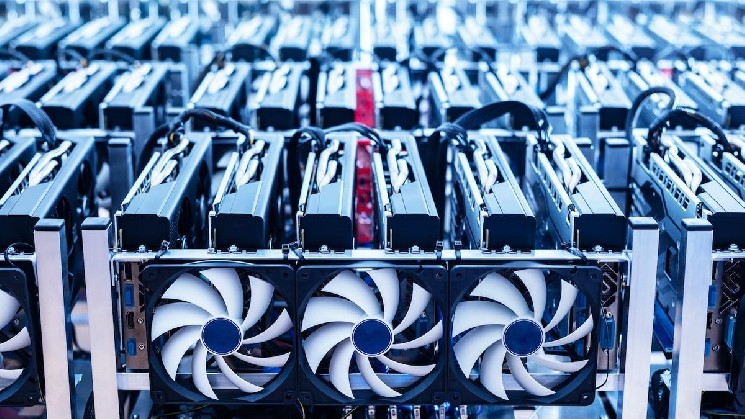
The concept is deceptively simple. Bitcoin miners, which solve complex mathematical puzzles to secure the network and earn new coins, generate significant amounts of heat as a byproduct of their electricity consumption. Rather than venting that warmth into the atmosphere, SunBit has figured out a way to capture and circulate it into home heating systems. The company delivered its first production batch of these specialized units in 2025, and the response has been steady. Founder and CEO Elmeri Suomi told CoinDesk this week that the firm now has thirty systems actively running, with all but one located in Finland. The devices have effectively replaced or greatly reduced reliance on gas, oil, wood, and even centralized district heating in various installations, marking a significant step toward decentralized energy independence.
The practical applications painted by the company’s portfolio read like a tour of Scandinavian architecture and industry. In Lekkum, a village in the Netherlands, SunBit’s first export project saw a commercial property completely abandon its natural gas heating in favor of the mining rig. The transition represents a full-circle moment for a technology often accused of squandering energy; here, it is the primary heat source. Meanwhile, in the Finnish port city of Kotka, which has a population of roughly 50,000, a sprawling 200-square-meter home has integrated the device not as a replacement, but as a hybrid partner. The Bitcoin Boiler works alongside an existing oil-burning system, offering a technological bridge for homeowners hesitant to sever ties with traditional fuel sources entirely.
Further inland, the adaptation becomes even more tailored to the harsh realities of the Finnish climate. In Tampere, the country’s third-largest city, an old manor house has seen its wood-burning requirements effectively eliminated. The miner installed there does double duty, maintaining a massive 1,500-liter water tank at a toasty 50 to 60 degrees Celsius, ensuring that the historic property retains its warmth without the back-breaking labor of sourcing and chopping timber. This symbiosis extends to more rugged environments as well; a massive 3,000-square-meter industrial hall in Vimpeli operates the system alongside an air-to-water heat pump. The setup is so efficient that it soaks up surplus power generated by a 30-kilowatt solar array, turning a renewable energy source into a stable, round-the-clock heating solution even when the sun isn’t shining.
However, for all its thermal ingenuity, the Bitcoin Boiler is tethered to the volatile economics of the cryptocurrency market. The viability of using mining heat as a primary heating source hinges entirely on the profitability of the underlying asset. This is where a looming deadline threatens to disrupt the pitch. Bitcoin’s next halving event—a cyclical mechanism that reduces the block reward for miners by 50%—is projected to occur in the spring of 2028. This schedule poses a chilling question for potential buyers: if the rewards for mining are slashed dramatically, it could take far longer than expected for homeowners to recoup the investment cost of their heating system. The halving could throw a wrench into the entire financial model, transforming what is currently a clever efficiency play into a costly liability before the hardware has reached the end of its useful life.
Despite these economic headwinds, the momentum in Finland is impossible to ignore. The country has evolved into the perfect testbed for this technology, driven by high energy costs, a culture of technological early adoption, and a genuine need for reliable heat. SunBit is not alone in this endeavor. The Mining and Rejuvenation Association (MARA) is actively pushing the boundaries of what is possible on a municipal scale. Their systems are currently feeding waste heat from mining operations directly into district heating networks in the regions of Satakunta and Seinäjoki. The scale of this operation is immense; through these networks, the heat generated by crypto mining is warming approximately 80,000 residents. This mass-scale implementation proves that the concept is not just a gimmick for niche, tech-savvy homeowners, but a viable solution for public infrastructure.
As 2028 approaches, the industry is at a crossroads. For the Bitcoin Boiler to achieve mainstream adoption beyond the early adopters, the economics must survive the reward halving. The current installations—from the hybrid oil boiler in Kotka to the solar-synergized industrial hall in Vimpeli—showcase remarkable engineering adaptability. Yet, the future may depend on factors beyond the company’s control: the price of Bitcoin itself. If the digital currency’s value rises to offset the reduced block rewards, the heating units could become a staple in cold climates worldwide. If not, the “Bitcoin Boiler” might remain a fascinating experiment—a brief moment in history where the ethereal world of cryptocurrency met the earthy reality of radiators and hot water tanks. For now, inside those thirty humming Finnish homes, the digital and physical worlds are working in perfect harmony, pumping out both HODL potential and heat.