


Imagine Venice Beach on a warm autumn weekend: the Pacific rolling in, skateboards clattering across the concrete bowls, street performers and drum circles competing for attention, and the smell of salt air mixing with food truck smoke. Now add a full-blown music festival weaving through that iconic stretch of boardwalk and sand. That’s the vision behind 1905 Fest, a brand-new, two-day festival planned for fall 2027. Organizers want to turn one of Southern California’s most recognizable coastlines into a sprawling concert destination, complete with five music stages, more than a dozen bars, and plenty of food vendors. The festival takes its name from the year Venice was founded, and it’s meant as a tribute to the neighborhood’s colorful history and the dreamer who started it all: Abbot Kinney. Sam Meyers, a former director of BeachLife Festival, is the brainchild behind the ambitious project. He describes it as his own interpretation of what Venice was built on—having fun and building community. In a world where the boardwalk can feel crowded and commercialized, Meyers says he still believes in the spirit of Kinney’s vision, even if that spirit can sometimes feel distant. For him, this festival isn’t just another event; it’s an attempt to bring people together around a shared sense of place, history, and joy.
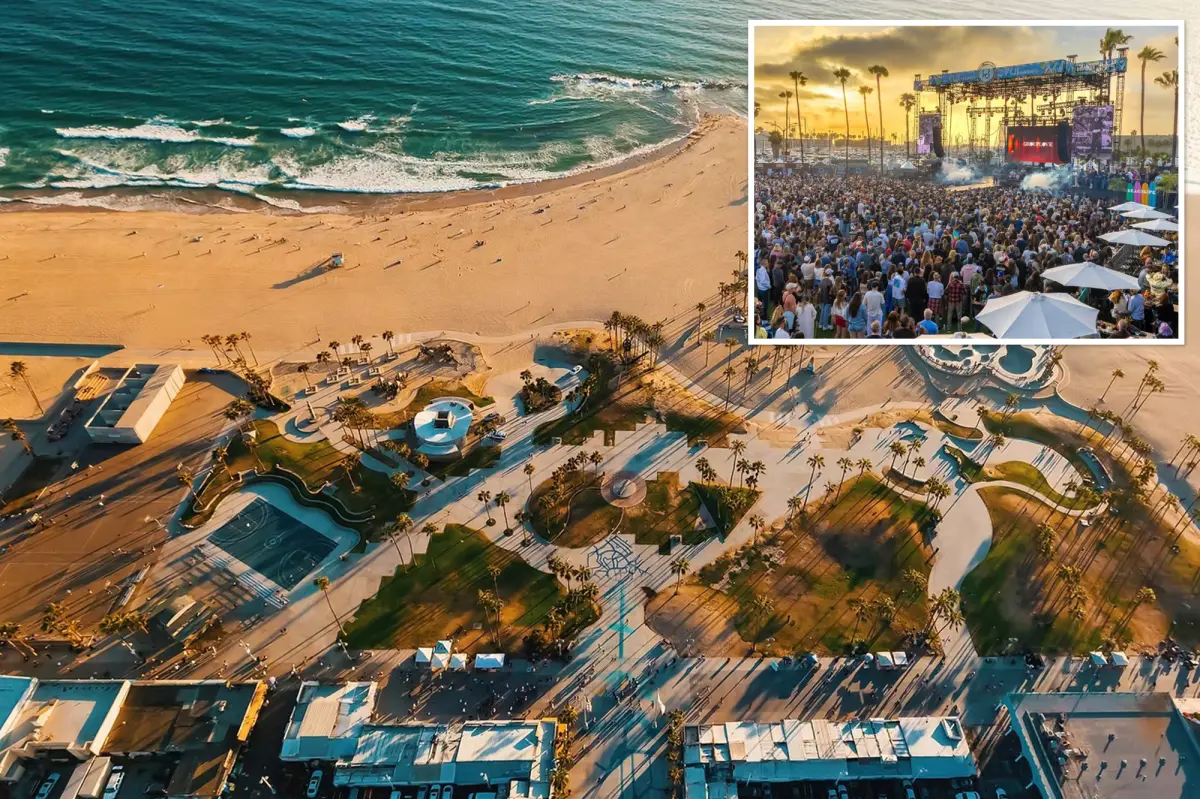
The scale of the event is what makes it so striking. The festival would be centered around Windward Plaza, right near the famous Venice Skatepark and Boardwalk, and would extend onto the sand where Windward Avenue meets the ocean. Renderings posted on the festival’s website show a concert footprint that sprawls across both beachfront and nearby streets, with five stages planned for the weekend. That’s not a small setup—it’s a full takeover of one of the most beloved and busiest public spaces in Los Angeles. But Meyers isn’t just thinking about headliners and sound systems. He and his team are also planning a free fan zone along a temporarily closed street, giving local businesses a chance to catch some of the festival foot traffic. It’s a smart move, because a festival like this can either feel like a corporate invasion or a neighborhood celebration, and Meyers clearly wants the latter. The idea is that festivalgoers will wander from stage to stage, grab a drink, eat something local, and also explore the shops and stalls that make Venice unique. The visual of those renderings—stages on the sand, crowds moving between ocean and street—feels both ambitious and magical. It’s the kind of event that could redefine what a music festival can be when it’s set against a backdrop of such natural beauty and cultural history.
When it comes to the music, the festival is aiming for a vibe that matches the neighborhood’s eclectic soul. The lineup is expected to lean toward indie dance and psychedelic rock, though no performers have been announced yet. That’s a promising sign for anyone tired of cookie-cutter festival lineups. Indie dance brings the energy and movement, while psychedelic rock nods to the free-spirited, bohemian history of the West Coast. It’s easy to imagine sun-soaked afternoons and glowing evenings filled with synthesizers, guitar solos, and crowds dancing barefoot in the sand. For Meyers, who has lived on the Westside for nine years, eight of them in Venice, this feels personal. He’s not an outsider looking to cash in; he’s a neighbor who wants to give something back to a community that has given him a home. He often talks about Abbot Kinney, the eccentric developer who created Venice in 1905 with the dream of building a seaside cultural haven inspired by its Italian namesake. Kinney wanted canals, art, architecture, and a place where people could enjoy life. Meyers’ festival is, in many ways, a continuation of that vision—a modern-day version of Kinney’s dream, with better sound systems and a much larger lineup. As he puts it, the concept is rooted in “having fun and building community,” which is exactly what Kinney hoped Venice would become.
But getting a festival of this size off the ground isn’t easy. There are permits, logistics, noise concerns, traffic issues, and the delicate politics of doing something big in a neighborhood that prides itself on being a little weird and a little protective of its character. Meyers acknowledges there are hurdles, but he’s already gotten a significant boost from local leadership. He told the Westside Current that he has received support from the offices of LA City Councilwoman Traci Park and LA County Supervisor Lindsey Horvath. The festival has also secured permits and logistical support from the city, county, and local district. That’s a major step forward for an event that’s still more than two years away. But Meyers knows that official support only goes so far. He needs the people of Venice on board. That’s why he’s asking residents to share their ideas and suggestions before the festival takes shape. Locals can reach him directly by email with their thoughts. It’s a refreshing approach—instead of presenting a finished plan and expecting everyone to get on board, he’s inviting the community into the process. He wants to hear from the people who have lived in Venice for fifty years, the ones who’ve been there for twenty, and the newcomers who just arrived. His goal is to unite all of them, to create something that honors the past while building for the future.
There’s something deeply resonant about a festival like this in a place like Venice. The neighborhood has changed dramatically over the decades. It has been a bohemian enclave, a skateboarding mecca, a tourist destination, a tech hub, and a symbol of gentrification. Longtime residents have watched rents climb and familiar businesses disappear. Newcomers bring energy and money but sometimes a different vision of what the neighborhood should be. In that mix, it’s easy for people to feel disconnected from one another. A festival, done right, can be a bridge. It can bring people together not just for music, but for a shared experience in a place they love. It can also raise concerns: more crowds, more noise, more pressure on local infrastructure. Those are real worries, and Meyers seems to understand that listening is just as important as planning. By reaching out to residents early, he’s acknowledging that Venice is not just a backdrop for a party—it’s a community with its own history, quirks, and needs. The festival’s website says it best: “Welcoming longtime Venetians, new neighbors, old friends, and everyone in between to be part of its next chapter.” That’s a beautiful sentiment, and if the festival can live up to it, 1905 Fest could be more than just a weekend of concerts. It could be a moment where the neighborhood comes together to remember what it stands for.
As fall 2027 slowly approaches, there’s still plenty of work to be done. An exact date hasn’t been announced, and the lineup remains a mystery. But the excitement is already building. Meyers and his team have time to get the details right, to build trust, and to craft an event that feels authentically Venetian. There will likely be debates, adjustments, and compromises along the way. That’s part of the process. But the fact that someone is willing to dream big enough to turn Venice Beach into a festival grounds—while keeping the community at the center of the conversation—is something worth celebrating. If all goes according to plan, 1905 Fest could become a new tradition, a yearly gathering where music, art, and culture meet the ocean breeze. For now, it’s a promise, a possibility, and an open invitation. The boardwalk will still be there, the skaters will still roll by, and the waves will keep crashing. But on one weekend in the fall of 2027, Venice will also be a stage. And if Meyers has his way, it will feel like the neighborhood Abbot Kinney imagined more than a century ago—a place built for fun, connection, and the simple joy of being alive. The music is still to come, but the spirit is already in the air.