



Paragraph 1: The Holy Grail of Aesthetic Approval
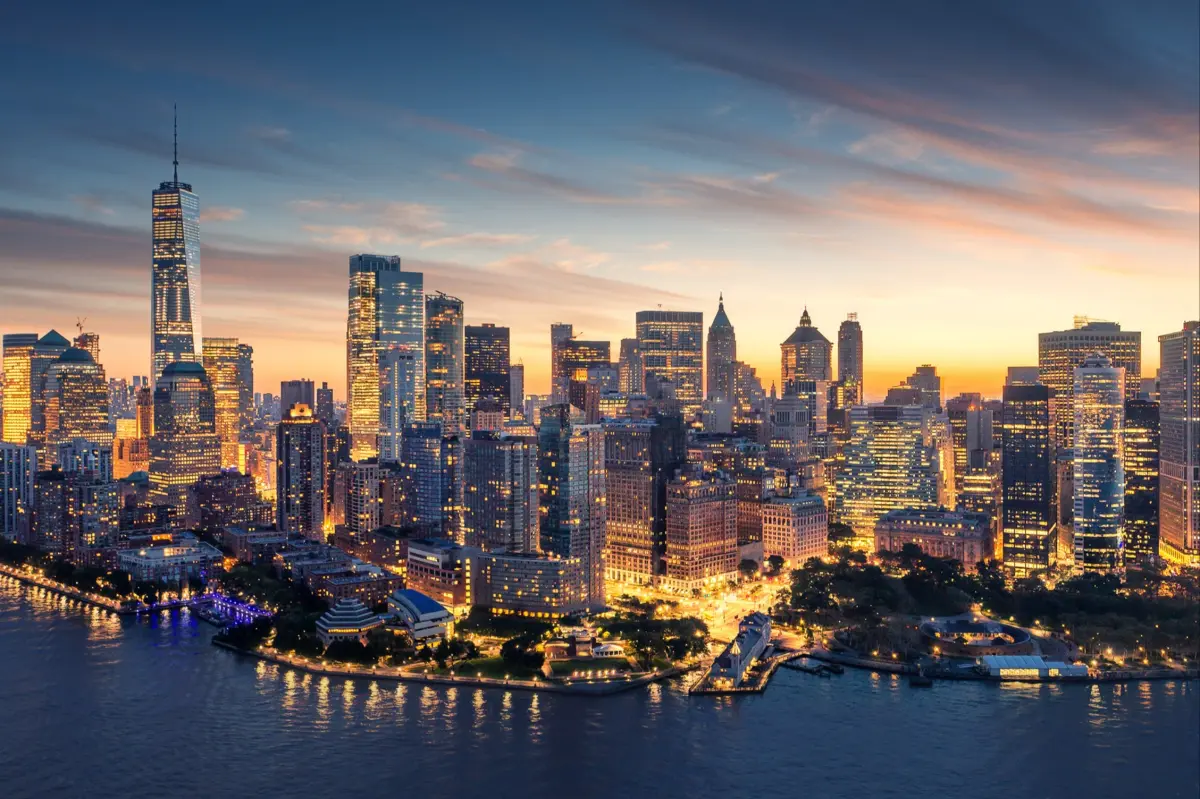
What truly makes a city cool? Is it the glittering skyline, the historic landmarks, or perhaps the infinite hustle of its inhabitants? While most of us have a gut feeling about what feels cool—that intangible vibe of exclusivity and effortless style—a recent study by Canada Sports Betting decided to strip away the subjectivity and get down to the hard data. They analyzed 150 cities across the United States and Canada, looking for the apex of “radness” by measuring concrete factors: the number of music events, sporting events, coffee shops, breweries, museums, and parks. The goal was to identify which metropolitan areas offer the most vibrant, everyday culture rather than just relying on name recognition. And when the digital dust settled, the results were painfully predictable yet undeniably satisfying: New York City was crowned the coolest city in North America. However, the study authors were keen to point out that this isn’t just about a city’s global reputation. “What makes a city cool isn’t necessarily its size or reputation, but how much it offers people in their everyday lives,” they explained, emphasizing that the best cities combine entertainment, culture, local character, and spaces to unwind—giving both visitors and residents plenty of reasons to explore. This methodology means that while the Big Apple took the top spot, the race was actually about depth of experience rather than just famous zip codes.
Paragraph 2: The Numbers Behind the Big Apple’s Swagger
New York didn’t just win; it practically lapped the competition. Scoring a staggering 89.11 out of 100, the city absolutely dominated the overall rankings, leaving second-place Boston (at 79.87) in the distant rearview mirror. But the most impressive stat was NYC’s “availability” score of 98.02—the highest in the entire study—reflecting the sheer, overwhelming volume of things to do. We’re talking about 171 museums that range from the hallowed halls of the Met to eccentric niche galleries, 2,629 coffee shops where caffeine-fueled literary genius and startup pitches collide, 43 breweries churning out craft lagers, and over 2,000 parks providing green respite from the relentless concrete jungle. It’s this explosive variety that sets it apart. “New York stands out because it offers something for almost everyone. Whether you’re a sports fan, a music lover, or someone who enjoys discovering new neighborhoods, there’s always another experience around the corner,” the study authors noted. San Francisco, Seattle, and Washington D.C. rounded out the top five, but they were all just footnotes to NYC’s ubiquity. Interestingly, even though it placed tenth overall among big cities, Denver earned a special shout-out for its impressive tally of 74 breweries, proving that sometimes, the path to coolness is paved with hops and barley.
Paragraph 3: Coolness Beyond the Metropolis
While New York might be the king of the concrete jungle, the study revealed that coolness isn’t exclusive to the massive coastal hubs. The researchers broke down their data by city size, uncovering some delightful surprises. Among midsize metropolises, Minneapolis, Minnesota, snagged the highest honors, offering a rich arts scene and a robust network of lakes and bike trails. But the real narrative shift happens in the Rust Belt, where a remarkable revival is taking place. Pittsburgh, Cleveland, Buffalo, and Cincinnati—cities once defined by steel mills and industrial decline—have transformed themselves into veritable playgrounds of culture, repurposing old factories into breweries, concert venues, and museums, proving that resilience is the ultimate form of cool. At the small-city level, Richmond, Virginia, earned the top spot, showing off its historic charm and booming food scene, followed closely by Boise, Idaho (aka Silicon Valley’s mountain-town sister), and Huntsville, Alabama. Even the Canadian cities of Regina and Oshawa made the list, with Regina boasting an incredible 362 parks—the highest concentration among small cities, proving that a tight-knit community with green space can absolutely hold its own against the glitz of Manhattan. This doesn’t just paint a picture of a diverse continent; it says that everyday cool is accessible everywhere.
Paragraph 4: The Street Cred and Social Media Darling
Beyond the data-driven metrics, New York has been stacking up cultural accolades that reinforce its “cool” label in the zeitgeist. If the city itself is cool, then its streets must be the veins of that trend, and recently, the historic Orchard Street on the Lower East Side was named the “coolest” street in America—and the ninth coolest in the world—by Time Out magazine’s annual ranking. Orchard earned this reputation through its timeless blend of old-school New York grit and youthful innovation. You can stumble out of a grimy dive bar, get a fresh tattoo, buy vintage vinyl, and feast at al fresco dining spots, all within a few blocks. It’s the kind of street that feels simultaneously like a time capsule and a sneak peek into the future. Furthermore, despite having a notoriously high cost of living, a famously abysmal dating scene (low chance of finding love), and a rodent population that has seemingly unionized, a separate 2025 analysis still declared NYC the “most Instagrammable” city in the US. The visual appeal of its chaotic streets, yellow cabs, and iconic skyscrapers is simply too potent for social media algorithms to ignore. It seems that even the city’s grit provides a perfect contrast filter for the perfect grid post.
Paragraph 5: The Paradox of Discontent in the City That Never Sleeps
However, amidst all the laurels, the glitzy rankings, and the accolades, there exists a sobering, jarring reality that threatens to unravel the narrative of the “coolest city.” Earlier this year, a shocking study revealed that a majority of New Yorkers are no longer singing the “Empire State of Mind” anthem with full conviction. The poll found that a staggering 55% of voters are either somewhat or very dissatisfied with their quality of life in the city. It’s a harsh juxtaposition: a city that ranks first in available experiences, yet where half of its residents feel defeated by the grind. This isn’t just about cold weather or a bad subway delay; it’s the accumulation of skyrocketing rent, the relentless rat infestation, the unbearable street noise, the shrinking green space relative to the cost to access it, and the systemic pressures of high taxes and overcrowding. The study’s metrics measure how many great things are available, but they don’t measure how easily accessible they are to the average working stiff. In a city where you can walk past a world-class museum but have to skip dinner to afford your rent, the definition of “cool” starts to feel like a luxury curated for the wealthy tourists and the 1% rather than for the residents who actually call it home.
Paragraph 6: The Final Verdict—Cool for Whom?
So, how do we reconcile the paradox of a city that is simultaneously the coolest in the continent and home to a deeply dissatisfied majority? The truth is, “coolness” is an exterior metric, a measure of abundance and variety that feeds the soul of a visitor or a young professional new to the city. The study measured the volume of experiences—the coffee shops, the parks, the concerts—and by that metric, no one can compete with New York. But humanization comes from the experience of living within those spaces. When the cost of entry to those spaces is prohibitive, or when the hustle required to stay pulls you away from enjoying them, the city becomes a stage set rather than a home. New York is an incredible city to be from, or to visit, or to conquer when you’re rich and childless. But for the rest of the residents, the 55% who are dissatisfied, the coolness rings hollow. Ultimately, this study tells us more about the definition of coolness itself: it’s relative. To a tourist, NYC is a 98 out of 100; to a mom paying $3,000 for a one-bedroom, it’s a constant struggle. The ranking is valid, but the story it misses is equally important—that the human heart values peace, security, and affordability just as much as it values street performances and craft beer. Until the cost of living aligns with the cost of cool, New York will remain a stunning, glittering crown resting on a very tired head. And that’s the honest, human truth behind the king of cool.