

Paragraph 1
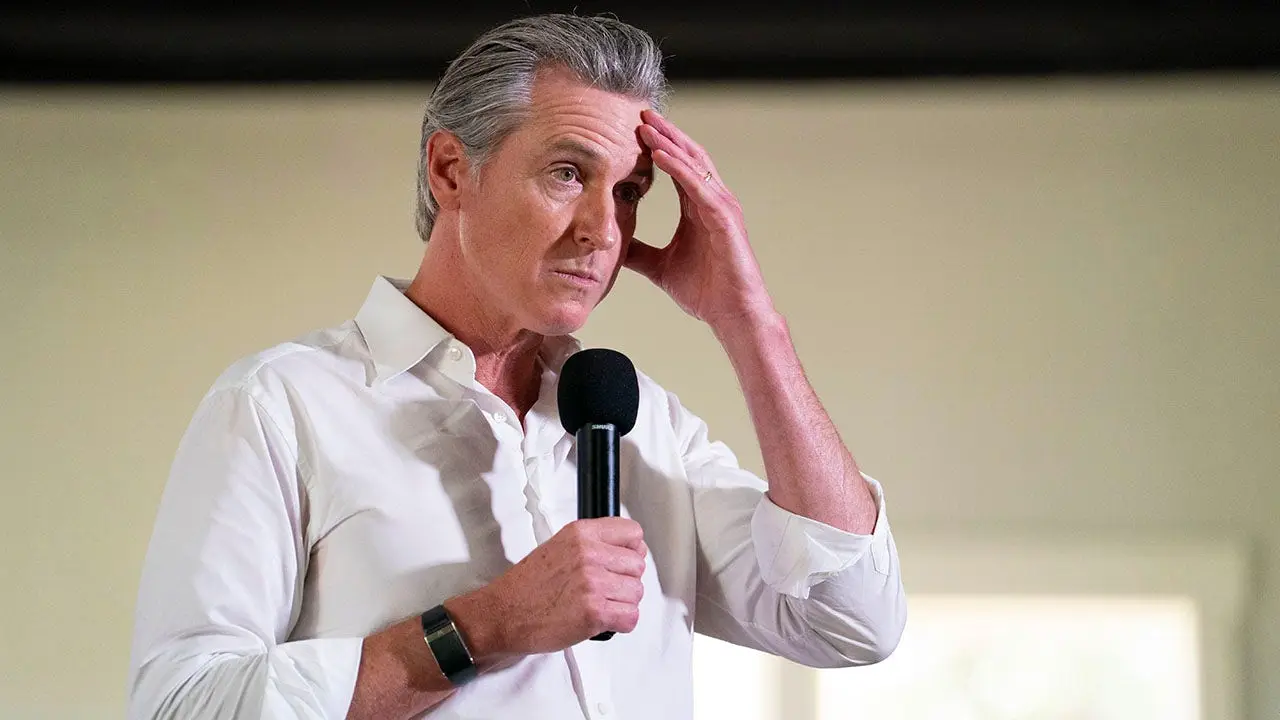
On a Thursday that will be remembered for years in California’s criminal justice history, Governor Gavin Newsom announced that he would commute the death sentences of every single condemned inmate in the state—nearly 550 people—to life in prison without the possibility of parole. The decision landed like a thunderclap across legal and victim advocacy circles, and the responses from current and former prosecutors were immediate, visceral, and deeply personal. These were not just legal abstractions to them; these were cases they had built, juries they had guided, and families they had promised a measure of justice. To hear that the men and women they had fought to see condemned would now be spared execution left many of them stunned. Among those prosecutors, Jonathan Hatami of the Los Angeles County District Attorney’s Office spoke with raw emotion. He had spent years seeking justice for a child who had endured unspeakable suffering, and now that same child’s killer was being pulled back from the death chamber. “It’s horrible,” Hatami told Fox News Digital. He made clear that the governor’s decision was made without any discussion with the family of the victim, leaving them to learn about the commutation through the same news cycle as everyone else. The broader reaction among district attorneys from San Bernardino to Sacramento echoed the same theme: that this sweeping act of executive mercy was not mercy at all to the people who had lived through the worst crimes imaginable, but rather a brutal final indignity inflicted on those who had already lost so much. Orange County District Attorney Todd Spitzer captured the fury in a single searing sentence: “Gov. Gavin Newsom’s commutation of the death sentences of all 548 condemned inmates in California is mercy for the wolves…while inflicting the ultimate act of cruelty on the sheep.” Behind the bold political statements, however, were real people—grieving parents, widowed spouses, orphaned children—who suddenly felt as if the state had turned its back on their suffering.
Paragraph 2
No case illustrates the emotional stakes better than that of Isauro Aguirre, the Palmdale man convicted in 2017 of torturing and murdering his girlfriend’s eight-year-old son, Gabriel Fernandez. Gabriel died in 2013, but the horror of what he endured before his death remains almost too painful to process. For more than seven months, Aguirre subjected the little boy to a campaign of cruelty that defies comprehension. He shot the child with a BB gun, burned his genitals, forced him to eat cat feces, and beat him so savagely that he ultimately died with a fractured skull and broken ribs. Prosecutors alleged that Aguirre’s hatred of the second-grader was rooted in his belief that the child was gay. Gabriel should have been worrying about schoolwork, playground games, and birthday parties; instead, his short life was a nightmare of pain and isolation. When deputy district attorney Jonathan Hatami stood before the court at sentencing, he did not try to hide his anguish. He described death as likely a merciful end to Gabriel’s pain, and said that when the boy needed someone most, there was no one there to hold him, love him, caress him, or tell him that everything would be all right. That image—of a small child dying alone in a house that should have been his sanctuary—is one that has haunted Hatami and everyone who worked on the case. In his closing argument, Hatami did not mince words about the man who had committed these atrocities. “The defendant is not a victim,” he said. Aguirre, he argued, was “pure evil” and a “coward.” Now, with Newsom’s commutation, Aguirre will spend the rest of his life in prison without the possibility of parole rather than face execution. For Hatami, the decision was not just a legal setback; it was a profound betrayal of a child who had no voice, no advocate, and no one to protect him. The fact that Gabriel’s mother was also sentenced to prison only deepens the tragedy of a family shattered by violence and neglect. The governor’s office did not speak with Gabriel’s family before making the announcement, and that silence has become its own kind of wound.
Paragraph 3
The scope of the commutation is staggering not only in its number but in the nature of the crimes committed by those who now escape the death penalty. These are not cases of ambiguous guilt or questionable evidence. These are the names that have haunted California for decades, the monsters that parents whispered about to their children and that true crime documentaries have chronicled in grim detail. Randy Kraft, known as the “Scorecard Killer,” murdered sixteen young men between 1972 and 1983, a killing spree that terrorized communities across Southern California. David Carpenter, the “Trailside Killer,” stalked hiking trails in the early 1980s and murdered seven people who were simply enjoying nature. Cary Stayner, the “Yosemite Killer,” murdered a mother, her daughter, the girl’s friend, and another woman in 1999, turning a beloved national park into a place of dread. Charles Ng, along with accomplice Leonard Lake, was sentenced to death for the abduction, torture, rape, and murder of eleven people between 1984 and 1985, including two infants. These are not abstract legal names on a court docket; they are human beings whose actions left behind entire communities of grief. The families of their victims have spent decades waiting for what they believed was justice, attending parole hearings, filing appeals, and reliving their trauma in courtrooms across the state. For them, the death sentence was not a vindictive punishment but a solemn acknowledgment that some crimes are so grave that they place a person outside the circle of human empathy. To commute those sentences in one sweeping gesture feels to many like the state telling them that their loved ones’ lives did not matter as much as the killers’ lives. San Bernardino County District Attorney Jason Anderson said he was not aware of any victims’ family members who received notice of the commutations from the governor. That lack of communication, he said, was itself a profound failure. The decision, he added, was “the wrong decision.” But behind that terse statement lies a world of pain—fathers and mothers who will now live out their final years knowing that the killers of their children will also grow old, albeit behind bars, rather than facing the ultimate penalty the law once promised.
Paragraph 4
Newsom, for his part, framed his decision not as a betrayal of victims but as a moral necessity. In an open letter to state residents, he wrote that California “cannot morally kill” the inmates whose sentences he was commuting. He argued that state-sanctioned killing is incompatible with California’s values, undermines the foundations of the legal system, and diminishes everyone in the state. He did acknowledge the immense suffering caused by the condemned, writing that they had caused “indescribable suffering” to victims, their families, communities, and the state as a whole. But he insisted that the answer to that suffering cannot be more death. That philosophical divide—between retribution and rehabilitation, between punishment and mercy—has long animated the debate over capital punishment in America. Yet even as Newsom spoke in lofty moral terms, prosecutors across the state responded with a focus on the practical and human consequences of his decision. Sacramento District Attorney Thien Ho issued a statement reminding Californians that every death sentence results from years of legal proceedings involving juries, judges, and multiple layers of mandatory appellate review. A blanket commutation, he argued, disregards the individualized facts and circumstances of each case, the careful judicial process that led to those lawful sentences, and the voices of victims who have waited decades for justice. That last point is crucial: the justice system, however imperfect, is built on the idea that each case deserves its own examination. To sweep every death sentence into one broad action is to erase the distinctions that matter, distinctions that the men and women who sat on those juries heard about for weeks or months. The prosecutors who pursued these cases did so not out of bloodlust but out of a commitment to the rule of law. For them, Newsom’s order did not feel like progressive reform; it felt like a rupture in the social contract itself, a decision made by one person that overrode the considered judgments of hundreds of jurors, dozens of judges, and the sustained will of the state’s voters, who have repeatedly expressed support for capital punishment.
Paragraph 5
The broader context only deepens the tension. California has not executed a condemned inmate in twenty years, and death row has become a kind of legal limbo, with prisoners living for decades in a high-security limbo that is neither life nor death. Progressive criminal justice reforms in recent years have reduced sentences for many offenders, but death row inmates have largely been excluded from those changes, precisely because their crimes were considered the worst of the worst. That is why Newsom’s commutation feels so jarring to critics: it does not merely end the death penalty, which some have long wanted; it extends the possibility of further leniency to people who were only on death row because their crimes were so monstrous. Orange County District Attorney Todd Spitzer warned that with death row off the table, these prisoners are now closer to even more leniency, including potential parole. Newsom’s office pushed back on that concern, saying on X that the prisoners in question are not eligible for new state parole board guidelines that critics warn could one day clear a path to freedom. But that reassurance has not quieted the alarm. The Criminal Justice Legal Foundation, led by former Sacramento County District Attorney Anne Marie Schubert, filed suit to block the new regulations that could make some of these offenders eligible for parole. Schubert, who has decades of experience with violent criminals, spoke bluntly about who is at stake. “We’re talking about people that would have been qualified for the death penalty, OK? So they are the worst of the worst,” she told Fox News Digital. “We are talking about cop killers. We’re talking about baby killers.” She recounted attending a press conference with a family whose six-week-old child had been tortured to death by her father over a weeklong period, with the abuse recorded on video. She also mentioned a mass shooter in Fresno in the early 1990s who killed ten people and pleaded to life without parole—someone who could potentially become eligible under the new rules. Schubert’s words conjure images that are impossible to ignore: infants, children, police officers, innocent strangers—all victims of violence so severe that society once concluded the only fitting punishment was death. To those families, Newsom’s decision is not an abstract philosophical debate about the morality of execution. It is a deeply personal message that their pain has been weighed and found insufficient.
Paragraph 6
In the end, Newsom’s commutation does not fully resolve anything. The state supreme court is expected to review hundreds of cases before the clemency becomes official, and legal challenges may delay or alter the outcome. California’s death penalty statute remains on the books, and current prosecutors like Los Angeles County District Attorney Nathan Hochman, along with counterparts in Orange, Sacramento, and other counties, have stated that they will continue to seek the death penalty in future eligible cases. The governor’s action is not a legislative repeal, and it does not change the law. But it does change the lives of every person sitting on death row, and—more importantly—it changes the emotional landscape for every victim’s family who thought the chapter had been closed. For people like Jonathan Hatami, the prosecutor who carried Gabriel Fernandez’s story with him for years, the decision is a reminder that justice is never guaranteed, and that even the most horrific crimes can be swept into a larger political and moral narrative that leaves victims behind. The families of Randy Kraft’s sixteen victims, David Carpenter’s seven victims, Cary Stayner’s four victims, and Charles Ng’s eleven victims will now have to process yet another layer of grief. They have already endured unimaginable loss; now they must endure the knowledge that the state has chosen to spare the lives of the people who took their loved ones away. Newsom may believe that refusing to kill killers is the only way to break the cycle of violence. But for those who have sat in courtrooms and watched the faces of the accused, who have held photographs of the dead, who have heard the terrifying details of how someone spent their final hours, mercy can look a lot like cruelty. As the legal process moves forward and the arguments continue, one thing remains certain: the grief of the victims’ families does not end with a governor’s signature. It endures, as it has for decades, in the silent spaces where no commutation letter can reach.