


Russia Opens Crypto Market to Everyday Investors, Greenlights Bitcoin, Ethereum, and Tether
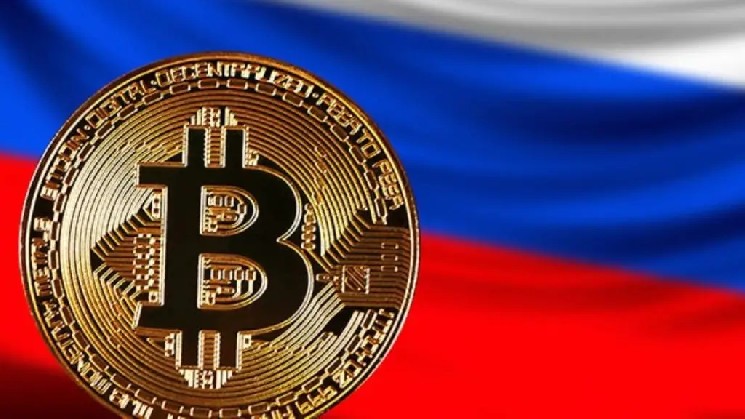
MOSCOW — The Central Bank of Russia has finally drawn a clear line in the sand for the country’s retail cryptocurrency market. In a much-anticipated statement, the regulator unveiled the shortlist of digital assets that will be accessible to individuals without qualified investor status: Bitcoin (BTC), Ethereum (ETH), and the dollar-pegged stablecoin Tether (USDT). According to the bank’s official communication, the new regulatory framework will take effect on November 17th, a date now being circled on the calendars of investors, brokers, and compliance officers throughout the nation. From that moment onward, licensed exchanges and trading platforms operating within Russian jurisdiction will be permitted to accept these three asset classes for public trading, effectively lifting a long-standing barrier that has kept everyday citizens at arm’s length from the crypto economy. The decision lands at a moment of renewed global interest in digital assets, with institutional investors re-entering the market and major jurisdictions scrambling to define their regulatory posture. For a central bank that once floated the idea of banning cryptocurrency outright, the announcement constitutes a stunning reversal. It marks a decisive pivot in the nation’s approach to virtual currencies, transforming what was once a legally murky and heavily stigmatized market into a formally sanctioned segment of the financial system. For millions of Russian retail investors who have previously been forced to navigate offshore platforms or resort to informal peer-to-peer networks to access digital money, the development signals that the era of regulatory ambiguity is finally coming to a close. While the list is undeniably conservative — featuring only the industry’s two largest cryptocurrencies and its most dominant stablecoin — the symbolic weight of the decision cannot be overstated. It legitimizes an asset class that the central bank itself had once dismissed as a speculative mirage, and it sets the stage for a profound restructuring of how virtual currencies are traded, held, and understood inside Russia’s borders.
To fully appreciate the significance of this announcement, one must trace the extraordinary ideological journey that carried Russian regulators to this point. For the better part of a decade, the Bank of Russia stood among the crypto industry’s harshest critics, with senior officials warning repeatedly that digital assets posed a grave threat to financial stability, enabled money laundering, and allowed citizens to circumvent the ruble. At various junctures, the central bank floated proposals for blanket restrictions on mining, trading, and even the mere possession of cryptocurrencies. Yet the tectonic plates of geopolitics and economics have shifted profoundly since those early warnings. The imposition of sweeping Western sanctions following geopolitical escalations in recent years drastically reduced Russia’s access to global payment systems, foreign capital, and even basic financial infrastructure. In response, Moscow has been forced to innovate on the fly, and cryptocurrency has gradually evolved from an object of institutional suspicion into a practical instrument of financial policy. The passage of a dedicated legal framework for cryptocurrency mining earlier this year — a logical step for a country blessed with abundant low-cost energy and one of the world’s largest computing capacities — signalled a softening of the official line. At the same time, the central bank continued to advance its own digital ruble project, laying the groundwork for a future in which central bank digital currency, decentralized assets, and traditional banking can coexist within a single, harmonized ecosystem. Now, with the formal admission of Bitcoin, Ethereum, and Tether into the legal retail sphere, the central bank is openly signaling that it regards digital assets not as a threat to be extinguished but as a reality to be managed, standardized, and mainstreamed. This pragmatic about-face aligns neatly with the broader contours of Russian financial policy since 2022, which have consistently prioritized resilience, financial autonomy, and the cultivation of alternative economic channels in the face of sustained external pressure. In that context, today’s announcement is not an isolated regulatory tweak; it is the natural culmination of a quiet revolution within the corridors of Russian financial power.
The mechanics of the new rule will determine just how quickly Russia’s retail investors can embrace digital assets, and the central bank has taken care to articulate a coherent operational framework. Under the announced plan, unqualified investors — ordinary citizens who have not been granted the special accreditation that Russian law typically reserves for high-net-worth individuals and institutional players — will be able to trade the three approved cryptocurrencies through brokers, portfolio managers, or licensed intermediaries offering digital asset services. In Russia’s securities law, the distinction between qualified and unqualified investors is a critical one; the former designation is reserved for individuals with significant portfolio sizes, professional experience, and income thresholds, while the latter covers the broad retail public that makes up the overwhelming majority of the population. By extending access to this group, the central bank is, in effect, democratizing participation in the digital asset market. The regulatory architecture creates a layered approach: rather than turning every citizen into a direct custodian of their own private keys, the system routes transactions through regulated financial entities that are expected to handle compliance, client verification, and reporting duties. Purchases can be executed either on organized exchange platforms or through over-the-counter markets, a dual-track design intended to accommodate both transparent centralized trading and the discreet bilateral deals that remain popular among more seasoned participants. Importantly, the selection of intermediaries is left open, meaning that banks, investment firms, and specialized crypto exchanges can all theoretically apply to participate provided they satisfy the regulatory prerequisites. This inclusive posture is designed to stimulate competition and to give retail investors a genuine choice of channels, rather than herding them toward a single jurisdiction venue. At the same time, it imposes a considerable burden on the intermediaries themselves, which must develop robust anti-money-laundering protocols, transaction monitoring systems, and client disclosure mechanisms in a remarkably short window between now and the November 17th effective date. With roughly two months to prepare, the country’s financial infrastructure is facing a period of accelerated adaptation.
One of the most analyzed elements of the new framework is the investment cap. Under the announced rules, unqualified investors will be subject to an annual ceiling of 300,000 rubles — roughly $3,600 at current exchange rates — per intermediary. The structure of the cap is as important as its size: it applies individually to each broker, portfolio manager, or trading platform, meaning that a determined investor could, at least in theory, open accounts with multiple intermediaries and multiply their aggregate exposure several times over. This design choice, which some observers have characterized as a deliberate safety valve, reflects a careful balancing act between financial inclusion and consumer protection. On one hand, the limit is sufficiently generous to allow brokers and trading venues to build viable business models and to generate meaningful fee income from retail clients. On the other hand, it functions as a brake on speculative excess, ensuring that no single intermediary can become the vector for catastrophic losses among inexperienced traders. In the context of the Russian economy, where average monthly wages currently hover in the neighborhood of 70,000 to 80,000 rubles, the cap equates to roughly four months’ salary — not a trivial sum, but hardly a bet-the-house threshold. It is low enough to insulate vulnerable households from the brutal volatility for which Bitcoin and its peers have become notorious, yet high enough to give ambitious retail participants a genuine sense of exposure. Analysts have also pointed to the regulatory advantages of the threshold: smaller position sizes imply smaller potential losses, which in turn reduces political risk should the retail experiment encounter turbulence. The cap may equally function as an initial calibration point, to be revisited and refined as the central bank accumulates empirical data on how ordinary Russians trade in a legally sanctioned market environment.
The inclusion of Tether alongside Bitcoin and Ethereum is arguably the most telling detail in the entire announcement. Bitcoin and Ethereum, of course, are the undisputed giants of the cryptocurrency ecosystem, embodying the store-of-value and smart-contract narratives that have driven global adoption for more than a decade. Tether, by contrast, is the workhorse of liquidity — a dollar-denominated stablecoin whose market activity routinely dwarfs that of any other digital asset in terms of trading volume. Its presence on a Russian-approved list carries immediate and practical consequences. For Russian users, a dollar-pegged instrument offers a hedge against ruble depreciation and a convenient medium for cross-border transactions, both of which have become pressing concerns in the era of heavy financial sanctions. The three-asset lineup effectively covers the entire spectrum of retail demand: Bitcoin as the prospective long-term reserve, Ethereum as the gateway to decentralized applications and yield-generating strategies, and Tether as the day-to-day settlement tool that bridges the gap between fiat money and the digital economy. With OTC desks likely to become a favored venue for larger retail trades, the new framework could also bring a measure of transparency to a segment of the market that has traditionally operated in the shadows. From a market perspective, the November 17th launch could inject fresh energy into Russia’s domestic trading volumes, which have ebbed and flowed unpredictably in response to changing regulatory signals. Licensed local venues can expect an influx of new account openings as previously sidelined investors migrate from informal channels to compliant platforms. Moreover, the central bank’s explicit approval is likely to encourage foreign platforms and international counterparties to treat Russian retail traders as legitimate participants rather than compliance risks. Beyond the country’s borders, the decision is being viewed with great interest by policymakers in other emerging markets, particularly within the BRICS bloc, many of which have struggled to formulate a coherent stance toward decentralized assets. Moscow’s willingness to test a structured, state-approved retail model may well become a template for nations seeking to capture the benefits of cryptocurrency while retaining a tight grip on financial oversight.
As the November 17th effective date approaches, attention will naturally shift to the practical realities of implementation. The central bank has been careful to frame the current list of three assets as a starting position rather than an immutable final destination; market participants are already speculating about which cryptocurrencies might be granted approval in subsequent waves, with a number of heavily traded altcoins featuring prominently in the discussions. The successful integration of Bitcoin, Ethereum, and Tether will ultimately hinge on a fragile matrix of variables: the readiness of intermediaries to satisfy rigorous compliance obligations, the willingness of retail investors to leave behind their familiar informal habitats, and the broader stability of the Russian financial system as it continues to operate under the strain of international sanctions. If the rollout proceeds smoothly, it may embolden regulators to pursue further liberalization, potentially expanding the roster of permissible assets and revisiting the 300,000-ruble ceiling. Conversely, any high-profile failures or scandals could reinforce the cautious tendencies that for so long characterized the central bank’s approach. At the same time, this retail-friendly framework is proceeding in tandem with the steady development of the digital ruble, which remains the bank’s flagship innovation and a potential pillar of a new, state-controlled payments infrastructure. The two projects — one decentralized and one centrally governed — are likely to be shaped by each other in the coming years. If Moscow’s digital-ruble platform matures into a widely accepted means of payment, it could coexist with Bitcoin, Ethereum, and Tether as distinct instruments serving different needs. What is beyond doubt is that Russia has now joined the ranks of major economies attempting to establish a workable coexistence between the established financial order and the decentralized, borderless world of cryptocurrency. The experiment begins in November, and both domestic observers and international analysts will be watching closely to see whether Moscow’s bold step forward yields a model of prudent adoption or becomes another cautionary tale in the ever-volatile history of digital assets.