


Here is a summarized and humanized narrative of the incident, expanded to the requested length and structure.
Paragraph 1: The Dream of Departure Turns into a Nightmare at the Gate
There is a particular kind of exhaustion that comes from the end of a long trip—the weary relief of knowing you’ve made it to the airport, are checked in, and have your seat locked in. For a Frontier Airlines passenger, that feeling of security shattered with a single glance at a boarding pass. It was October 4th, and the traveler had done everything right. They had checked in online, verified their itinerary, and were comfortable with their pre-assigned seat 12D. They’d pictured the flight, the descent, the arrival. But when they arrived at the gate, scanning their digital boarding pass, a chill ran down their spine. The familiar alphanumeric code of their seat had been replaced by a stark, nonsensical number: “0.” It’s a number that means nothing in the context of an aircraft cabin, a digital phantom that signifies a complete system collapse. As they looked around, they realized they were not alone in their confusion. A low murmur of panic began to ripple through the waiting crowd as other passengers discovered that their seats had vanished into the ether. The reality quickly dawned that they weren’t just facing a minor seating inconvenience; they were facing a full-scale overbooking debacle. As the gate agent began to announce boarding, the truth hit them like a wall: they were being denied entry onto a plane they had legally purchased a ticket for. Roughly twenty other passengers stood in stunned disbelief alongside them, witnesses to a Kafkaesque bureaucratic failure where a computer algorithm had erased their existence from the manifest, marking them as ghosts just before takeoff. The traveler felt a surge of helpless rage—their paid vacation, business trip, or family visit was being stolen from them by sheer corporate incompetence, and there was absolutely nothing they could do about it.
Paragraph 2: A Hollow Offer of Compensation and the Agony of the Follow-Up
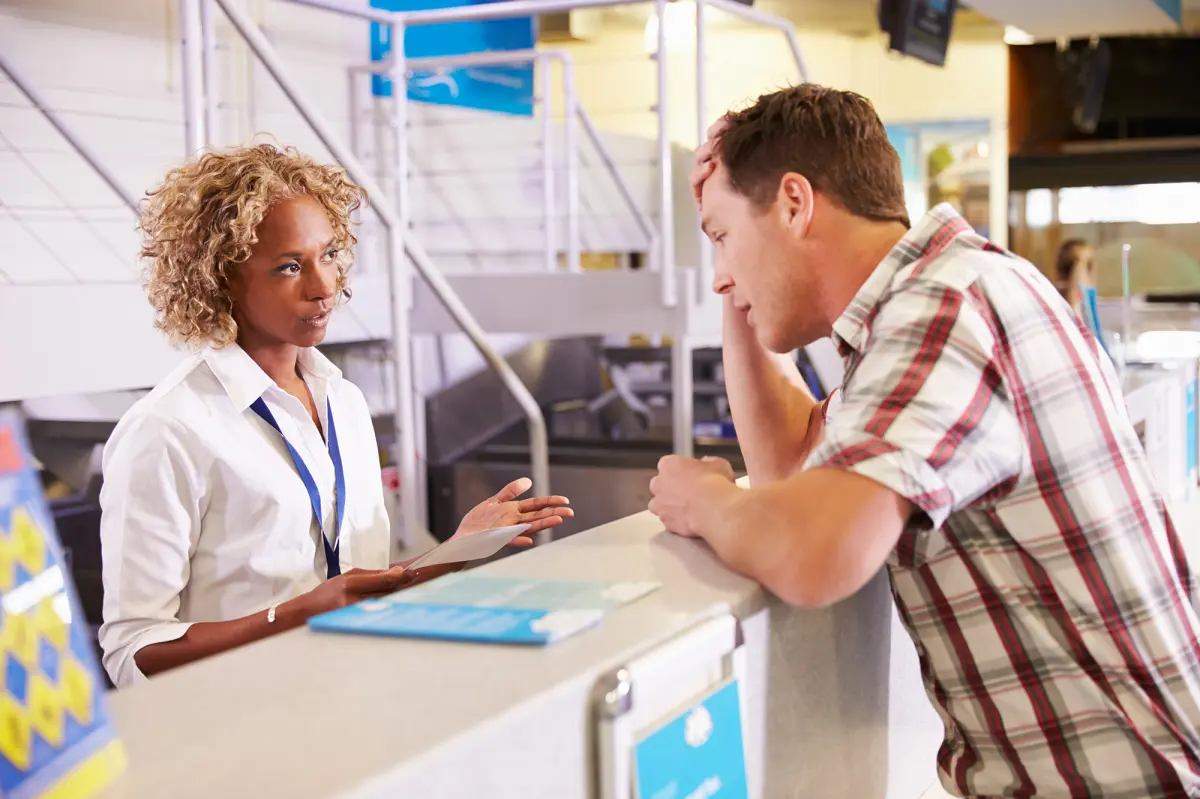
Furious and humiliated, the traveler waited roughly thirty minutes to speak with a gate manager, clinging to the hope that this was all some terrible, correctable mistake. When the manager finally arrived, the conversation felt less like a solution and more like a forced interrogation. The manager, with the weary tone of someone who has delivered this exact speech a hundred times, presented a rigid ultimatum: either accept a rebooking onto a later flight, or immediately take a full refund plus a $250 flight voucher to be used on a future Frontier journey. For the traveler, the choice was agonizing. The urgency of their original itinerary made waiting impossible, and they were loath to give this airline any more money. So, they chose the financial out: the refund and the voucher, the latter of which felt like a pathetic consolation prize for the emotional whiplash and logistical terror they had just endured. The manager assured them, with a confident nod, that the process had been initiated—the money would be back on their card, and the voucher would appear in their account within days. The passenger left the airport that evening with a hollow feeling, trusting the verbal contract they had just made. But as the days dragged on into two agonizing weeks, the promise began to rot. No refund appeared in their bank statement. No voucher landed in their email inbox. When they finally mustered the courage to call customer service, desperate for answers, they hit a brick wall. The cheerful automated system connected them to a representative who, after checking the file, delivered the most infuriating verdict imaginable: the system had marked the passenger as a “no-show.” The sheer absurdity of the designation left the traveler sputtering in disbelief. How could someone be a no-show when they were physically standing at the gate, trying to board a flight that was being denied to them?
Paragraph 3: The Invisible Hand of Algorithmic Overbooking and Financial Pressure
The anger in the passenger’s Reddit post, titled on r/frontierairlines, was palpable. They questioned the very definition of “no-show” while describing the scene of being kicked off a flight they paid for, a scenario that feels like a betrayal of the basic contract of commercial aviation. But to understand how this terrible situation occurred, one must look behind the curtain at the brutal economics of the ultra-low-cost carrier. While it might appear to be a massive, unjustified clerical error, the root cause often lies in the practice of “aircraft swapping” and the complex science of overbooking. When an airline swaps a larger plane for a smaller one due to maintenance or scheduling, the seat map is redrawn, and the computer algorithm assigns new seats. In this digital scramble, sometimes a passenger’s reservation gets lost in the shuffle, resulting in a “0” seat number—a placeholder for a body with no physical space. Simultaneously, the airline is ruthlessly calculating how many tickets to sell, banking on a certain percentage of no-shows. But when everyone shows up, the algorithm renders human beings surplus to requirements. It’s a business model that prioritizes maximizing revenue per flight over passenger comfort, and the financial data supports this pressure-cooker environment. In the very same quarter as this incident, Frontier revealed in its earnings report that the average airfare revenue collected per passenger skyrocketed by 71% to $67.82. While ancillary baggage fees also contributed, the airline was still hemorrhaging money, posting a net loss of $104 million due to soaring fuel costs. This financial desperation creates a corporate culture where gate agents are given strict protocols, and systems are designed to deny claims—such as declaring a seated passenger a no-show—rather than provide reasonable restitution.
Paragraph 4: The Digital Campfire of Shared Scars on Reddit
The initial Reddit post served as a match thrown into a dry forest of pent-up frustration, igniting a firestorm of similar stories in the comments section. It became a virtual support group for the victims of the airline industry, a place where passengers shared their own horror stories of being gaslit by large corporations. One user commented that an eerily identical ordeal had happened to them the previous month, validating that this wasn’t a one-off glitch but a systemic virus within Frontier’s operations. Another traveler recounted witnessing a physical removal of a passenger from a flight that very weekend, while also detailing their own personal degradation: after an aircraft change, they were demoted from a paid exit-row seat with extra legroom to a cramped, standard economy slot, losing money they had shelled out for comfort. Yet, unlike the original poster, this particular user found a small vein of fortune when a gate agent managed to issue a refund on the spot, proving that some employees do retain the power to correct wrongs amidst the chaos. However, most commenters were keen to offer practical advice. One astute observer suggested that the “aircraft swap” was likely the instigator and that the original poster should file a formal complaint with the US Department of Transportation (DOT), arguing that the airline’s internal files would show proof of the swap. The advice to involve the DOT was repeated by several others, a testament to the passengers’ collective distrust in the airline’s customer service channels. The thread also served as a warning to those planning future trips, with travelers noting the need to take screenshots of boarding passes and record conversations with airline staff as evidence, turning every trip into a preemptive legal battle.
Paragraph 5: The Human Cost of the Ultra-Low-Cost Carrier Experiment
The narrative unfolding in the comments pointed to a larger, disheartening trend in the aviation industry: the normalization of treating passengers like cargo rather than guests. “Frontier is literally the new Spirit Airlines and has taken over as THE worst airline ever. Their only saving grace? The cheap flights,” one griped, succinctly capturing the public’s perception. This comparison to Spirit—which has historically topped lists of customer dissatisfaction—perfectly illustrates the “race to the bottom” model. These ultra-low-cost carriers (ULCCs) strip away every conceivable amenity—including basic patience and customer service—to offer a tantalizingly low sticker price. But as the financial data shows, they recapture that lost revenue through ancillary fees and, increasingly, by cutting corners on operational accountability. For the passenger, the cheap ticket is an illusion that hides the true cost: the constant anxiety of wondering if your seat will exist, the dread of an aircraft swap, and the soul-crushing battle to claim a promised refund. The $250 voucher in this story is more than just a paltry sum; it’s a symbol of the dehumanization of the travel experience. It represents the airline’s offer to buy back their peace of mind—and their firmly scheduled trip—for a fraction of its actual value. In an era where fuel costs are volatile and quarterly earnings are scrutinized, the human being behind the boarding pass becomes a mere revenue stream. The lack of a robust contingency plan, a swift resolution, or even a simple apology reveals a systemic indifference to the chaos their business model creates, leaving travelers feeling like they are in a David vs. Goliath battle every time they book a cheap seat.
Paragraph 6: The Search for Justice and the Future of Flight
As the story of this frustrated passenger reverberates through the digital sphere, it becomes a case study in how the modern traveler must navigate an increasingly adversarial transportation landscape. For the original poster, the path forward is clear: they must escalate beyond the phone lines. The Reddit community was unanimous in recommending a DOT complaint, which forces the airline to respond within a specific legal timeframe, holding them accountable for their mishandling. Additionally, a credit card chargeback is a powerful tool, as banks act as arbiters and can claw back the disputed funds when a service is not rendered. But beyond the logistical steps, this tale offers a broader lesson about expectation management in the age of budget airlines. The traveler’s final cry—”NEVER FLY FRONTIER”—is a lament for the lost diamond of reliable air travel. It poses a question to the industry: can a business model that charges $67 for a fare yet loses $104 million afford to treat its customers so poorly? The irony is stark. Airlines are collecting more money from passengers than ever before, yet the infrastructure for handling simple glitches remains broken. As the passenger looks back on that October day, the memory is not of a flight missed, but of dignity stripped away. The frustrated Reddit post, the angry comments, and the shared stories all point to a simmering resentment that could eventually force a change. While the voucher may never arrive, the conversation has started—a conversation that insists that a seat number is not just a digit, but a promise to a human being, and that failing to keep that promise requires more than a robotic apology and a hollow offer of $250.