

The Weight of a Name: How Dak Prescott is Turning Grief into a Lifeline with “Huddle 94”
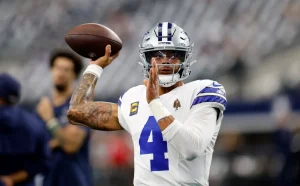
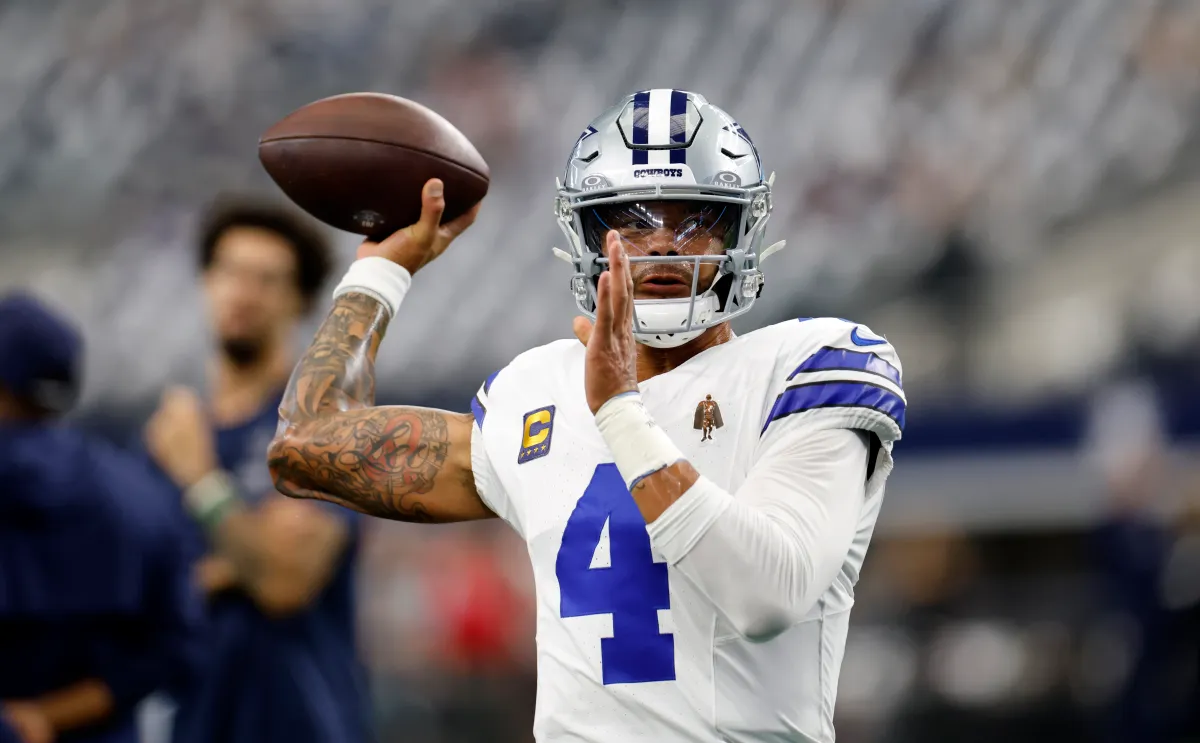
One year has passed since the Dallas Cowboys organization was shaken to its core by the sudden and devastating loss of defensive end Marshawn Kneeland. The silence of his absence still hangs heavy in the locker room, a constant reminder of a young life cut far too short. But this week, quarterback Dak Prescott stepped forward not just to lament the loss, but to transform that profound grief into a tangible, life-saving initiative. In an emotional address to the media, Prescott unveiled “Huddle 94,” a program dedicated to Kneeland’s legacy that aims to tear down the walls of silence and isolation that often plague professional athletes. This is more than just a charity drive or a symbolic gesture; it is a raw, vulnerable attempt to create the very support system that Prescott believes might have saved his teammate’s life. By fostering intimate conversations about the stressors that accumulate off the field, the initiative seeks to ensure that no Cowboy ever feels they are battling their demons alone. It marks a significant cultural shift within a sport often stereotyped for its hyper-masculinity, recognizing that true strength sometimes lies in the ability to speak your truth, rather than burying it under pads and helmets.
The tragedy that sparked this movement is a stark reminder of the fragility of life. Kneeland died by suicide on November 6, 2025, a fact that sent shockwaves through the football community. In the months following his death, a posthumous examination revealed that he was suffering from Stage 1 Chronic Traumatic Encephalopathy, commonly known as CTE—a progressive and devastating brain disease linked to repetitive head trauma. While Stage 1 represents the early stages of the disease, with Stage 4 denoting the most severe neurological damage, the diagnosis provided a heartbreaking piece of a very complex puzzle, yet it offered no easy answers. For those who knew Kneeland, the news was a gut-wrenching dichotomy: here was a man who appeared to be the epitome of an NFL player, strong and dependable, yet he was silently battling an invisible opponent that left him feeling helpless. The revelation highlighted the often-unseen collateral damage of the sport they love, forcing Prescott and his teammates to confront the chilling reality that you can never truly know the depth of a person’s internal war. It is a sobering context for “Huddle 94,” transforming it from a simple memorial into a critical intervention—a proactive attempt to address the mental health crisis that shadows the gridiron long after the final whistle blows.
Explaining the genesis of the program, Prescott’s voice carried the weight of immense reflection. “(It’s) allowing us to create conversations and get together in smaller groups that talk about life and talk about things that are stressors to us that if it was something that we had, may have helped Marshawn,” he said, pausing to gather his emotions. The logic is beautifully simple yet radically compassionate. In the high-pressure cauldron of the NFL, players often wear a literal mask of invincibility, hiding anxiety, depression, and personal turmoil behind the façade of athletic prowess. “Huddle 94” aims to break that barrier by breaking down the massive team structure into smaller, digestible units—safe spaces where vulnerability is not a weakness but a currency. By discussing life, finances, family, and the psychological toll of the game, the initiative seeks to normalize the uncomfortable conversations that often get deferred until it is too late. Prescott articulated this hope with a poignant clarity: “It may have been something that would have been a resource for him to prevent what inevitably happened.” This realization—that connection and communication might have altered a tragic trajectory—is the driving force behind the endeavor. It is a proactive pledge to look out for one another, recognizing that a text message or a locker room chat can sometimes bridge the vast chasm between despair and hope.
To truly understand the depth of Prescott’s commitment, one must look at his own history with darkness. The quarterback has never shied away from his personal battles, having navigated the devastating aftermath of his brother’s suicide years ago. During the isolating depths of the COVID-19 pandemic in 2020, Prescott bravely spoke about his own struggles with depression and anxiety, a confession that was as revolutionary as it was humanizing. “I think that (it) is important to be vulnerable, to be genuine and to be transparent,” he shared in an interview with “In Depth with Graham Bensinger,” explaining that as a leader with a platform, these qualities “go a long way when you are a leader and your voice is being heard by so many and you can inspire.” This personal experience is the sleet that guides his current mission. He is not approaching this as a distant philanthropist who only sees a statistic; he is approaching it as a survivor of grief who intimately understands the suffocating feeling of being overwhelmed. That authenticity gives “Huddle 94” an unshakable credibility. It is one thing for a franchise to offer resources, but it is an entirely different matter when the franchise’s franchise player stands in front of the room, tears in his eyes, admitting that he gets it too, and that he needs his brothers just as much as they might need him.
The initial reaction from the locker room, according to Prescott, suggests that the initiative is already striking a nerve. “I think it’s gonna be big. I think it’s gonna be needed, just even hearing from the introduction about it, how guys felt about it. I’m excited to do it. At the same time, you’re honoring Marshawn. You’re getting to bring up conversations of how people felt about him and what he meant to us,” he said. The beauty of “Huddle 94” lies in its dual purpose: it leverages the memory of a fallen teammate to forge stronger bonds among the living. By talking about Kneeland, they keep his spirit alive, but by talking about the issues that plagued him, they protect themselves. It transforms passive sorrow into active solidarity. This is the evolution of a football team from a collection of colleagues into a brotherhood that understands the importance of leaning on one another. The initiative recognizes that the chaos of the season—the brutal hits, the scrutiny of the media, the pressure of a fanbase—can fragment a team’s focus unless they have an outlet. By institutionalizing these small group meetings, the Cowboys are operating on the principle that mental healing is not an individual journey, but a collective process, and that the confidence gained from discussing personal hurdles can translate into unmatched trust on the field.
As Prescott looks toward the future, one prayer encapsulates the mission’s profound sentimentality. “He’s missed. He’s missed greatly from a lot of people around here, and in this organization. I appreciate them honoring him,” he said, before delivering a powerful benediction: “Every time I step on that field, I say a prayer and I end with, ‘God allow me to do this for Marshawn and people that can’t do it anymore.’ Life is delicate, and we should never take these moments that we have, no matter if it’s football or whatever we do in life, for granted. And be thankful, and make sure we’re always telling the people around us that we love them.” These words crystallize the essence of the initiative. “Huddle 94” is ultimately a life lesson wrapped in a football tradition. It is a reminder that the game is fleeting, but the souls of the men who play it are eternal. By honoring number 94, Prescott is not just paying tribute to a fallen teammate; he is issuing a challenge to the entire league and to anyone who struggles in silence: speak up, lean in, and cherish the delicate beauty of your existence. While Marshawn Kneeland is gone, his legacy is being rewritten—no longer just a number on a jersey, but a symbol of hope, a catalyst for mental health awareness, and a promise that in the huddle of life, nobody has to stand alone.