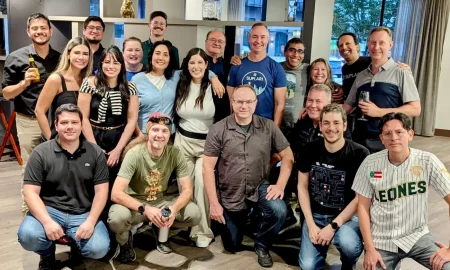



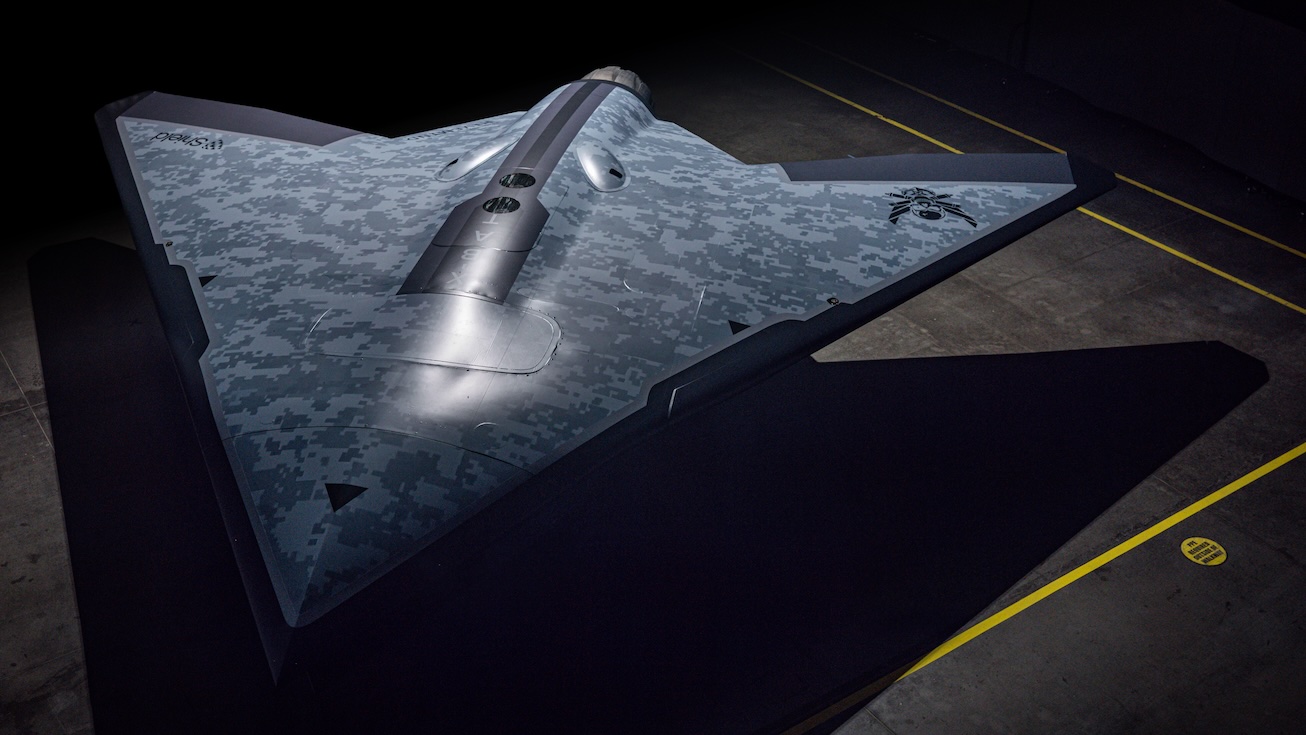
In the unassuming industrial corridors of Frisco, Texas, a quiet but monumental revolution in military aviation has just been welded, bolted, and wired into existence. Shield AI, a defense technology firm that has built its reputation by aggressively upsetting the slow-moving apple cart of Pentagon procurement, has just rolled out the first full-scale prototype of its X-BAT autonomous fighter jet. This milestone was achieved in a stunning twelve months, a pace that borders on heresy in an industry where it can take over a decade just to decide on the shape of a cockpit or the placement of a rivet. The machine, freshly born from the drawing boards, is now carefully packed and heading to the vast, open skies of Kansas, specifically to the Newton City-County Airport, where the company has established its dedicated flight-testing ground. There, the engineers will push the boundaries of physics, aerodynamics, and software, preparing the aircraft for its first untethered leap into the atmosphere. Armor Harris, the senior vice president of aircraft engineering at Shield AI, speaks with the intensity of a man under siege, in the best possible way, emphasizing that this frantic pace is not merely a corporate strategy but a profound moral and tactical necessity. He articulates the driving force behind this breakneck speed with a clarity that cuts through the usual bureaucratic fog: “a capability is only useful if it arrives in time to matter.” In an era where conflicts can erupt, evolve, and shift within days rather than decades, waiting for a perfect, over-engineered aircraft means showing up to a fight armed with yesterday’s tools. The X-BAT represents a bet that speed, adaptability, and artificial intelligence can redefine the very nature of who gets to fly, what they fly, and how quickly a new weapon can go from a PowerPoint slide to a ready-to-launch silhouette lurking on the horizon.
While the prototype undergoes its physical trials in the heartland, the true economic and industrial impact of this endeavor is scheduled to unfold thousands of miles away, along the rainy, evergreen shores of Puget Sound. Shield AI has already thrown down a massive gauntlet in the Pacific Northwest, selecting Des Moines, Washington, as the home for its sprawling “X-Forge 3” manufacturing plant. This isn’t just a modest hangar; it’s a colossal 420,000-square-foot monument dedicated to the future of aerospace, strategically situated within the Des Moines Creek Business Park. When that facility swings open its doors in the spring of 2027, it will herald a seismic shift in the local job market and the regional economy. The company has been unequivocal about its ambitions, stating its intention to employ as many as 4,000 workers in the region by the early 2030s. For the legions of engineers, machinists, avionics specialists, and software developers who have weathered the cyclical storms of the traditional aerospace industry—the layoffs at legacy giants like Boeing and the countless smaller contractors that depend on them—this represents a rare and potent lifeline. It is a chance to build something genuinely new, unburdened by the legacy of commercial jetliners or the inefficiencies of legacy programs. The hiring managers have already begun the talent sweep, posting an extensive array of openings across avionics, mechanical design, software engineering, and aircraft assembly. The implications for Washington state are profound, positioning it not just as the historical birthplace of commercial jetliners, but as the cutting-edge capital of autonomous military aviation. The X-Forge 3 facility will be more than just a factory; it will act as a crucible of innovation where theoretical AI pilot software meets the gritty, tangible reality of aluminum, composite materials, and high-thrust turbofan engines. The company is betting that the region’s deep, generational pool of aerospace talent can pivot seamlessly from building passenger carriers to building autonomous warfighters that operate with a level of independent lethality never previously deployed at this scale.
So, what exactly is the X-BAT, and why should we, as taxpayers and observers of global power dynamics, care about this specific prototype? Let’s demystify the heavy jargon. Picture a sleek, angular fighter jet roughly the size of a small business jet, but with one crucial distinguishing factor: there is not a single human soul inside of it. It is piloted entirely by an artificial intelligence system that has ingested terabytes of flight telemetry, combat data, and tactical simulations. This is not a ground-controlled drone like the Air Force’s Predator was; this is a fully autonomous strike aircraft that can take off, navigate through contested airspace, engage enemy targets, and land entirely on its own accord, making split-second decisions that would overwhelm the cognitive limits of any human pilot. Unveiled to the public just last year, the X-BAT is designed to carry internal weapons bays loaded with up to 2,000-pound class ordnance, meaning it packs a devastating punch. Its combat radius is a staggering 1,000 nautical miles, a figure that decisively outpaces the Lockheed Martin F-35A’s estimated 590 nautical miles. This extended range means it can strike deep behind enemy lines while remaining safely distanced from threats, all without risking a trained pilot’s life. But the most bewildering and tactically dominant capability is its vertical takeoff and landing (VTOL) functionality. It hovers like a helicopter, transitions to high-speed jet flight, and then returns to a stable hover to land. The physics required to manage the thrust vectoring and the delicate control laws necessary for such a maneuver are nightmarishly complex, but the payoff is an operational flexibility that other fighters simply cannot match. This ability to operate without a concrete runway fundamentally alters the geometry of battle. The X-BAT launches from and returns to a mobile, trailer-mounted Launch and Recovery Vehicle—a clever piece of engineering that acts as the “aircraft carrier” of the land-based domain. This unassuming trailer can be hitched to a heavy truck and parked in a forest clearing, rolled off the deck of a naval destroyer, or hidden inside a camouflaged warehouse. The tagline “Earth is our Runway” isn’t just a clever marketing slogan; it’s the doctrinal reality that defines the entire project, acknowledging that the world’s massive, vulnerable airbases are becoming liabilities.
The strategic rationale behind this machine is grim, pragmatic, and undeniably compelling. Harris paints a stark picture of the modern battlefield when he notes that our adversaries have invested billions in long-range ballistic and cruise missiles designed specifically to turn static airbases into burning graveyards of expensive, non-replaceable hardware. As he astutely points out, “Aircraft are hard to shoot down in the air, but easy to destroy when they’re on the ground.” Traditional air power is a stunningly visible target; a multimillion-dollar fighter jet is parked on a well-known pad, exposed to constant satellite surveillance and pre-targeted by enemy missile batteries. In any future conflict, the opening salvo would likely decimate these bases within the first few minutes, effectively neutralizing the defender’s formidable air force before a single sortie can even be launched. The X-BAT dissolves this vulnerability by completely eliminating the centralization of air power. Instead of concentrating hundreds of millions of dollars’ worth of aviation assets into a single, known location, the X-BAT allows militaries to disburse their strike capability into the backwoods of the theater of operations. Each aircraft can be tucked away in a modified shipping container, in a farmer’s barn, or under the dense canopy of a pine forest. The Launch and Recovery Vehicle makes this hide-and-seek distribution eminently practical, allowing a small convoy of trucks to operate as a distributed, roaming “ghost airfield” that can reposition itself every few hours. Consequently, the adversary’s reconnaissance assets—satellites, high-altitude drones, and spy planes—are forced to scan an entire continent rather than just a handful of tarmac strips to locate the hidden warplanes. This forces the enemy into a resource-intensive, frustrating game of hide-and-seek, tying up their intelligence apparatus just to try and find where the strikes are coming from. The X-BAT effectively forces the enemy to take all those overhead surveillance assets looking down at our vulnerable bases and turn them into hunters looking for a needle in a haystack. If the autonomy works flawlessly, the X-BAT redefines force projection by allowing a platoon of less-specialized soldiers to project fighter-like air power, breaking the traditional air force monopoly on striking power and making it vastly more survivable and flexible.
Building this kind of paradigm shift requires deep pockets, and the financial firewall behind the project is massive, signaling a tangible shift in how the government and private markets view investment in AI-centric defense hardware. Just last month, the U.S. Navy awarded Shield AI a $150 million contract modification through the Pentagon’s Defense Exportability Features program, which was immediately matched dollar-for-dollar by an additional $150 million in private Shield AI funds. Combined with an earlier $100 million collaborative award from the Navy and the Defense Innovation Unit in August, the X-BAT program is now backed by approximately $400 million in total funding. This capital is accelerating the timeline to reach the production line in Des Moines, with the first Washington-built X-BAT set to roll off the line in 2028 and full-rate production ramping up to an unprecedented 150 aircraft per year by the early 2030s. For context, that kind of production volume for a cutting-edge combat aircraft is absolutely unheard of in the era of bespoke, hand-built stealth fighters. The company’s financial war chest is further padded by a staggering $2 billion venture capital round, which valued the company at a whopping $12.7 billion earlier this year. At the helm of this tidal wave is co-founder Brandon Tseng, a former Navy SEAL. Tseng’s background is not in locking himself away in a corporate boardroom; it’s in understanding the gritty, chaotic realities of asymmetric warfare, where small units need immediate air cover without waiting months for a massive carrier strike group to sail into range. He and his team are leveraging the agility of the private sector to force a long-overdue cultural shift in the defense industrial base, pushing against the stagnation of legacy contractors who often take decades to produce a single aircraft. The sheer velocity of the development cycle—from a clean sheet of paper to a flying prototype in just 12 months—is a direct challenge to the accepted norms of the military-industrial complex. The message to the Boeings and Lockheeds of the world is clear: adapt to the silicon age or be bypassed by digital-native startups with lower overheads, a higher tolerance for risk, and a razor-sharp focus on operational urgency.
Of course, a prototype is merely a heavy paperweight until it proves it can survive the brutal physics of flight. The engineering team at Shield AI is now in the throes of a meticulously orchestrated, multi-phase testing gauntlet in the skies over Kansas. The first stage involves horizontal and vertical engine runs, a truly bizarre sight to witness. They take the massive GE Aerospace F110-GE-129E engine—the same kind of powerplant that propels F-15s and F-16s—and run it while the aircraft lies horizontally on its mobile launch trailer. Then, they slowly tilt the entire assembly upright to test how the engine and the flight control software manage the massive thrust in a vertical orientation, a critical step for ensuring the VTOL mechanics work safely. The next phase is an exercise in controlled paranoia: tethered crane testing. The jet is suspended from a massive industrial crane purely as a safety mechanism. If the AI or the engines hiccup during a hover attempt, the crane prevents a spectacular crash from turning into a pile of expensive, scrapped aluminum, allowing the engineers to diagnose any failures in real-time without destroying their million-dollar asset. Finally, after these initial data points are validated, they will conduct untethered flight trials, freeing the prototype from its artificial leash to conduct free-flight trials and widen the aircraft’s launch-and-recovery envelope. This is the moment of truth, where they chase down all the inherent instabilities of transitioning from a stable hover to fast, horizontal flight. Harris frames this progression with the confidence of a veteran engineer who has been grinding for years to reach this point, stating, “We’ve built the first aircraft. Now it’s time to go prove what it can do.” The stakes of this proof are high, not just for Shield AI as a company, but for the entire concept of autonomous, distributed warfare. If the tests succeed, the X-BAT will pave the way for a future where human pilots are shifted from the cockpit to the command center, supervising entire swarms of AI-piloted jets. For the workers in Des Moines, the investors in Silicon Valley, and the soldiers on the ground, this marks a definitive shift in how air supremacy is achieved. The days of the fragile, $100 million stealth fighter being used as a precision scalpel are being supplemented by a proliferated swarm of expendable, intelligent, agile drones that can run the gauntlet of air defenses without a single tear shed at home. The 12-month sprint to get the prototype to Kansas is a testament to what happens when a team is driven by a singular, unrelenting sense of purpose—a reminder that in the complex landscape of the 21st century, victory belongs to the swift, the smart, and the unrelenting.