




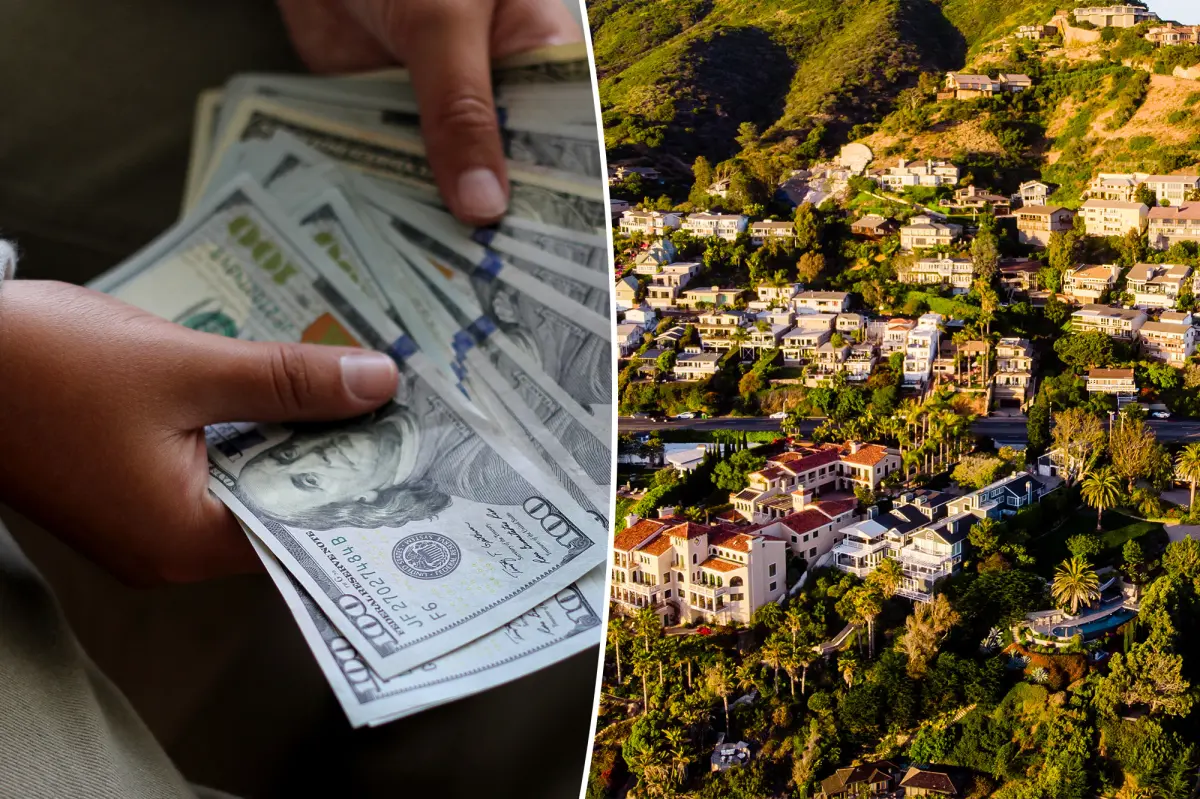
The Fading Value of the California Dream
There’s something almost poetic about watching a paycheck dissolve in the Golden State. You work hard, you earn your money, and then you watch it slip through your fingers like California sunshine—beautiful but impossible to hold onto. The state that promises golden dreams has quietly become the place where dollars go to die, or at least to shrink. According to recent data, California has earned the unenviable title of being the most expensive state in the entire country, where a crisp $100 bill manages to buy only about $90 worth of actual goods and services. That’s not just a small discrepancy; it’s a profound difference that touches every single aspect of daily life, from the morning coffee run to the monthly mortgage payment that seems to grow with each passing year.
What makes this particularly striking is the contrast with the rest of the country. While Californians watch their money evaporate before their eyes, residents in states like Arkansas and Mississippi are discovering that their dollars stretch remarkably further. In those states, the same $100 bill transforms into $115 worth of purchasing power. Imagine that difference adding up over a year of groceries, gas, utilities, and rent—it’s the kind of gap that can mean the difference between financial stability and barely scraping by. For a family in Little Rock, that extra buying power might mean a family vacation, a college fund contribution, or simply breathing room at the end of each month. For a family in Los Angeles or San Francisco, it means working harder just to stay in place, watching their savings accounts grow at a snail’s pace while their expenses sprint ahead at full speed.
The numbers tell a stark story of geographic inequality that stretches across the American landscape. Oklahoma and Iowa aren’t far behind the leaders, with $100 worth $114 in both states. Alabama, Louisiana, and South Dakota round out the top tier at $113, giving their residents nearly a quarter more purchasing power than their California counterparts. Even California’s immediate neighbors offer some relief, though modest. In Nevada, $100 holds its value perfectly at exactly $100, while Arizona offers $99 and Oregon provides $97. It’s a reminder that you don’t have to travel across the country to find economic relief—sometimes just crossing a state line can make your money work a little harder for you. Only Hawaii comes close to matching California’s dismal numbers at $91, with New Jersey at $92 and New York and Washington tied at $93, creating an expensive coastal corridor that stretches from the Pacific to the Atlantic.
So where exactly does all that money go? The answer lies in a perfect storm of costs that pile up before you even reach the checkout counter. California’s tax structure alone feels designed to drain wallets dry, with the nation’s highest state income tax brackets topping out at over 13 percent. That means the more successful you are, the more the state takes its cut, creating a system that punishes ambition and rewards mediocrity. But income tax is just the beginning. Gas prices in California routinely rank among the highest in the nation, fueled by taxes that exceed 60 cents per gallon, making every commute to work feel like a small fortune. The state’s complex regulatory environment drives up utility rates, and local sales taxes can push the cost of everyday purchases into uncomfortable territory. By the time you’ve paid for housing, which in many California cities consumes an astronomical percentage of household income, there’s simply not much left for the things that make life enjoyable.
This economic divide represents more than just a headline-grabbing statistic; it’s a fundamental reshaping of the American landscape that affects where people choose to live, work, and raise their families. Young professionals weighing job offers in Silicon Valley against positions in Austin or Nashville are increasingly looking beyond the salary number to consider what that money will actually buy. Remote workers who once dreamed of California coastal living are discovering that they can earn similar incomes while living in states where their money goes significantly further. Families are making agonizing decisions to leave behind support networks and beloved communities because the math of staying just doesn’t work anymore. The dream of California, sold to generations of Americans through movies, music, and mythology, is being quietly replaced by a more practical calculus about what it really costs to live there and whether that cost is worth paying.
The disparity raises fundamental questions about what we value as a society and how we measure success. California offers unmatched natural beauty, a thriving innovation economy, and cultural diversity that few places can match. But all of that comes with a price tag that increasingly feels insurmountable for average families. When your basic necessities consume nearly everything you earn, the opportunities to save, invest, and build wealth become nearly impossible. The California paradox is that a state responsible for creating some of the world’s most valuable companies and innovative technologies has made it almost impossible for the people who power those industries to live comfortably. Grocery store checkout lines are filled with residents who are doing the math in their heads, mentally comparing prices on everything from eggs to laundry detergent to that $5 loaf of artisanal bread that once seemed reasonable but now feels like an unaffordable luxury.
As WalletHub put it in their social media post accompanying the analysis, your $100 might be worth more than you think—or it might disappear faster than you can say checkout. For Californians, unfortunately, it’s decidedly the latter. The analysis, based on the latest local price data from the Bureau of Economic Analysis, confirms what residents have known for years: living in the Golden State requires either immense wealth or immense sacrifice. The middle ground, where most Americans live, is getting harder to find every day. While policymakers debate housing reforms and tax relief measures, families continue to make their own decisions about where their futures lie, often choosing communities where their dollars don’t just survive but actually thrive. The math, after all, doesn’t lie. A dollar in Arkansas is simply worth more than a dollar in California, and for many Americans wrestling with the high cost of living, that fundamental truth is becoming impossible to ignore.