


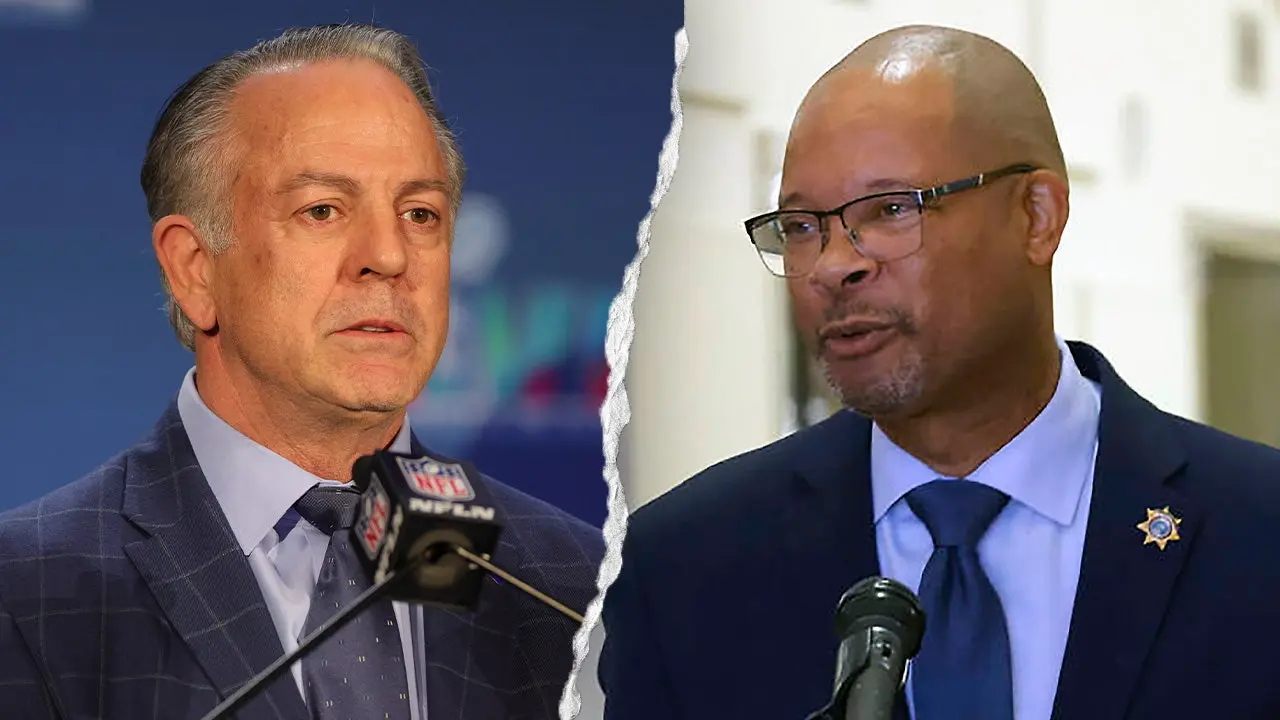
One of those election nights that feel both sudden and inevitable arrived in Nevada, and when the dust settled, the state had chosen a new direction. Democrat Aaron Ford, the state’s attorney general, defeated Republican Governor Joe Lombardo, according to the Associated Press, in a race that had become one of the most intensely watched gubernatorial contests in the country. For Democrats, this was more than a victory; it was a reclaiming. For Ford, it was a history-making moment that breaks a barrier that has stood since Nevada became a state. He will be the first Black governor in Nevada’s history, a fact that carries enormous symbolic weight in a state as diverse and ever-changing as any in the West. But beyond the milestone, the election was fundamentally about the everyday pressures weighing on Nevada families. Voters went to the polls with groceries, gas, and rent still painfully high, with schools struggling to recover from pandemic fallout, and with a sense that the state’s economy, built heavily on tourism and gaming, had not yet become resilient enough to support all its residents. Ford ran directly at those anxieties, promising not just a different leader but a different approach—one centered on affordability, housing, education, healthcare, and the protection of abortion rights. His victory hands Democrats the governor’s mansion for the first time since Lombardo defeated Steve Sisolak in 2022, and it also signals a possible realignment in a state that has repeatedly proven itself one of the nation’s most decisive battlegrounds.
Ford’s path to the governor’s office was not built overnight. Since 2019, he had served as Nevada’s attorney general, and in that role he became a familiar and often combative figure in the state’s legal and political battles. He regularly challenged Trump administration policies in court, earning a reputation as a Democrat willing to use the power of the state to resist federal overreach. That experience shaped his campaign message and his promise to be a governor who would not simply defer to Washington. Throughout the race, Ford talked about the struggles of working- and middle-class families in Nevada with a specificity that felt personal. He pointed to soaring housing costs, especially in the Las Vegas and Reno metropolitan areas, where affordable homes have become increasingly rare and rents have climbed far faster than wages. He spoke about utility bills that keep rising, about families who have to choose between paying for childcare and paying for the electricity, about teachers and nurses who cannot afford to live in the communities they serve. His platform was built on the idea that the state’s prosperity, such as it is, has not been widely shared, and that the Lombardo administration had not done enough to ease the strain. On the campaign trail, Ford argued that Nevada needed a governor who could simultaneously stand up to the federal government and bring real solutions home—who could fight for federal funding and immigration policies that respected the state’s values while also tackling the cost-of-living crisis that was squeezing residents from every direction.
The contrast with Lombardo could not have been sharper. Governor Lombardo, who had served as Clark County sheriff before entering the governor’s office, ran as a law-and-order Republican with a record to defend. He pointed to his administration’s increases in education funding, its expansion of workforce development programs, and its efforts to diversify Nevada’s economy beyond the familiar pillars of casino floors and convention halls. He argued that his approach to public safety had made Nevada stronger, and he framed his re-election bid as a validation of the work he had already done. But Ford repeatedly attacked Lombardo for aligning himself with President Donald Trump and the national Republican agenda. In a state where labor unions are powerful, where a large Latino population has deep ties to immigration issues, and where voters have consistently protected abortion rights, that alignment was a risky bet. Ford argued that Lombardo had become too closely tied to a national party that many Nevadans viewed as extreme on abortion, immigration, and voting rights. He insisted that the state needed a governor who would challenge the administration when necessary rather than simply echo it. Lombardo, for his part, countered that his relationship with the president benefited Nevada, and he accused Ford of being a rubber stamp for progressive policies that would raise taxes and expand government without a clear plan to pay for them. The race became a referendum not only on Nevada’s future but on what kind of governor is best suited to navigate the tension between local needs and national politics.
Money and policy proposals became central battlegrounds in the campaign’s final stretch. Lombardo’s team released an analysis claiming that fully implementing Ford’s platform would cost billions of dollars over four years, a figure they argued would require massive tax increases or devastating cuts to existing services. Ford rejected that analysis as misleading, insisting that his proposals relied on realistic assumptions and a combination of existing state resources, federal funding, and policy reforms. He argued that Lombardo’s own administration had included spending mechanisms and projections that were not actually part of Ford’s plans, distorting the true cost of his agenda. For many voters, the clash over numbers was less important than the question of whether their own financial lives would improve. Housing, in particular, emerged as the defining issue of the race. Nevada has long struggled with a shortage of affordable homes, and the pandemic only made the problem worse. As remote workers moved into the state and investors snapped up properties, home prices soared, rents followed, and the dream of homeownership drifted further out of reach for many working families. Ford proposed measures to increase housing supply, protect renters, and ease the burden on first-time buyers. Lombardo defended his record of economic development and argued that the best way to address housing costs was to grow the economy and create higher-paying jobs. The two also clashed over energy costs, which have risen sharply in Nevada in recent years, and over how to handle the state’s growing energy demands. Data centers and other large industrial projects have put enormous pressure on Nevada’s power grid, and Lombardo welcomed them as engines of economic growth. Ford warned that economic development should not come at the expense of residents who were already struggling to pay their bills, and he promised to ensure that growth was managed in a way that did not leave ordinary families behind.
Beyond the economic issues, the campaign touched on nearly every fault line in American politics. Abortion was a major mobilizing force. Nevada has a history of protecting reproductive rights, and Ford campaigned forcefully on defending and expanding access to abortion. Lombardo, who had said he would not support a federal abortion ban and described himself as a moderate on the issue, still faced criticism from abortion rights advocates who worried about the direction of the national Republican Party. Crime and public safety also played a significant role. Lombardo highlighted his background as Clark County sheriff and argued that his administration had kept Nevada safe. Ford, while not dismissing public safety concerns, insisted that safety meant more than policing—it meant investing in schools, mental health services, and economic opportunity. Immigration was another flashpoint. Nevada’s large immigrant community made the issue deeply personal for many families, and Ford promised to stand against federal policies that threatened the rights of Nevadans. He also emphasized voting rights, arguing that democracy itself was at stake in the election. The candidates’ visions for the state’s reliance on tourism and gaming also diverged. Lombardo emphasized the importance of supporting the industries that have long been the backbone of Nevada’s economy, while Ford argued that the state needed to diversify and protect its workers from the boom-and-bust cycles that have always defined Las Vegas and Reno. The result was a campaign that felt less like a simple choice between two individuals and more like a choice between two very different futures for the state—one rooted in the politics of the past, the other promising a more inclusive and sustainable path forward.
Now that the race is over, Ford faces the enormous challenge of governing a state that has high expectations and limited resources. He enters office with significant advantages: Democrats control both chambers of the state Legislature, giving him a unified government and a real opportunity to pass his agenda. But governing is rarely as simple as holding a majority, and Ford will have to navigate the competing demands of a legislature that includes moderates and progressives, urban and rural interests, and powerful labor unions alongside business groups that want to keep Nevada attractive to entrepreneurs and investors. Taxes, education spending, public safety, and the state’s business climate are all likely to spark intense debate. Ford will also have to deliver on his promise to challenge the federal government. As attorney general, he was a frequent litigant against the Trump administration, and his election is likely to make Nevada a more prominent Democratic counterweight to Washington in the years leading up to the 2028 presidential election. For many Nevadans, the hope is that Ford’s leadership can bring a sense of stability and fairness to a state that has been buffeted by economic upheaval, a pandemic, and political division. The stakes are high, and the challenges are real. But for the first time in years, the governor’s office in Nevada will be held by someone who made history, who promised to fight for working families, and who will have the power to try to turn those promises into reality. Whether he succeeds will depend not only on his own leadership but on the willingness of the people and their representatives to come together and do the difficult work of building a state where everyone, not just the fortunate few, can share in the promise of Nevada.