


The Unlikely Rise of California’s Comeback Kid
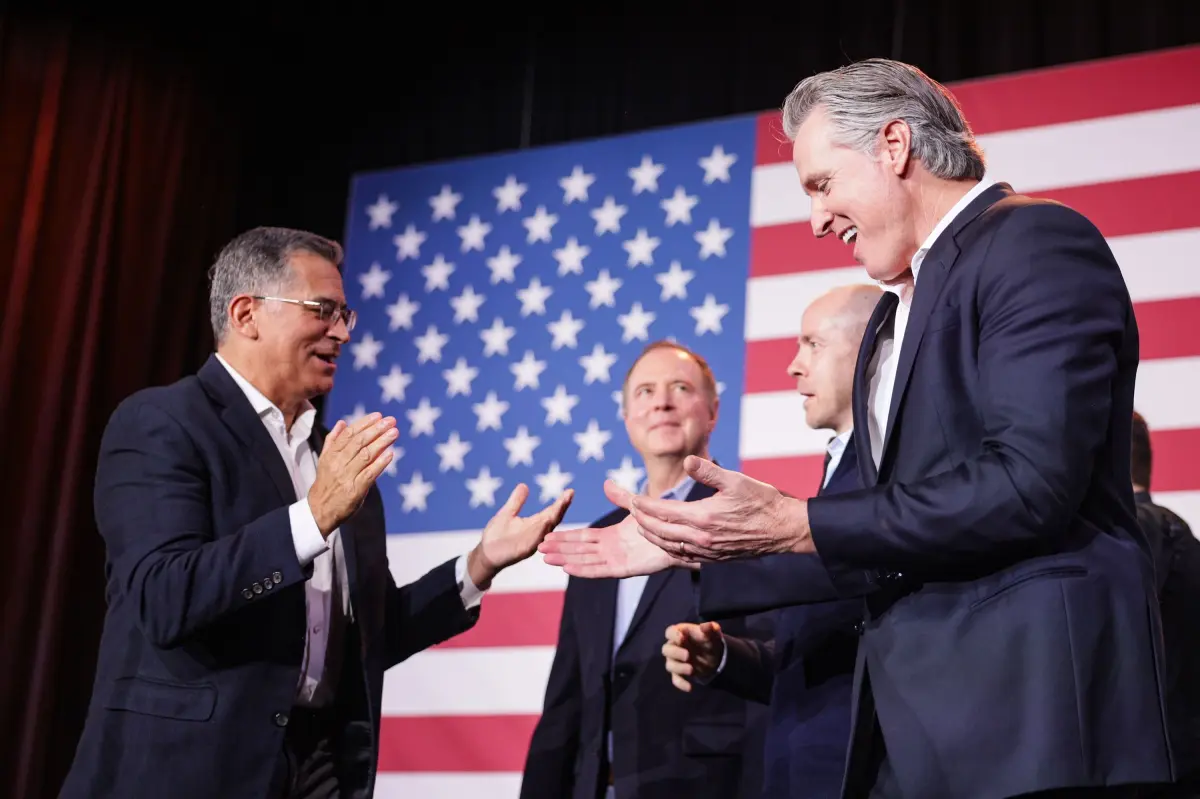
In a stunning turn of events that left political observers across the nation scratching their heads, Democrat Xavier Becerra emerged victorious in California’s gubernatorial race on Tuesday, defeating Republican challenger Steve Hilton by a comfortable margin. The Associated Press called the race for Becerra almost immediately after polls closed at 8 PM, before a single ballot had been counted. Just months ago, this outcome seemed virtually impossible, as Becerra languished in sixth place in early primary polls, struggling desperately to even secure a spot on the debate stage. His campaign, criticized by many as lackluster and uninspiring, appeared destined for obscurity. Yet here he stands, poised to succeed Governor Gavin Newsom, who will be officially replaced when Becerra takes the oath of office in January. The victory represents one of the most improbable political comebacks in recent California history, a testament to the unpredictable nature of politics and the strange twists of fate that can transform an also-ran into a state’s highest-ranking official.
Becerra’s journey from political afterthought to governor-elect reads like a script from a Hollywood political drama, complete with scandal, billionaire spending, and a fortunate collapse of his primary competition. The turning point came when the Democratic frontrunner, former Congressman Eric Swalwell, saw his campaign implode spectacularly following multiple public accusations of sexual assault from several women. Swalwell, who had been married with three children, denied any wrongdoing beyond personal failings, but the damage was done. He suspended his campaign and resigned from Congress, leaving California Democrats scrambling for a viable alternative. Suddenly, Becerra’s extensive résumé—which spans his time as California Attorney General, Congressman, and Biden’s Health Secretary—transformed from a liability into an asset. His position as a safe, if somewhat bland, choice became his greatest strength in a political climate where Democrats desperately needed a candidate who could avoid controversy and unite the party. By the time the June primary rolled around, Becerra had edged out billionaire Tom Steyer, who had dumped a record-breaking $200 million into his campaign, and progressive rival Katie Porter, securing his place in the November runoff.
The irony of Becerra’s victory lies in the fact that he succeeded by offering voters little in terms of grand vision or inspirational rhetoric. Instead, his campaign leaned heavily on his established record and his ability to serve as a reliable Democratic standard-bearer in a state where Democrats outnumber Republicans 45% to 25% in voter registration. “He’s really the California comeback kid,” remarked Democratic political consultant Steve Maviglio, reflecting on the remarkable turn of events. “You gotta remember, for months we were talking about how we might not even have a Democrat to vote for. That was a real scenario back then.” Becerra’s years as Attorney General proved valuable, giving him a record to run on in a race where Democrats were competing to see who could take the hardest line against President Trump. “He had receipts because of all the lawsuits,” Maviglio noted, referencing Becerra’s numerous legal battles against the federal government during his tenure as the state’s top law enforcement officer. This history of resistance against Republican policies resonated with California voters who viewed the state as a bulwark against conservative governance.
His opponent, Steve Hilton, a former Fox News host and adviser to British Prime Minister David Cameron, faced an almost insurmountable challenge running as a Republican in overwhelmingly blue California. Despite carrying President Trump’s endorsement and presenting a detailed policy platform addressing the state’s affordability crisis—including proposals for $3 gas, $73 car registration, and eliminating income taxes on the first $150,000 of earnings—Hilton was fighting against political arithmetic that heavily favored his Democratic opponent. In his final message to voters, Hilton posted a video from a perch overlooking the Golden Gate Bridge, highlighting California’s natural beauty and innovation while questioning why so many residents and businesses had been fleeing the state in recent years. “Despite all our incredible advantages, people have been leaving California,” Hilton lamented. “Millions of people moving to other states without anything like what we have to offer, businesses moving to other states. Why would anyone leave such an incredible place as this?” He attributed the exodus not to the state itself but to its government, a message that ultimately failed to resonate with enough voters to overcome California’s Democratic stronghold status.
As Becerra prepares to take office on January 4, 2027, he inherits a state facing significant challenges that have left many Californians feeling pessimistic about their future. A recent California Post poll found that 56% of likely voters believe California is on the wrong track, with economic issues ranking as their top concern. The poll, which surveyed 800 likely voters, revealed that 44% had seriously considered leaving the state. Sky-high housing costs, persistent homelessness, an ongoing structural budget deficit, and the constant threat of federal immigration enforcement actions loom large over his incoming administration. Voters expressed particular anxiety about the cost of living, which has driven millions of middle-class families to relocate to more affordable states in recent years. Becerra’s policy proposals have been notably light on specifics, but he has pledged to expedite building permits, utilize public land and state financing to increase housing construction, and enforce housing laws against cities that fail to meet their obligations. On healthcare, he has promised to move the state toward universal coverage while protecting existing coverage from federal cuts. He has proposed automating Medi-Cal renewals to prevent eligible patients from losing coverage due to paperwork issues and creating a fraud task force to address abuses in hospice care and other services.
Political analysts see parallels between Becerra and past governors Gray Davis and Jerry Brown—both of whom governed with a pragmatic, businesslike approach during challenging economic times. Maviglio suggests that Becerra will work closely with the Legislature and focus heavily on addressing the state’s cost-of-living crisis, recognizing that voters have made clear their frustration with the status quo. Becerra weathered attacks on his record during the campaign, particularly criticism from former colleagues who sharply criticized his leadership at the federal health department, with one former Biden official describing him as hapless and even callous in his handling of a child migrant crisis at HHS, allegedly referring to vulnerable minors as ‘little Juanitos and Juanitas.’ Despite these attacks, California voters ultimately chose stability and experience over the alternative, delivering a decisive victory that validates Becerra’s approach of letting his record speak for itself. As he prepares to assume California’s highest office, Becerra embodies the unexpected nature of American politics—a career public servant who, after decades in the political wilderness of Washington and Sacramento, finally found himself in the right place at the right time, ready to lead the nation’s most populous state through its next chapter of challenges and opportunities.