

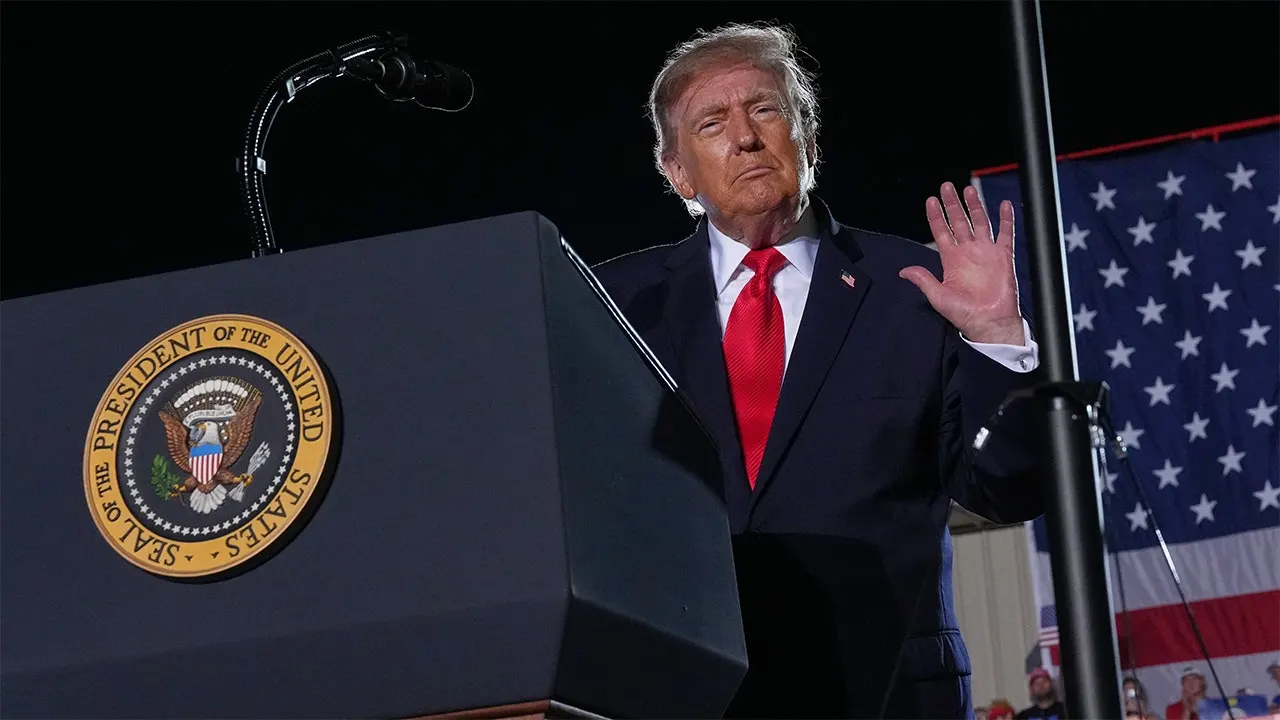
It’s Election Day in America again, and after months of shouting, fundraising, and frantic door-knocking, the moment has finally arrived for voters to have their say. This is no ordinary Tuesday, and the stakes are enormous: the entire U.S. House of Representatives, a third of the Senate, dozens of governorships, and countless state legislative seats are on the ballot. The next two years of President Donald Trump’s final term will be shaped by what happens in voting booths from tiny rural precincts to bustling city centers. Republicans are defending painfully slim majorities in both chambers of Congress, and Trump has been on a whirlwind tour trying to convince his supporters that the GOP will not just survive but thrive. “We’re going to win and let’s make the next two years bigger and better and stronger than ever before,” he told a crowd in Kansas on the eve of the election. But history is not on his side. In nearly every midterm election, the party that holds the White House loses ground. On top of that, Republicans are grappling with an unhappy electorate, squeezed by persistent inflation and weary of a war with Iran that remains deeply unpopular. Trump’s own approval rating has been slipping, and polls suggest Democrats are more fired up to actually show up and vote. More than 54 million people have already cast ballots through early voting, shattering previous records by nearly nine million, and since early voting has traditionally been a Democratic strength, all eyes are on whether Republicans can make up the difference on Election Day itself. As Republican National Committee Chair Joe Gruters put it bluntly, “If our voters turn out, we win.” That simple sentence may prove to be the whole ballgame.
The battle for the Senate is a statistical knife fight. Right now, Republicans hold a 53-47 majority, which means Democrats need to flip four seats to take control. Republicans need to hold at least 50 seats because Vice President JD Vance would break any tie. Every single race matters, and the Republicans are playing defense on a surprisingly wide map. The Fox News Power Rankings, along with most independent handicappers, list Alaska, Iowa, Maine, Nebraska, Ohio, South Carolina, and Texas as pure toss-ups, and GOP-held seats in Kansas and Ohio are also looking shaky. One of the most striking stories is in deep-red Kansas, where a Democratic pastor named Adam Hamilton is trying to do something no Democrat has done in nearly a century: win a Kansas Senate seat. He’s challenging Republican Senator Roger Marshall, and the race has tightened so much that the Fox News Power Rankings shifted it from “Lean Republican” to “Toss-up” just hours before the polls opened. Hamilton’s campaign has tapped into frustration among farmers dealing with high costs and suburban voters tired of chaos, and his candidacy has become a symbol of how unpredictable this election really is. Democrats are also playing defense themselves, with competitive races in Michigan, Minnesota, and New Hampshire, so the path to a majority is not a one-way street. If Democrats manage to flip the Senate, they will have accomplished something that seemed unlikely just a year ago. Democratic National Committee Chair Ken Martin sounded almost giddy in his Election Eve message, saying, “Think of what is possible tomorrow: Democrats can flip the House, take back the Senate, and stop Trump’s harmful agenda.” But even if the GOP loses the Senate, a narrow Democratic majority would offer little room for error, and every vote in the chamber would become a high-stakes drama. The Senate is truly a coin flip, and the outcome may not be known until the last ballots are counted in the early morning hours.
The House is an equally tense affair, but the math is even more delicate. Republicans are holding onto a razor-thin majority, and Democrats only need a net gain of three seats to reach 218 and reclaim the speaker’s gavel. The Fox News Power Rankings suggest Democrats could have a very good night and end up with as many as 240 seats, which would be a decisive victory. But if Republicans manage to defy the political headwinds, they could still end up with 212 seats, which would leave them just short of a majority but close enough to give the next Democratic speaker an absolute nightmare trying to balance the demands of the party’s moderate and far-left wings. Early results from Kentucky’s 6th District, which covers Lexington and a broad swath of central Kentucky, will offer some of the first clues about the night ahead. Trump won that district by fifteen points in the last presidential election, but this year it looks genuinely close, thanks to a strange coalition of left-leaning college voters and farmers who are hurting from higher costs. As Remy Numa, who helps steer the Fox News Power Rankings, pointed out, keeping an eye on that district will tell you whether the “blue wave” is real or just a mirage. The same dynamic is playing out in governor’s races across the country. There are currently 26 Republican governors and 24 Democratic governors, and the battle to control statehouses is fierce. Alaska, Nevada, Georgia, and Wisconsin are all rated toss-ups. Florida, Kansas, and Texas lean Republican, while Arizona, Iowa, Michigan, Ohio, and Oregon lean Democratic. Governors matter more than ever because they sign or veto laws on everything from abortion to voting rights to education policy, and this year’s results will set the stage for the next decade of redistricting and legal fights. A wave in one direction could transform state government for a generation, not just in Washington, D.C., but in state capitals from coast to coast.
Beyond the candidates, voters are also deciding on a dizzying array of ballot measures that touch daily life in deeply personal ways. Eleven states, including Alaska, Arizona, Arkansas, California, Colorado, Kansas, Nevada, North Carolina, Ohio, South Dakota, and West Virginia, are voting on voter identification requirements or bans on noncitizen voting. These measures reflect a national debate over election integrity and access, and the results could reshape how millions of people cast their ballots in future elections. Alaska is having a particularly heated referendum to repeal its ranked-choice voting system, open primaries, and campaign finance disclosure rules, a system that voters narrowly approved in 2020 and kept in 2024 but that has come under new scrutiny because of a controversial spoiler candidate in the state’s Senate race. Virginia is asking whether convicted felons should automatically regain the right to vote after they are released from prison. But the most headline-grabbing measure is California’s Proposition 40, a first-of-its-kind proposal to slap a one-time 5% tax on the wealth of Californians worth over $1 billion, with most of the money going to healthcare. It’s a bold experiment in taxing extreme wealth, and the entire country is watching to see whether it passes. Washington state is also wrestling with wealth and income taxes, as voters decide whether to repeal a new 9.9% tax on income over $1 million a year, a tax that strikes many in a state without a personal income tax as a fundamental shift in how government raises money. Redistricting is on the ballot in Maryland, Missouri, and Colorado, setting up another battle over political maps ahead of the 2028 census. And in an election that feels deeply personal, four states are voting on transgender students’ participation in sports, while Colorado will decide whether to block gender transition surgeries for minors and strip state and federal funding for those operations. Missouri is weighing a measure to repeal the right to abortion and ban gender transition care for children, while Idaho could overturn one of the nation’s strictest abortion bans. Virginia and Nevada are voting on establishing a right to abortion in their state constitutions. Meanwhile, California, Colorado, and Arizona have measures on energy policy, transportation, and development. No matter where you look, the ballot is full of choices that will affect families, classrooms, doctors’ offices, and wallets.
The logistics of Election Day are just as dramatic as the politics. Polls open and close at staggered times across the country, creating a rolling narrative that starts in the East and ends in the far reaches of Alaska. The first closings come at 6 p.m. Eastern time, when parts of Kentucky and Indiana wrap up voting. By 7 p.m., Georgia, South Carolina, Vermont, and Virginia are done, and the remaining polls in Kentucky and Indiana close, along with most of Florida and New Hampshire. At 7:30, North Carolina, Ohio, and West Virginia close, and by 8 p.m., a massive wave of states, including Alabama, Connecticut, Delaware, Illinois, Maine, Maryland, Massachusetts, Mississippi, Missouri, New Jersey, Oklahoma, Pennsylvania, Rhode Island, Tennessee, and Washington, D.C., shut their doors. Most of Texas, Michigan, Kansas, North Dakota, and South Dakota also close at that hour, with the remaining polls in those states closing an hour later. Arkansas closes at 8:30, followed by a huge block at 9 p.m. that includes Arizona, Colorado, Iowa, Louisiana, Minnesota, Nebraska, New Mexico, New York, Wisconsin, and Wyoming. At 10 p.m., Montana and Utah go dark, along with most of Idaho and Oregon. Then at 11 p.m., California and Washington state close, and the last polls in Idaho and Oregon follow. Hawaii and most of Alaska finish at midnight Eastern, and the final Alaska precincts close at 1 a.m. For political junkies, this schedule is like a slow-burn thriller, with each closing time narrowing the range of possible outcomes. But for ordinary Americans, it means a long night of refreshing websites and watching maps turn blue and red, with every state a tiny chapter in a much larger story that won’t truly be finished until the last vote is counted and the last race is called.
As the sun sets across the country, the biggest unknown remains the gap between what the polls say and what voters actually do. Public opinion surveys have pointed to a possible blue wave, but the same surveys also underestimated Republican support in recent elections, leaving everyone nervous and cautious. If Democrats are truly as energized as they seem, they could seize the House, flip the Senate, and fundamentally change the trajectory of Trump’s second term. If Republicans turn out in force, they could once again defy history, hold their majorities, and enter the final two years of Trump’s presidency with the power to push his agenda forward. The record-shattering early voting numbers tell us that people are engaged, passionate, and determined to be heard, but they don’t tell us which side has the advantage. What makes elections so beautiful and so terrifying is that every single vote really does count, and the outcome is never known until the polls close and the ballots are tallied. Across the country, election workers are setting up tables, checking machines, and preparing for what promises to be an extraordinary day. Campaign volunteers are making one last phone call, driving one last voter to the polls, and holding one last sign on the corner. In small towns and big cities, in living rooms and coffee shops, Americans are talking about their futures. Some are hopeful, some are angry, and many are simply tired of the noise. But they are participating, and that participation is the quiet heartbeat of democracy. No matter how the results turn out, this Election Day will be remembered as a moment when the country once again had to choose its own path. The polls are open, the ballots are ready, and the rest is up to the people.