


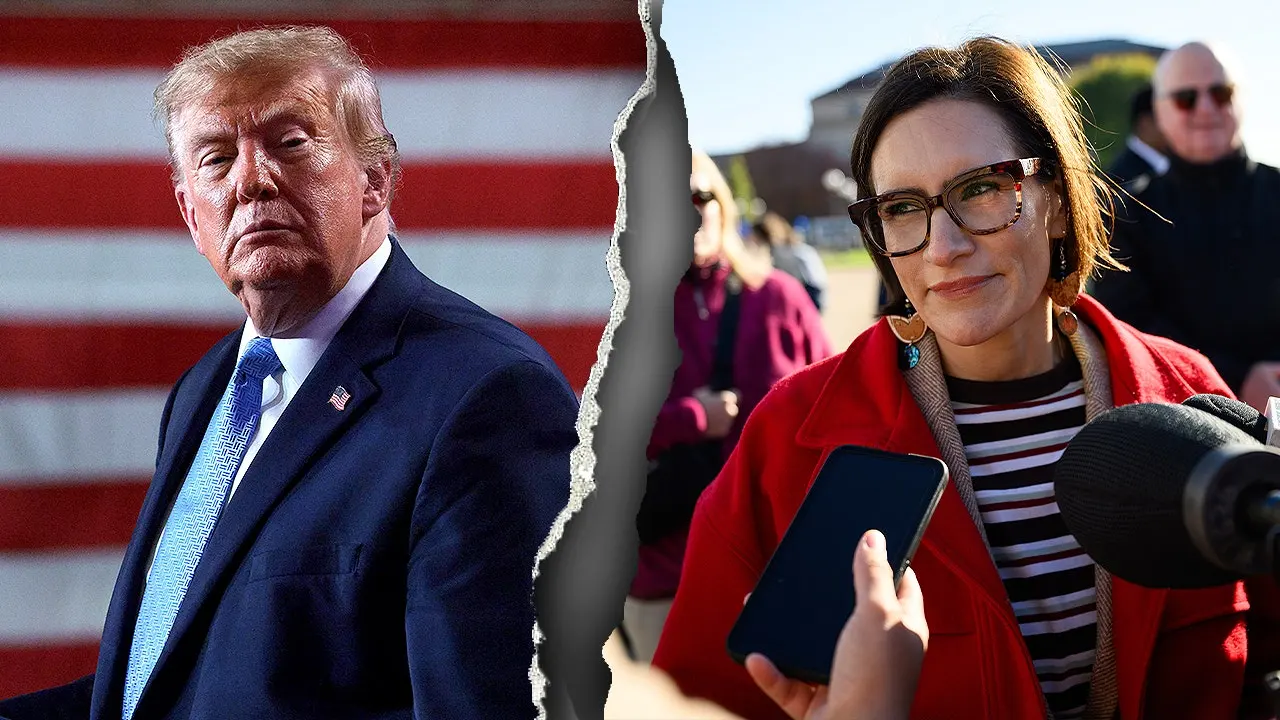
In a moment that captured the uncomfortable tightrope Democrats walk in battleground states, Minnesota Senate candidate Peggy Flanagan was asked point-blank on Fox News whether there was a single issue she could work with President Donald Trump on. The question, from Fox News’ Bill Melugin, should have been an easy one for any politician who claims to value bipartisanship. But Flanagan, the state’s lieutenant governor and the Democratic nominee for Senate, paused, touted her history of working with Republicans, and then swerved into an attack on the president’s character, accusing the administration of “continued grift” and refusing to name even one policy area where she could find common ground. The exchange laid bare a campaign caught between two realities: Flanagan’s carefully cultivated image as a consensus-builder in Minnesota politics, and the hard-left, Trump-resistant energy of the national Democratic base that she needs to turn out in November. It also underscored just how strange this Senate race has become. Minnesota, after all, is a state Democrats have reliably carried in presidential elections for decades. Yet here is Flanagan, a progressive who has called for abolishing ICE and expanding the Supreme Court, fighting for her political life against a former NFL sideline reporter with no elected experience—and the race is now considered competitive enough that Fox News shifted its rating from “Likely Democrat” to “Lean Democrat.” The moment on Sunday wasn’t just an awkward television appearance. It was a window into a campaign where the word “bipartisan” has become a shield, and where the question of working with Trump is not a matter of policy but of identity. For voters who watched the exchange, the takeaway was unmistakable: even when given an open invitation to extend an olive branch, Flanagan chose instead to fight. That instinct may energize her supporters, but it also raises a question that could decide the election: if she can’t name a single thing she’d work with the president on, what does that mean for the practical job of governing a state that needs federal help?
Flanagan’s refusal to give an inch to Trump was especially striking because she had just spent the first half of her answer building a case for herself as a practical, deal-making legislator. “I just want to be really clear that I’ve got a long track record of working with folks on the other side of the aisle,” she told Melugin. She pointed to her years at the Children’s Defense Fund–Minnesota, where she said she learned to build coalitions across ideological lines, and her time in the Minnesota Legislature, where she served alongside a Republican majority and helped pass bipartisan bills. “I think that, you know, that proves that I have the ability to work with folks,” she added. It was a classic political pivot—the kind of answer that sounds reasonable until you realize she never actually answered the question. The follow-up was what exposed the gap between her self-portrait and her agenda. When pressed on whether she could work with the president on anything, Flanagan didn’t mention infrastructure, or trade, or even a noncontroversial issue like veterans’ health care. Instead, she went straight to corruption. “Right now, I’m deeply concerned about the Trump administration, the continued grift, making money hand over fist directly from the Oval Office,” she said. She then explained that voters on the campaign trail aren’t asking her to find common ground with Trump at all; they want someone who will act as “a check” on the administration and “roll back some of the devastating cuts and impacts on Minnesota.” That’s a plausible reading of the Democratic primary electorate, but it’s a risky one in a general election. Flanagan’s platform includes some of the most aggressive progressive positions in recent memory: eliminating Immigration and Customs Enforcement, replacing private health insurance with a Medicare for All system, and fighting against the administration’s proposed cuts to Medicaid and SNAP. Those are not exactly the building blocks of a bipartisan appeal, and they gave Tafoya ammunition to paint Flanagan as a far-left ideologue rather than the pragmatic consensus-builder she claims to be. It is a contradiction that hasn’t been lost on political observers, who note that bipartisanship is meaningless if it never extends to the person you’d be forced to work with in the Senate.
On the other side of this race is Michele Tafoya, a well-known former NFL sideline reporter who has never held public office but has managed to turn the Senate contest into a real threat to Democrats. Tafoya’s strategy has been to make the race a referendum on the massive fraud scandal that unfolded under the watch of Democratic Governor Tim Walz—a scandal involving misused public funds in Minnesota’s child-care and nutrition programs. As Walz’s lieutenant governor, Flanagan was the No. 2 in the administration, and Tafoya has argued that she cannot escape responsibility for the mess. The charge clearly stings. At one point, Flanagan responded by trying to shift blame to Walz, a move that drew criticism from even some Democrats who said it made her look like she “knows she’s cooked” rather than defending her own record. Tafoya has also hammered Flanagan’s progressive positions, warning voters that a vote for Flanagan is a vote for Medicare for All and a dismantled ICE. “The more that Minnesotans learn about me and my opponent and see what my opponent has failed to do over the last eight years alongside Tim Walz, they’re understanding Minnesota needs change,” Tafoya said in a Fox News Digital interview. “We need fresh ideas, we need an independent thinker and they’re jumping on board.” But Tafoya isn’t running as a cookie-cutter Trump Republican. In fact, she’s making a deliberate effort to create distance from the president on at least one high-profile issue: abortion. In a new campaign ad, she declares: “I’m a pro-choice Republican not afraid to stand up to my party.” That message is unusual in today’s GOP and has drawn opposition from some conservatives, including Mercedes Schlapp, a senior fellow at the Conservative Political Action Conference. But Tafoya appears to be calculating that in a state like Minnesota, where support for abortion rights is strong, she needs to position herself as an independent voice who can work with Trump without being his lapdog. “When Trump is right, I will work with him. When he is wrong, I will stand up for Minnesota,” she says in the ad—a line that stands in stark contrast to Flanagan’s blanket refusal to name a single issue she’d work with the president on.
The race has developed a momentum that few political observers anticipated. Earlier this year, national handicappers considered Minnesota safely in the Democratic column, but Tafoya’s rise changed the math. Fox News moved its rating from “Likely Democrat” to “Lean Democrat,” a small but significant shift that signals a competitive contest in a state that has not sent a Republican to the U.S. Senate in nearly two decades. Flanagan has responded by trying to nationalize the race, tying Tafoya to Trump at every opportunity. “Michele Tafoya is all in for Donald Trump — and he’s all in for her,” Flanagan posted on social media last month. That’s a smart play in a state where Trump’s approval ratings have consistently been underwater. But Tafoya has managed to blunt the attack by drawing those careful distinctions, especially on abortion. She presents herself as a Republican who will support the president when she agrees with him and push back when she doesn’t—a classic moderate positioning that could appeal to independents and suburban women who have drifted away from the GOP in the Trump era. Trump, for his part, has enthusiastically embraced her. At a rally in Ohio, he told the crowd: “You have to vote for Michele Tafoya, who’s a very respected person.” The endorsement was a double-edged sword. On one hand, it energizes the base Tafoya needs to turn out. On the other, it gives Flanagan exactly the kind of visual she wants: Tafoya, arms linked with a president who is deeply unpopular in Minnesota. The question is whether voters will see Tafoya as an independent thinker willing to stand up to Trump, or as another Republican in lockstep with the White House. Flanagan clearly hopes it’s the latter. “They’re interested in whether people are going to be a check on this guy, and roll back some of the devastating cuts and impacts on Minnesota,” she said, framing the election as a choice between a loyal opposition and a rubber stamp. But her own refusal to name even a single issue on which she’d cooperate with the president undercuts her claim to be a bipartisan leader. It suggests that, for all her talk about reaching across the aisle, her actual instinct is to treat Trump as an illegitimate figure who cannot be worked with—only opposed.
Behind the political posturing, there are real people in Minnesota who will have to live with the consequences of this race. The fraud scandal that Tafoya keeps hammering on isn’t an abstract talking point. It involved the theft of public money from programs designed to feed low-income children and support working families—money that came out of state and federal budgets and that will ultimately have to be repaid by taxpayers. Many voters across the state, particularly in rural and suburban communities, are still angry about it. They want to know who was watching the books and why no one caught the problem sooner. Flanagan’s position as lieutenant governor makes her vulnerable to that anger, no matter how much she tries to blame her old boss. At the same time, there are voters who are just as angry about the Trump administration’s proposed cuts to programs like Medicaid and SNAP. They see those cuts as an attack on the most vulnerable people in the country, and they want a senator who will fight them tooth and nail. Flanagan’s message speaks directly to those voters. “Roll back some of the devastating cuts and impacts on Minnesota,” she said—a phrase that could be a campaign slogan in the state’s blue-leaning urban areas. But Minnesota is not just Minneapolis and St. Paul. It is also a state of small towns, farming communities, and exurbs where people are worried about inflation, the cost of health care, and whether the government can be trusted with their tax dollars. For those voters, Tafoya’s promise of independence and her focus on the fraud scandal may be more compelling than Flanagan’s list of progressive policy proposals. This is not just a clash of ideologies; it’s a clash of lived experiences. The race is shaping up to be a test of two very different visions of what a senator should be: a fighter for progressive ideals who sees compromise with Trump as moral surrender, or an independent-minded pragmatist who can work with the White House when it serves the state and push back when it doesn’t. The problem for both candidates is that their own records don’t fully match their campaign messages. Flanagan’s bipartisan history suggests she can work with Republicans on state issues, but her platform and her rhetoric make her sound like a partisan warrior. Tafoya’s ad says she’s pro-choice and independent, but her embrace of Trump’s endorsement tells a different story to the people who fear him most.
In the end, Flanagan’s Sunday interview may be remembered less for what she said than for what she didn’t say. When asked directly whether there was a single issue she could work on with President Trump, she couldn’t offer one. Not a compromise on infrastructure. Not an agreement on criminal justice reform. Not even a shared commitment to fighting the opioid crisis. Instead, she chose to attack the president’s integrity, accusing him of “continued grift” and turning the conversation to the need for a “check” on the administration. It was a revealing moment—one that shows how difficult it has become for any Democrat to acknowledge a sliver of common ground with Trump, even in a purple-ish state like Minnesota. And it gave Tafoya a ready-made contrast. Her campaign is built on a different premise: that you can be a Republican, support the president when you agree with him, and still say no when you don’t. Whether that message will resonate with enough Minnesota voters is the central question of the race. The polls are close, the national parties are paying attention, and both candidates are trying to define the other before voters make up their minds. Flanagan wants to paint Tafoya as a Trump loyalist who will rubber-stamp the president’s agenda. Tafoya wants to paint Flanagan as an incompetent progressive who was part of a scandal-plagued administration and can’t be trusted to be independent. In a state known for its fierce independence and its willingness to split tickets, that could be a winning formula for either side. But what seems certain is that this race will be decided by the kind of voters who don’t usually make headlines: the people who listen to interviews like the one Flanagan gave, who notice when a candidate says one thing and does another, and who want a senator who will fight for Minnesota first and worry about party labels later. In a way, the entire Senate race can be seen as a response to the same dysfunction that leaves voters frustrated—a struggle between the desire to stand on principle and the need to get things done in a broken political system. Flanagan may still win, but she’ll have to do it without ever telling those voters exactly what she would accomplish by working with the president. Tafoya may lose, but she has already forced the conversation toward accountability and independence. And in a political climate where so few people trust either party, that might be the most human thing of all.