

-
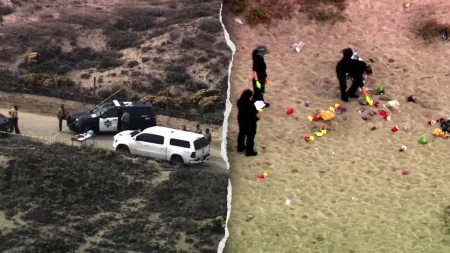
Early Monday morning, what should have been a peaceful stretch of coastline became the scene of a devastating tragedy. Multiple people were killed and several others were injured in a shooting near Moss Landing State Beach in California, according to authorities. The Monterey County Sheriff’s Office responded to reports of gunfire along Jetty Road shortly after midnight, and what they found has shaken the quiet coastal community to its core. In a brief press release, the sheriff’s office confirmed that there were “multiple fatalities and casualties,” though they did not immediately specify exact numbers. The incident unfolded under the cover of darkness, turning a place known for its calm waters and fishing boats into a crime scene marked by emergency lights and police tape. For local residents and visitors alike, the news was both horrifying and hard to process. How could a night on the coast, so often associated with relaxation and quiet contemplation, end in such sudden and senseless violence? The answer was not yet available, but the pain was already deeply felt. As dawn broke over Monterey Bay, the gravity of the loss began to settle in—not only for the families directly affected, but for everyone who calls this part of California home.
-
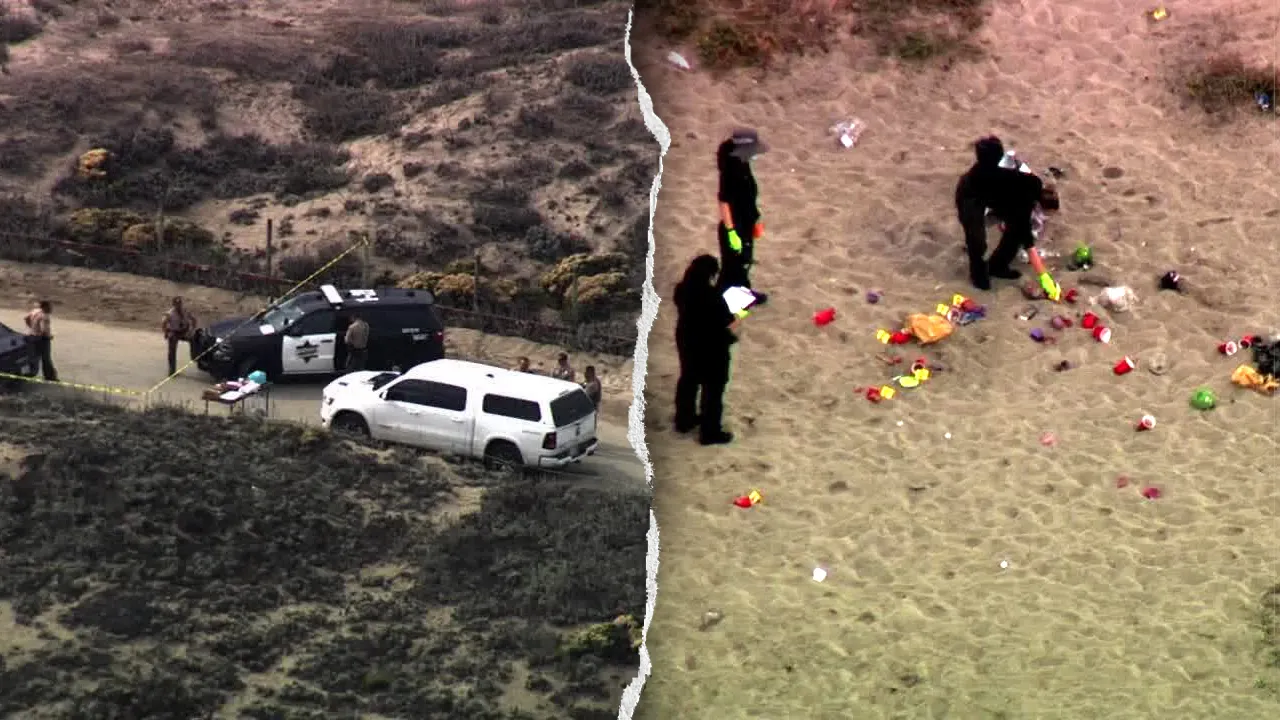
The first details to emerge painted a grim picture. North County Fire Protection Chief Jess Cortez told FOX 2 KTVU that arriving crews discovered two people suffering from gunshot wounds to the chest. Both were pronounced dead at the scene, their lives ending far too soon on a remote beach road. A third person was found with minor injuries and was transported to a nearby hospital for treatment, but the exact number of total victims remained unclear. Authorities were careful not to release inaccurate information during such a chaotic and evolving situation. The sheriff’s office also declined to discuss what may have led to the shooting, leaving many questions unanswered. Was this a targeted act of violence? A random incident? A dispute that spiraled out of control? Without official details, speculation began to swirl, but the community was urged to remain patient and let investigators do their work. In the meantime, California State Parks Police moved quickly to close Jetty Road and Moss Landing State Beach at the request of the sheriff’s office, sealing off the area from public access. The beach, normally open to anyone seeking a moment of peace by the sea, became an active crime scene, with investigators combing through evidence in the cold morning air.
-
As the investigation unfolded, officials moved to reassure the public while remaining appropriately guarded. The Monterey County Sheriff’s Office issued a statement emphasizing that there was “no active threat to the Moss Landing Community at this time.” This small measure of relief, however, did little to ease the shock of what had happened. The sheriff’s office described the situation as an active investigation and said no further information would be released until more was known. This is often the most difficult phase of any tragedy—the waiting, the uncertainty, the unanswered questions that hang heavy in the air. For families of the victims, the coming hours and days would be filled with unbearable pain, confusion, and the slow, agonizing process of seeking the truth. Local elected officials also weighed in, offering condolences and trying to find words for something that felt beyond language. State Sen. John Laird called the shooting an “unspeakable horror,” a phrase that captured the shock felt across the Central Coast. In a heartfelt statement, he acknowledged the broader pattern of gun violence that has plagued the nation, noting that “over the weekend, there were numerous reports of shooting deaths across the country.” He continued, “This unspeakable horror has also hit home on the Central Coast, with reports of multiple fatalities just after midnight today in Moss Landing. The pain and suffering of all those impacted is impossible to measure and my heart goes out to everyone.” He also expressed gratitude to the Monterey County Sheriff and their team for managing such a devastating situation.
-
Behind the official statements and press briefings lie the human stories that statistics often fail to capture. Moss Landing is not a large city; it is a small, tight-knit community known for its harbor, its wildlife, and its slower pace of life. On any given day, visitors come to watch sea otters, eat fresh seafood, or simply walk along the shore and listen to the waves. A shooting here feels especially out of place, a violent intrusion into a setting that many consider a refuge from the chaos of modern life. Now, that refuge has been violated. The victims were someone’s loved ones, someone’s friends, someone’s reason to call home. Their families are now faced with the impossible task of mourning while also seeking answers. First responders, too, carry the weight of these events—dispatched into the night, unsure of what they would find, and confronted with scenes that no training can fully prepare them for. The person who was taken to the hospital with injuries will carry the trauma of that night for the rest of their life. Witnesses, if there were any, are likely struggling to make sense of what they saw. And the wider community must now grapple with how to process an event that changes the way people see a familiar and beloved place. Grief is not a linear process, and moments like this remind us that healing takes time, patience, and the support of others.
-
While the investigation into the Moss Landing shooting is still in its early stages, it is impossible to ignore the broader context of a nation reeling from repeated acts of gun violence. The same news cycle that brought word of this tragedy also carried reports of other shootings across the country, each one leaving behind shattered families and traumatized communities. In California alone, there were recent stories of gunfire erupting at an unsanctioned party that drew hundreds, leaving one dead and six injured, as well as a shooting at a Florida beach described as a “teen takeover” that left a 17-year-old hospitalized. Even a 70-year-old woman opening fire inside a police department lobby in Florida made headlines, a stark reminder that gun violence can strike in the most unexpected places and at the hands of the most unexpected people. These stories, though distinct in their details, are connected by a thread of collective sorrow. They also raise urgent and uncomfortable questions about the prevalence of firearms, the roots of conflict, and the failure to protect vulnerable communities. People across the political spectrum may disagree on solutions, but few would argue that a weekend filled with shooting deaths is anything less than a national crisis. When a small beach town becomes another data point in a grim tally of gun violence, it forces us to confront the reality that no community is immune, and that the work of preventing future tragedies requires not just mourning but meaningful action.
-
In the days to come, more facts will emerge about what happened in Moss Landing. Investigators will piece together the sequence of events, identify those responsible, and seek justice for the victims. The hope is that closure, however incomplete, will eventually come for the families and friends who are now navigating the earliest and most painful stages of loss. But for now, the most important thing we can do is honor the lives that were lost, support the survivors, and refuse to let the dead be reduced to a statistic. They were human beings, with dreams, relationships, and futures that should not have been cut short. They deserved better, as do all victims of gun violence. As the sun sets over the Pacific once again, the people of Moss Landing and the wider Monterey Bay area will begin the long and difficult journey of healing. They will hold vigils, share memories, and lean on one another for strength. They will demand answers from their leaders and accountability from those who perpetrated this crime. And perhaps, in time, they will find the resilience that communities always find after tragedy—not because the pain disappears, but because people come together to carry it. The beach will reopen, the road will be cleared, and life will slowly return to some form of normalcy. But the memory of this night will remain, a somber reminder of how fragile life is, how precious every moment is, and how desperately we need to create a world where such senseless violence no longer tears communities apart.
Multiple people killed, others injured in shooting near California beach
Keep Reading