


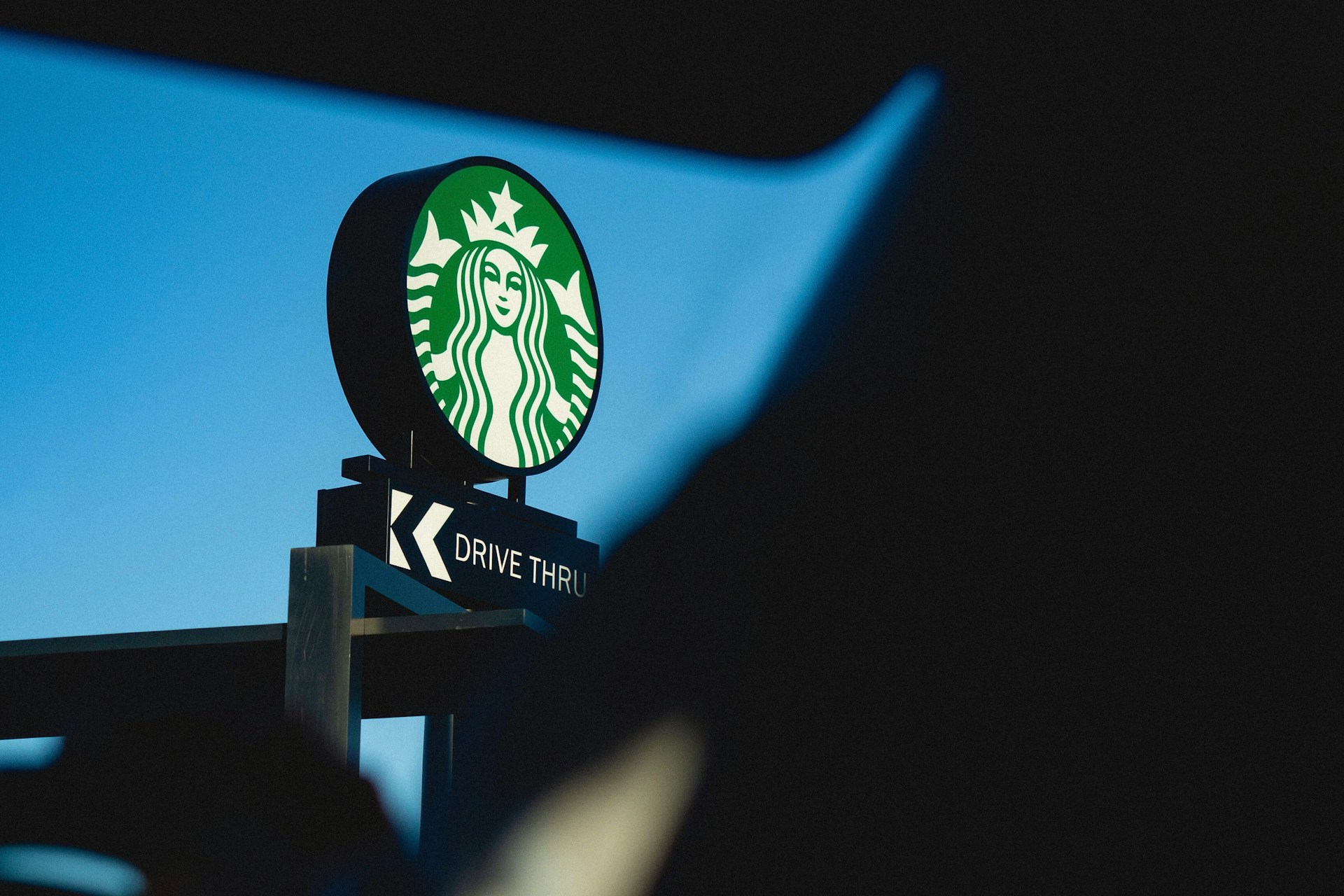
There’s something almost magical about the idea of pulling up to a Starbucks drive-thru and being greeted by name, with your usual order already waiting in the digital queue. That’s the vision Starbucks CEO Brian Niccol painted on a recent earnings call, and the internet immediately ran with it. Headlines started buzzing about facial recognition, about artificial intelligence knowing your face, about a future where the coffee shop sees you before you even roll down the car window. But if you slow down and actually listen to what Niccol said, the reality is far less sci-fi and far more grounded in the phone you already carry everywhere. He described a scenario where a customer who uses the Starbucks app pulls up to the drive-thru, and the system—through the app itself, not through cameras scanning your features—recognizes that you’re there. It shows your past orders, the barista says, “Hey, is it the usual?” You confirm, payment is already handled, and you glide to the window to grab your drink and go. Niccol calls it a “fast pass,” a phrase that evokes theme parks and expedited lines, and he admits it’s still a ways off. But the excitement around it says a lot about how much we crave convenience that feels personal rather than robotic.
So how would this actually work without turning Starbucks into a surveillance state? The most likely answer is technology that already exists and is quietly used in other parts of the restaurant world. One option is geofencing, where the Starbucks app uses your phone’s location services to sense when you’ve entered a virtual perimeter around a particular store. If you’ve ever ordered curbside pickup from another chain, you’ve probably experienced this: the restaurant knows you’ve arrived, and someone comes out with your food. The same principle could apply at the drive-thru lane. Another possibility is a small Bluetooth transmitter placed near the order board, which pings your phone as your car pulls up. That’s how some fast-food spots handle drive-thru loyalty or curbside check-ins. Neither approach requires facial recognition or any kind of camera scanning your face. It’s just your phone saying, “Hey, I’m here,” and the Starbucks system quietly saying, “Got it, welcome back.” Niccol was careful to frame this as an enhancement to the existing relationship between baristas and customers, not a replacement for it. In fact, the whole point, as he described it, is to preserve the human moment: the barista still speaks, still connects, still offers that small ritual of recognition that makes a routine caffeine stop feel like a neighborhood hangout. He didn’t announce where this would be tested or exactly how customers would be identified, and Starbucks later clarified that the company is early in the work and plans to test, learn, and scale what works. That caution is worth remembering anytime a tech company floats a big idea before the kinks are worked out.
What’s driving all this isn’t just a love of innovation—it’s the brutal reality of the drive-thru lane. Niccol said on the call that roughly half of Starbucks customers use the drive-thru, which means speed isn’t a nice-to-have; it’s central to survival. Starbucks is competing with drive-thru-focused chains like Dutch Bros and the rapidly expanding 7 Brew, places that have built their whole identity around fast, friendly, high-energy service at a window. If Starbucks can shave even a few seconds off the average drive-thru visit, that advantage compounds across millions of orders. But the “fast pass” is only one piece of a larger technological push. Before that concept ever reaches a store, Starbucks plans to start testing what Niccol called “background AI models” this fiscal year, which began in late September. The idea is to help baristas enter orders more accurately and efficiently, not replace them. This builds on a pilot that GeekWire reported on earlier this year, where an AI system listens as a customer orders and automatically enters the items into the register. The barista remains at the speaker, but the AI acts as a kind of invisible sous-chef, catching the details and reducing the mental load. That’s a notably different approach from chains like McDonald’s, which ended its AI drive-thru ordering test with IBM in 2024 after a series of viral mishaps, or Wendy’s, which has expanded AI ordering nationwide using Google Cloud technology. Starbucks seems to be taking the more conservative path: keep the human in the loop, use AI to support them, and let the technology fade into the background.
Starbucks has learned, sometimes painfully, that not every AI experiment is ready for prime time. In May, the company retired an AI-powered inventory counting tool that had been built with a Redmond, Washington-based startup called NomadGo. The tool was unveiled with optimism just nine months earlier, but baristas soon reported miscounts and other glitches. Instead of doubling down, Starbucks listened to the feedback and changed course, retiring the system quietly and then acknowledging the decision when asked. That episode is a useful reminder that the gap between a compelling demo and a reliable daily tool is enormous. A system that works beautifully in a controlled setting can fall apart when faced with the chaos of a busy store, a sudden rush of customers, a new barista trying to learn the ropes, or a poorly lit shelf of syrups. The same is likely true for any drive-thru recognition system, which will have to deal with all sorts of real-world complications: phones with dead batteries, customers who don’t have location services enabled, cars that pull too far past the Bluetooth beacon, or people who simply don’t want to be recognized. Starbucks seems aware of these risks, and the company’s cautious language—“we’re early in this work”—suggests that the flashy headlines are ahead of the actual rollout.
The drive-thru experiments are part of a much broader modernization push happening inside Starbucks, and it’s hard to overstate how much the company is trying to change at once. Niccol described the current fiscal year as “a major tech modernization year,” with new staffing, scheduling, and point-of-sale systems rolling out to stores. These are the unglamorous but essential upgrades that determine whether a coffee chain can operate smoothly at scale. On top of that, Starbucks plans to build delivery directly into its app early next year, which would be a significant shift for a company that has relied heavily on third-party delivery services. The company also wants to use AI to improve search in the app—so when you type “vanilla” or “iced” or “extra oat milk,” you actually find what you’re looking for quickly—and eventually it wants to support ordering through AI assistants and directly from customers’ cars. That last one is particularly interesting because it points to a future where your car and your coffee are connected in a seamless digital loop: you’re driving to work, you tell your car’s assistant you want your usual, the Starbucks app confirms the order and payment, and the drink is waiting when you arrive. It’s a vision of convenience that feels almost frictionless, but it also depends on a level of integration between apps, cars, payment systems, and store operations that doesn’t fully exist yet. In that sense, the “fast pass” drive-thru is just the beginning of a much longer journey.
Underneath all the technology talk, though, there’s a deeper question about what Starbucks wants to be. The company has spent years positioning itself as a “third place” between home and work, a warm environment where people linger, chat, and feel a sense of belonging. But the drive-thru is a different animal. It’s transactional by design. People pulling up to the window aren’t looking for a place to sit for an hour; they’re looking for a quick, reliable, and pleasant interaction that fits into an already crowded day. The challenge for Starbucks is to make that interaction feel human even as it becomes more automated. Niccol’s story about the barista saying, “Brian, is it the usual?” is an attempt to square that circle: use technology to handle the mechanics of recognition, ordering, and payment, but keep the voice, the warmth, and the ritual of being known. And the timing might be right. Starbucks’ U.S. same-store sales were up 7.7% in the quarter that ended Sept. 27, a sign that the business is picking up after a difficult stretch. The company has momentum, and it’s investing in the kind of technology that could define the next decade of quick-service coffee. Whether it’s called a fast pass, a loyalty perk, or just “the usual,” the goal is the same: get you in and out faster while still making you feel like you matter. And if Starbucks can pull that off without losing the human touch, it might just have found the sweet spot that every fast-food chain is chasing.