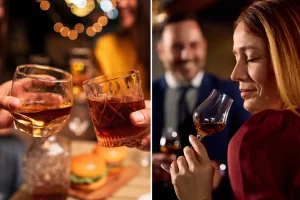



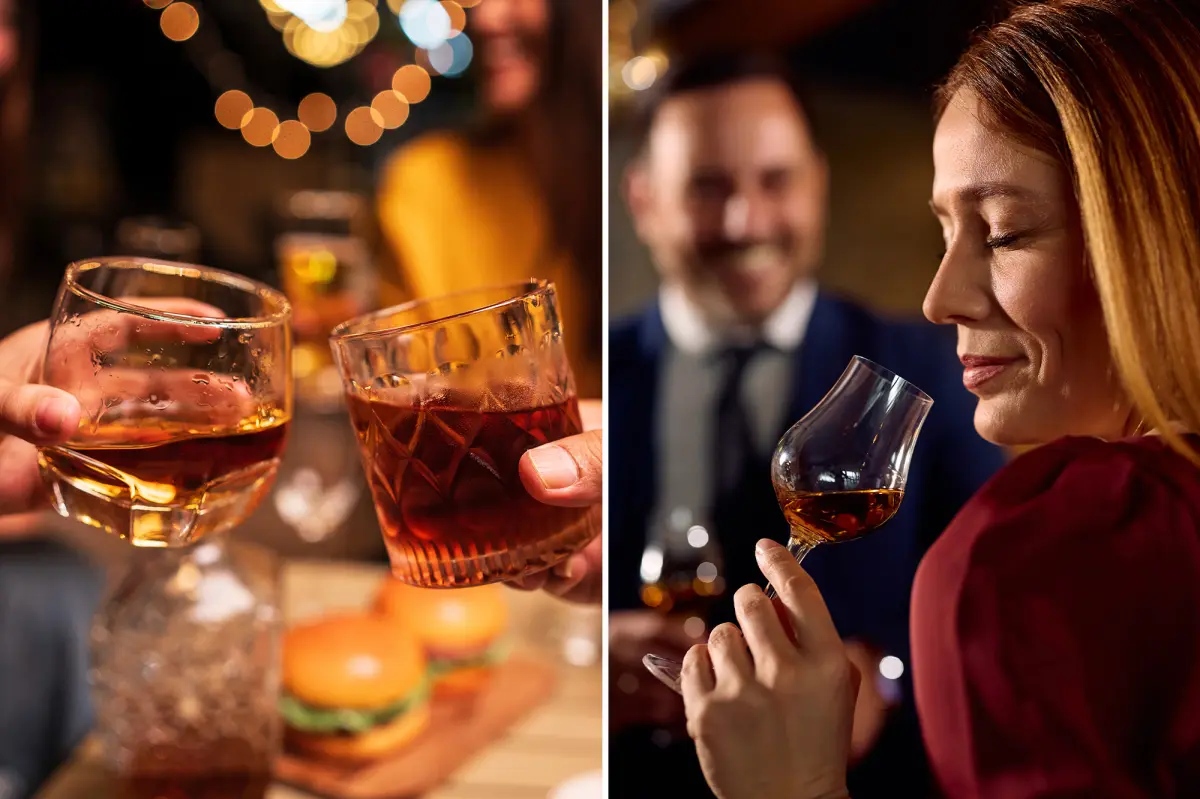
There’s a long-standing theory in the bourbon world that women are naturally better at tasting the spirit than men. It’s the kind of claim that gets tossed around at distillery bars and tasting rooms, often with a wink and a nod. But according to some experts, there’s real scientific evidence that might back it up. At the heart of the theory is the simple fact that tasting bourbon is deeply tied to smelling it, and women, on average, appear to have a keener sense of smell and taste than men. Susan Reigler, a Louisville, Kentucky–based whiskey expert and former president of the Bourbon Women organization, put it plainly in an interview with Fox News Digital: “Women have a keener sense of smell and taste than men.” She pointed to a 2014 scientific paper that examined differences in the olfactory bulbs—the parts of the brain that process scent—and found that women have just under 50 percent more neurons in those regions than men. That difference could translate into a noticeably stronger sense of smell, and for anyone who loves bourbon, the sense of smell is everything. But as Caitlin McLean, vice president of Qualitative Solutions at MMR Research Worldwide’s North American offices in New York, was quick to note, the story is more complicated than one number. “There are a number of different factors that come to play and certainly things that are outside of smell that affect men and women differently,” she said. In other words, the question of who tastes bourbon better isn’t just about anatomy or neurons. It’s about how all our senses work together, how our bodies change over time, and how much experience we bring to the glass. Still, the idea that women might have a biological advantage is compelling, especially when you consider how much of the bourbon experience is driven by aroma. And while it might feel like a playful argument to have over a pour of your favorite rye, it has real implications for the industry, from quality control panels to whiskey competitions. To understand why women are often thought to be more sensitive tasters, it helps to look at the science of smell, the mechanics of tasting, and the hidden role of hormones. It also helps to remember that, no matter what biology suggests, becoming a truly great taster ultimately comes down to something far more democratic: practice, patience, and paying close attention.
So what exactly is the science saying about women’s noses and palates? The 2014 study Reigler mentioned is one of several pieces of research that have found structural differences between the olfactory systems of men and women. The fact that women have more neurons in olfactory regions doesn’t automatically mean every woman can smell every note in a glass of bourbon better than every man, but it does suggest that, on a population level, women may be more sensitive to certain aromas and better at distinguishing between them. That matters because the way we experience bourbon is not only about the taste buds on our tongues. In fact, some of the most important flavors we detect in bourbon are actually aromas that reach our noses from the inside of our mouths, a process that flavor scientists call retronasal olfaction. To understand this, think of the difference between sniffing a glass of bourbon before you take a sip and chewing a sip so that the vapors travel up the back of your throat and into your nasal cavity from inside. The first is orthonasal olfaction, which happens when aromas enter through your nostrils. The second is retronasal olfaction, and it is absolutely critical to the bourbon-tasting experience. McLean explained that when you taste bourbon, the flavors you recognize—vanilla, cinnamon, leather, tobacco, smoke, dark fruit—are all largely identified through retronasal olfaction. The tongue and palate, she said, “can only taste so much.” Sweet, salty, bitter, sour, and savory are the basics, but the complexity of a great bourbon lives in the aromas that travel backward through your nasal passages. This is why wine and spirits experts will tell you to take a sip and let it coat your mouth, or even open your lips slightly to let oxygen in. They’re not being extra; they’re trying to get those volatile compounds to reach the nose from behind. So when we talk about someone being a better bourbon taster, we’re talking about their ability to pick up on a vast, invisible world of aromas, and that ability seems to be at least partly linked to the same biology that gives women a keener sense of smell in general. It’s not about being born with a superhuman nose; it’s about having a more sensitive instrument to work with, combined with the skill to know what you’re smelling.
Hormones, too, play a fascinating and often overlooked role in the way people perceive bourbon. McLean noted that estrogen is associated with a heightened sense of smell, which helps explain why women may experience significant changes in their olfactory sensitivity during different stages of life. For example, pregnancy and menopause are two moments when many women notice that smells become stronger, sharper, or sometimes almost overwhelming. This hormonal sensitivity is not just a small, random quirk of the body; it seems to be part of a deeper biological design. There is a theory, though difficult to prove scientifically, that women evolved to have a stronger sense of smell and taste as a way to protect their children. If a mother can detect spoiled food, toxic plants, or other dangers through scent and taste, her children are more likely to survive. As McLean put it, “There is some scientific evidence that women, on average, outperform men in olfactory tasks, but maternal instinct is a difficult one to prove scientifically.” That doesn’t mean the idea is wrong; it just means it’s hard to capture in a laboratory result. But even without an evolutionary explanation, the hormonal connection is important to consider in the context of bourbon tasting. A woman in a particular phase of life might pick up on subtle notes that she didn’t notice before, or she might find certain flavors overpowering. This variability is part of what makes tasting such a personal, dynamic experience. It also highlights a truth that professional tasters already know: your ability to taste is not a fixed, permanent trait. It shifts with your body, your mood, your environment, and even what you ate for lunch. So when we talk about whether women are better at tasting bourbon, we’re not talking about a simple, unchanging biological scorecard. We’re talking about a range of factors that interact in complex ways, making each person’s palate unique. Hormonal changes are just one more reminder that the human experience of flavor is deeply physical, and that our noses and taste buds are doing much more work than we usually give them credit for.
Beyond the biology, there’s also a fascinating piece of cultural history that supports the idea that women are excellent bourbon tasters, not just in theory but in practice. Reigler pointed out that, historically, the quality control and tasting panels at Kentucky’s bourbon distilleries were made up mostly of women. In an era when many production jobs and leadership roles in the industry were dominated by men, women were often asked to sit on these crucial panels and determine whether a batch of bourbon was up to standard. This wasn’t a marketing gimmick; it was practical. Distillers needed honest, reliable palates to evaluate their product, and women proved time and time again that they had them. Reigler’s observation adds a meaningful layer to the theory that women are better bourbon tasters. It suggests that the belief is not just a modern, science-driven talking point, but a tradition that has been quietly embedded in the industry for generations. You can walk the Kentucky Bourbon Trail today and see how much of the industry has evolved, but the legacy of those tasting panels remains a point of pride for many women in the whiskey world. It also challenges the old stereotype of bourbon as a “man’s drink” that women were only ever brought in to assist with. In reality, women were often the ones who had the final say on whether a whiskey was ready to be bottled and sold. And while many of those early panels were staffed by women because they were seen as having more refined palates, there was also something more practical at work: tasting several barrels of high-proof whiskey in a day is demanding, exacting work, and distillers wanted people who could be precise, honest, and consistent. The fact that women were repeatedly chosen for that responsibility speaks volumes. Of course, this history doesn’t prove that every woman is a better taster than every man, but it does explain why the theory has so much traction in the bourbon community. The reputation was earned, bottle after bottle, barrel after barrel, on the very ground where bourbon is made.
Now, if you’re a man reading this, there’s no need to feel left out of the conversation. Reigler is quick to point out that men can absolutely be excellent bourbon tasters, too. The key, she says, is practice. But what does practice really mean when it comes to tasting bourbon? It means tasting often, tasting systematically, and paying attention to more than just whether you like a particular whiskey or not. It means slowing down, skipping the catch-all phrase “it tastes like whiskey,” and trying to identify specific things: the sweetness of caramel on the nose, the heat of cinnamon, a whiff of leather or tobacco, a hint of dark fruit that appears only after you swallow. It also means training your memory, because being a good taster is as much about remembering past tastes as it is about detecting new ones. That’s something anyone can do, regardless of gender. In fact, the idea that smelling and tasting are skills that can be developed is one of the most encouraging takeaways from the entire conversation around women and bourbon. Yes, there may be biological differences that give some people a head start, but a natural advantage is no substitute for real, dedicated practice. Over time, a person who has tasted hundreds of different bourbons, written notes on them, compared them side by side, and asked questions will almost certainly outperform someone who relies only on innate ability. This is true in every craft that engages the senses. A chef’s palate is sharpened by years in the kitchen. A perfumer’s nose is refined by constant exposure to different scents. A whiskey taster’s ability is built, sip by sip, pour by pour. So while the science about neurons and hormones is fascinating, and the historical role of women on distillery tasting panels is inspiring, the real lesson is more accessible: tasting better doesn’t require special magic. It requires curiosity, attention, and the willingness to keep learning.
So where does that leave the original question, especially for someone who wants to taste bourbon like a pro? The most honest answer is that both nature and nurture are at work, and they’re difficult to untangle. There is legitimate scientific evidence that women, on average, have a keener sense of smell and taste, and some of that evidence points to structural differences in the brain. There’s also the powerful influence of hormones, which can change olfactory sensitivity at different times in a woman’s life and may be tied to a deep evolutionary drive to protect children. And there’s a rich history of women serving as the trusted palates of Kentucky’s distilleries, a tradition that lends real-world credibility to the theory. But there’s also the undeniable truth that the human palate is not fixed. It is shaped by experience, repetition, memory, and the simple desire to get better. Whether you’re a man or a woman, whether you have a surgically precise nose or feel like you struggle to pick out even one flavor in a glass, the path to becoming a skilled taster is the same: taste more, pay attention, and practice. If you do that, you’ll likely discover that your sense of smell improves, your ability to name flavors sharpens, and your enjoyment of bourbon deepens in ways you didn’t expect. The idea that women have an edge might draw people into the conversation, but it’s not a barrier to anyone else. Instead, it’s an invitation to appreciate the enormous complexity of what’s happening every time you raise a glass. Your nose and brain are doing remarkable work, filtering a swirl of aromas and translating them into moments of recognition and pleasure. That’s true whether you’re sitting on a distillery tasting panel, visiting the Kentucky Bourbon Trail for the first time, or just pouring a glass at home after a long day. Ultimately, the question of who is better at tasting bourbon may be less important than the shared experience of enjoying it, and the simple joy of discovering one more note in every sip.