

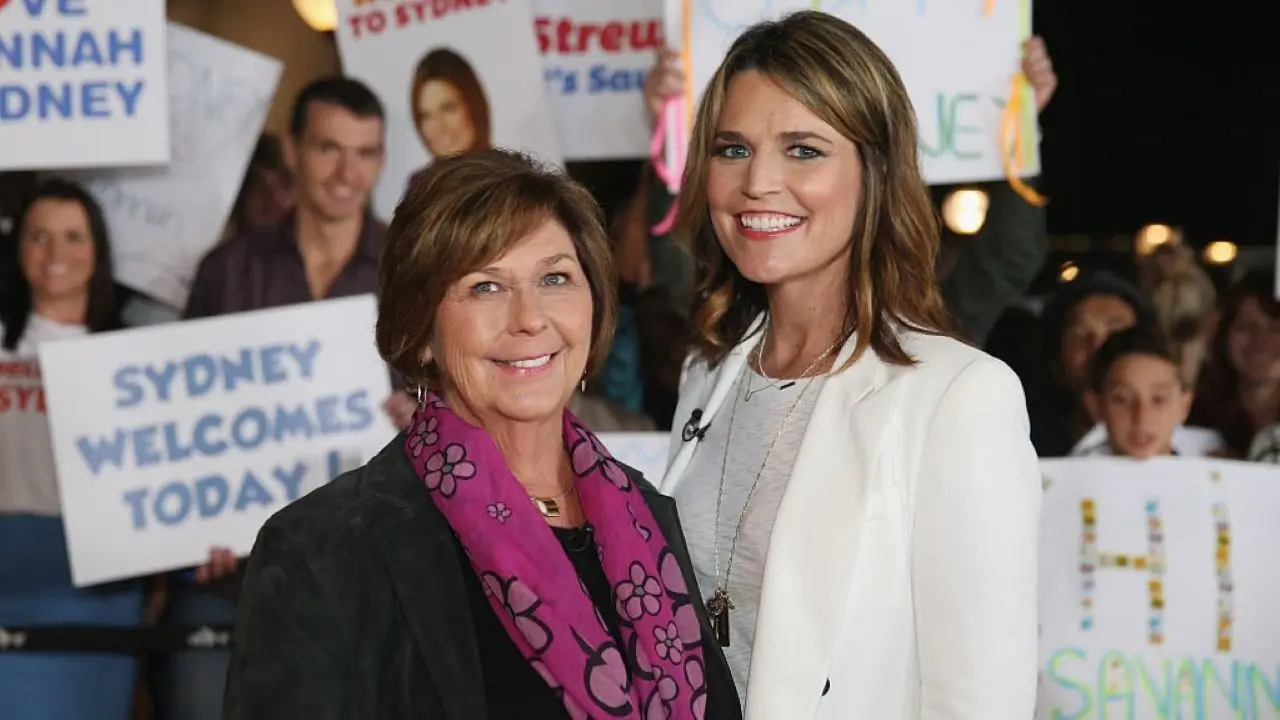
For more than nine months, the name Nancy Guthrie has lingered in the hearts and minds of people far beyond the sun-baked streets of Tucson, Arizona. She is not just a case number or a headline; she is an 84-year-old mother, grandmother, and a beloved presence in her quiet Catalina Foothills neighborhood. And she is the mother of NBC’s Savannah Guthrie, a public face of warmth and resilience, now living every family’s worst nightmare in the glare of national attention. The mystery of Nancy’s disappearance began on a chilly night in late January, when a relative dropped her off at her home just before 10 p.m. It was an ordinary end to an ordinary day, the kind of moment no one thinks twice about until it becomes the last known snapshot of a life. Minutes or hours later, a masked man appeared on her Ring doorbell camera, and by the time authorities were alerted, the house was not simply empty—it was a scene of anguish, confusion, and unanswered questions. Nancy had not wandered off, had not gone to a friend’s house, had not been the victim of a simple misunderstanding. Sheriff Chris Nanos would later state with unmistakable certainty: “She did not leave on her own. We know that.” That single sentence turned a missing person report into a kidnapping investigation, and a community’s hope into a vigil that has stretched across seasons, holidays, and countless prayer circles.
The latest chapter in this enduring search arrived on a Friday, when the Pima County Sheriff’s Department offered a quiet but meaningful update. In a post on X, the department shared that investigators had recently traveled to Florida to meet with lab scientists, not to close the case, but to ask the kind of difficult, hopeful questions that keep cold cases warm: What more can be done? What new technology might unlock a clue hidden in evidence that has already been examined? What ideas have not yet been tried? The trip was part of an ongoing collaboration with the Nancy Guthrie Task Force, a dedicated team that includes local detectives and federal agents, all of whom continue to work on DNA analysis in an effort to push the investigation forward. The department did not announce a breakthrough, nor did they pretend that answers were around the corner. Instead, they offered something arguably more important: a reminder that they are still there, still looking, still refusing to let Nancy Guthrie become a forgotten name. They also made a simple, human request that speaks to the heart of so many investigations—no tip is too small. “Even the smallest piece of information could be critical to this investigation,” the department said. It is a phrase that might sound routine after years of press conferences, but in this case, it carries the weight of a family waiting by the phone, of neighbors scanning their own security footage, of strangers wondering if they saw something they didn’t realize mattered.
To understand the pain behind this update, one must go back to the beginning, to the shock of that February morning when Nancy Guthrie was reported missing. She was last seen shortly before 10 p.m. on January 31, a Friday evening that would forever split the calendar of her loved ones into before and after. The Ring camera footage captured a masked figure, a man whose identity remains unknown, but whose presence in those frames turned a home into a crime scene. In the days that followed, Sheriff Nanos addressed reporters with a tone that was both resolute and grim. He confirmed that Nancy had been taken, making it clear that this was no voluntary disappearance and no tragic accident. The announcement sent ripples through Tucson and beyond, not only because of Nancy’s connection to a famous television journalist, but because the case seemed to defy explanation. Who would target an 84-year-old woman? Why would they take her and then disappear into the night? The lack of an obvious motive, the absence of a named suspect, and the eerie silence from any captor made the case all the more haunting. Neighbors were questioned, drones were flown, search teams scoured the desert landscape that surrounds the Catalina Foothills, and reward money grew to an astonishing $1.2 million. Yet despite all of that effort, the masked man remained a ghost, and Nancy remained missing. For Savannah Guthrie, who has continued to work and appear publicly while carrying this private burden, the ordeal has been a stark reminder that fame offers no shield against life’s cruelest mysteries. Her silence, broken only by occasional statements, has been a lesson in dignity under pressure.
In July, investigators released two ransom notes that had been sent in the earliest days after the kidnapping, and those notes only deepened the emotional roller coaster for everyone following the case. The first, dated February 2, just one day after Nancy’s disappearance, reported that she was unharmed and demanded a staggering $4 million in cryptocurrency for her safe release. It was a chilling message, yet also a flicker of hope—she was alive, at least according to the note, and a negotiation seemed possible. But four days later, on February 6, a second note arrived with words no family should ever have to read: Nancy had died shortly after she was kidnapped. The contradiction between the two notes left investigators and loved ones in a painful limbo, unsure whether to hold onto hope or prepare for the worst. Authorities released the notes publicly in late July, not to sensationalize the case, but because they were written in a unique, unusual style that might be recognizable to someone in the community. They asked anyone who recognized the patterns, the phrasing, or the handwriting to come forward. The release turned ordinary citizens into potential witnesses, inviting them to look at the words of a possible kidnapper and ask themselves: Have I seen this before? Does this sound like someone I know? The emotional whiplash of those two messages—first reassurance, then devastation—has haunted those who have followed the case, and it has made the public even more determined to help uncover the truth.
Then, in late September, came another twist. The Pima County Sheriff’s Department announced that the task force had been made aware of a possible new ransom note related to Nancy’s disappearance. The post was brief and carefully worded, noting that investigators were aware of social media comments about the note and were looking into the information to determine its credibility. It was not a confirmation, and it was certainly not a resolution. But it was a reminder that this case remains very much alive, that new information can surface at any time, and that even the most unexpected messages can send investigators back into the field. The public’s reaction to the possibility of another note was immediate, with speculation spreading across platforms and armchair detectives offering their own theories. Some wondered if the note was a genuine communication from those responsible, while others suspected a cruel hoax or the work of someone seeking attention. The sheriff’s department, true to its careful approach, neither confirmed nor denied, but simply promised to examine the evidence. For the Guthrie family, the news must have stirred a painful mixture of emotions: hope that this could finally break the case open, and dread that it might be another dead end, or worse, another cruel reminder of their loss. This is the exhausting reality of a long-term missing person case—every new lead feels like a door that could lead to answers or to another locked hallway.
As the investigation continues, the human side of this story remains as important as the forensic details. There is an unclaimed $1.2 million reward, a figure that might seem like an extraordinary incentive for someone to come forward. Yet the fact that the reward has gone unclaimed has led some retired FBI agents to suggest that the circle of suspects may be very small—perhaps so small that anyone who knows something is either directly involved, too afraid to speak, or too loyal to break their silence. That thought is both sobering and motivating. It means the answer may be hiding not in a distant laboratory, but in the memory of someone who has not yet realized what they know. It means that a neighbor who saw a strange car, a delivery driver who noticed a door ajar, a friend who heard an odd comment, or a family member who suspects something but cannot prove it—all of these people hold potential pieces of a puzzle that could finally give the Guthrie family some peace. The Pima County Sheriff’s Department has made it clear that no detail is insignificant, and they have repeated that message with genuine urgency. For those who have information, there are multiple ways to help: call 1-800-CALL-FBI, or, for those who wish to remain anonymous, call 520-88-CRIME. Every phone call, every email, every tip—no matter how small—could be the thread that unravels this mystery. In the meantime, the rest of us can do something far simpler, but no less meaningful: remember Nancy Guthrie. Remember that behind the headlines, behind the ransom notes, behind the DNA analysis and the trips to Florida, there is a woman who deserves to come home, and a family that deserves to know the truth. The investigation is not over. The hope is not lost. And as long as there are people who refuse to look away, Nancy’s story will not end in silence.