


Paragraph 1: The Fairy-Tale Finish in Milwaukee
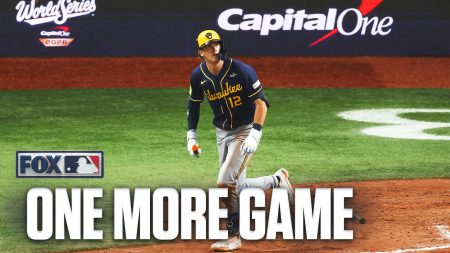
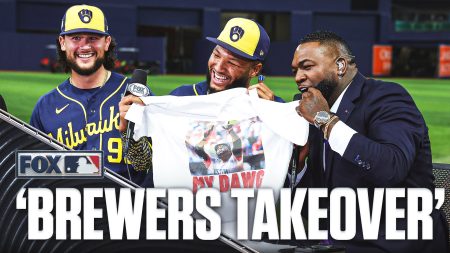
Let’s be honest, for generations, the Milwaukee Brewers were the lovable losers of baseball—a small-market franchise that could break your heart with a late-season collapse while charming you with sausage races and a retractable roof. But in 2026, everything changed. After grinding through a grueling 162-game season and stacking up an MLB-best 103 wins, the Brewers did something no one in Wisconsin had ever seen: they finished the job. It wasn’t just about getting to the playoffs; it was a complete, undeniable demolition of everyone in their path. They bounced the San Diego Padres in four games during the National League Division Series, then swept the mighty Los Angeles Dodgers—the same Dodgers who had spent a billion dollars to build a superteam—clean out of the NL Championship Series. And finally, in the World Series, they outlasted the Tampa Bay Rays in five games to hoist the first championship trophy in franchise history. For the fans in Cream City, it was a dream come true, the kind of storybook ending that makes you want to hug a stranger in the parking lot. But here’s the kicker that makes this title so deliciously sweet: they did it without Tarik Skubal, the back-to-back Cy Young winner who everyone thought was the missing piece. While the rest of the baseball world obsessed over acquiring the Detroit ace at the trade deadline, Milwaukee’s front office stayed stubborn, stuck to their guns, and proved that perhaps the greatest championship is the one you build with your own guys.
Paragraph 2: The Trade That Never Happened (And Why It Still Worked)
Let’s rewind a little, because the drama of the trade deadline is where this story really gets its juice. The entire baseball universe knew the Tigers were listening to offers for Tarik Skubal, and the Brewers—as legitimate contenders with a need for another frontline starter—were right in the mix. According to reports from insider sources, Milwaukee’s brass put a very respectable offer on the table: infield prospects Luis Peña (the organization’s number two prospect according to MLB Pipeline) and Jett Williams (the number ten), plus outfielder Josh Adamczewski, a 15th-round pick from the 2023 draft. But Detroit didn’t blink. The Tigers wanted more. They weren’t interested in a haul of mid-tier prospects; they wanted a crown jewel. Specifically, they asked for Logan Henderson, the promising right-handed pitcher who was already under team control for years to come, and perhaps a position-player stud as well. That was the line in the sand for Milwaukee. The Brewers looked at their future, looked at Henderson’s potential, and said, “Thanks, but no thanks.” It was a massive gamble, a moment where the front office had to decide whether to push all their chips in for a rental or trust their internal process. Looking back, it was the bravest decision they could have made—because while Skubal ended up landing in Los Angeles in a blockbuster three-player trade that sent top outfield prospect Zyhir Hope to Detroit, the Brewers confidently pivoted to a wholly different strategy, one that would ultimately define their postseason run.
Paragraph 3: The Understated Pivot That Saved the Season
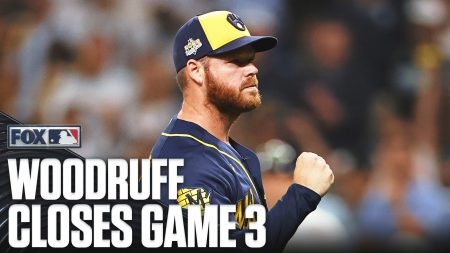
While the Dodgers were popping champagne over their new Cy Young winner, the Brewers were quietly doing something far more impressive: shopping at the discount store and finding gems. Instead of making one splashy, ego-driven move, Milwaukee’s front office engineered a series of quiet, understated trades that perfectly addressed their needs without sacrificing the farm. They acquired starting pitcher Dustin May and left-handed reliever JoJo Romero from the St. Louis Cardinals, and then they added right-handed reliever Antonio Senzatela from the Colorado Rockies. On paper, none of these moves would land you on SportsCenter’s top plays. But they were surgical. These guys weren’t names you’d buy a jersey for, but they were arms you could trust in the ninth inning of a tie game in October. And the results spoke volumes. JoJo Romero, in particular, became an unsung hero, surrendering just one run over eight innings of work across the entire postseason. It was a masterclass in “Moneyball”-style asset management. This is the part of the story that often gets lost in the glory of the trophy presentation, but it’s the absolute heart of why they won. They didn’t rely on one savior with a 100-mile-per-hour fastball; they built a bullpen and a rotation with depth, character, and no ego. It proves that in baseball, chemistry and trust can often beat raw talent, especially when that talent is loud and expensive.
Paragraph 4: Skubal’s Uncomfortable Reality in L.A.
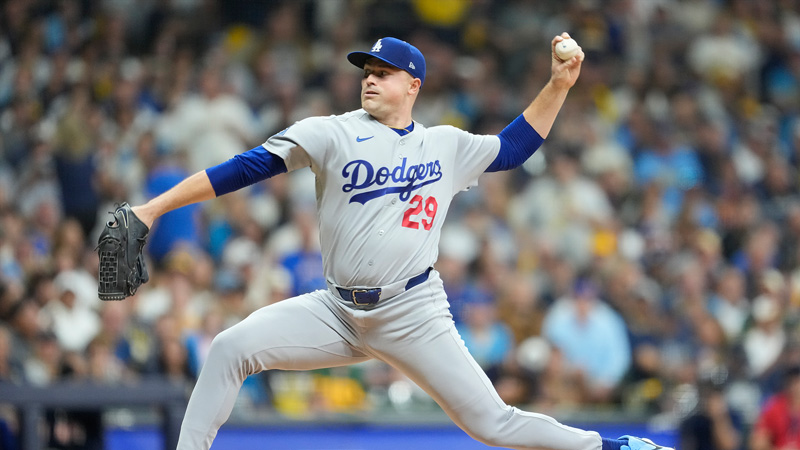
So, what happened to the guy everyone thought would be the deciding factor? For Tarik Skubal, the Dodgers chapter was a tale of two truths. On one hand, when he was on the mound, he was brilliant. His 2026 regular season with L.A. was marred by a frustrating six-week stint on the injured list due to elbow surgery—a detour that cost him his rhythm and the chance to truly anchor the rotation. But when he did pitch, he was nothing short of fantastic. Skubal posted a dazzling 2.61 ERA, a 1.05 WHIP, and a 162 ERA+ (which means he was 62 percent better than the league average, for those keeping score at home) with 70 strikeouts across 62 innings. In the postseason, he was even sharper, throwing 11 innings across two starts with a 2.45 ERA, a 1.00 WHIP, and 14 strikeouts. But here’s the poetic irony: his second postseason start of that year came against the Brewers, and it was a heartbreaking 2-1 loss that opened the NLCS and set the tone for the Dodgers’ eventual sweep at the hands of Milwaukee. It was the ultimate “be careful what you wish for” moment. The Dodgers got the big name, paid the huge price, and generated massive headlines, but in the games that mattered most, the Brewers’ unheralded group simply out-pitched them. Skubal wasn’t bad—he was exceptional—but baseball is a team sport, and one ace can’t carry a team when the other lineup is just putting together better at-bats.
Paragraph 5: Looking Ahead—Now, Do the Brewers Pursue Him?
Now here’s the fun twist that has Brewers fans dreaming of an even brighter future: Tarik Skubal is set to hit free agency this winter, entering the 2027 season at age 30. The question on everyone’s mind in Wisconsin is whether the Brewers should now go out and buy the Lamborghini they refused to rent. On the surface, it sounds incredibly tempting. Imagine adding a Cy Young-caliber southpaw to a rotation that is already the envy of the league. The Brewers’ rotation—anchored by the likely 2026 NL Cy Young Award winner Jacob Misiorowski, the incredibly promising Logan Henderson (yes, the guy they protected), and the steady left-hander Robert Gasser—was absolutely dominant on its own. We’re talking about a unit that was second in MLB in opponent batting average (.220), third in strikeouts (907) and WHIP (1.14), and fifth in ERA (3.61). They are the young, hungry kids who just proved they don’t need a savior. But the beauty of free agency is that it’s a different kind of transaction. It costs you money, not your future. Adding Skubal would be a statement of intent, a middle finger to every pundit who said they couldn’t do it without a “proven” ace. But knowing this front office, I suspect they might just look at their trophy, look at their payroll flexibility, and decide that the 103-win core they have is the real deal, maybe adding a piece or two but trusting the culture that just got them there.
Paragraph 6: The Bigger Lesson from a Championship Season
In the end, the story of the 2026 Milwaukee Brewers isn’t really about what the Tigers asked for, or what the Dodgers gave up, or even the stats that Skubal put up in a Dodgers uniform. It’s about believing in your own process. This season was a testament to the fact that you don’t need to blow up your farm system to win in October. You need a plan, a culture, and a group of players who genuinely enjoy playing for each other. The Brewers built a roster that was deeper than any other team’s top five, and they rode that depth all the way to the promised land. They took a path of resistance, rejecting the idea that you have to outspend or out-trade your rivals to be champions. In a sport where the rich usually win, Milwaukee proved that the smartest guys in the room can beat the richest guys in the room. For the fans who packed the stadium on a Tuesday night in July, and for the players who celebrated in a pile on the mound in late October, this championship is a reminder that sometimes the best move is the one you don’t make. And as they look forward to defending their title, they do so not as underdogs, but as the standard-bearers for a new way of winning—one built on grit, intelligence, and that sweet, Milwaukee-made stubbornness that refuses to give in to the crowd.