


For years, a quiet kind of anger has been growing in the hearts of American veterans, not about the enemy they faced, but about the invisible handcuffs they wore in combat. They came home with medals, yes, and with a sense of duty fulfilled, but also with stories that did not fit neatly into parades or thank-you speeches. These were stories about waiting for permission while danger closed in, about watching a target slip away because a lawyer miles away had to approve the strike, about being told to “hold fire” when every instinct screamed to protect the soldier next to them. The rules of engagement—those carefully worded directives designed to prevent civilian casualties and keep wars legal—became, in the eyes of many, a source of deep betrayal. And now that frustration has reached a critical point. It has reached Pete Hegseth, a veteran and former Fox News host who has become a powerful voice for those who feel the military’s hands have been tied. More importantly, it has reached a generation of new recruits, young men and women who grew up listening to their fathers, uncles, and older brothers describe a war that was fought with one hand behind its back. These recruits are not entering the service with the same innocent trust in the system. They are entering with questions, with doubts, and with a determination to never let their own squad suffer because someone in a headquarters bunker was afraid of a headline.
To understand the depth of these complaints, you have to walk through the reality of a combat zone, where the rules of engagement are not abstract legal texts but life-and-death boundaries drawn in the sand. A soldier on patrol in a dusty village does not have time to read a thirty-page manual. He has time to look at a rooftop, see a man with a weapon, and decide within a second whether to shoot. The rules say he must be certain, that he must positively identify the threat, that he must consider the possibility of a civilian nearby. In theory, this makes perfect sense. In practice, it can feel impossible. Veterans describe moments when they hesitated because of the rules, and that hesitation cost them a brother. They describe Taliban fighters who knew the rules better than they did, using women and children as shields, firing from schools, then disappearing before the soldiers could respond. The soldiers felt like they were fighting with both arms tied, while the enemy fought with no rules at all. One retired sergeant, his voice cracking, remembered a night when his unit was ambushed. “We called for air support,” he said. “We had the coordinates. We had the enemy. But we had to wait for approval. And while we waited, we lost two men.” He did not blame the pilots. He did not blame the young lieutenant who was afraid to make the call. He blamed a system that seemed to value legal perfection over the lives of American service members. That kind of grief does not fade with time. It becomes a story told at reunions, a warning whispered to younger soldiers, a quiet rage that builds until someone finally says, “We need to change this.”
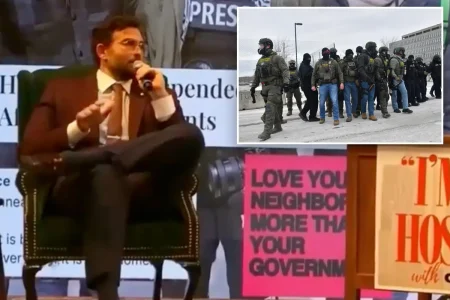
Pete Hegseth has become that someone. A veteran of Iraq and Afghanistan, a man who wears his service like a badge of authenticity, he has spent years on television and in books giving voice to these frustrations. He talks about the “politically correct” war, about generals who cared more about their careers than their troops, about a Pentagon that seemed more afraid of lawsuits than of losing soldiers. To many veterans, Hegseth is a breath of fresh air. Finally, someone who understands. Finally, someone who is willing to say that the rules of engagement were not just inconvenient, they were deadly. Hegseth has called for a return to what he sees as the warrior ethos—the belief that the primary duty of a soldier is to fight and win, and that excessive restrictions violate that duty. He has criticized the “lawfare” that he says has turned combat into a bureaucratic nightmare. And as he has risen in prominence, especially as a nominee for Secretary of Defense, his words have carried weight. New recruits listen to him not as a distant politician, but as a veteran who has walked the same ground they are about to walk. They hear his stories, and they think: This is someone who will have our backs. This is someone who will not let us die because of a checkbox. Hegseth represents a generation of veterans who are done being silent, done being polite, done watching their sacrifice be second-guessed by people who have never heard a bullet fly past their head. His voice has become the vessel for their pent-up anger, and that vessel is now at the center of the national conversation.
But the most profound shift is happening not in the halls of power, but in the hearts of the new recruits. These are the young people who were born around the time of the first Gulf War, who grew up during the endless conflicts in Iraq and Afghanistan, who saw their older siblings and parents deploy multiple times. They are not naive. They have grown up with the internet, with YouTube videos of combat, with podcasts where veterans openly discuss the failures of leadership. They have heard about the soldiers who were court-martialed for protecting themselves while officers who made catastrophic mistakes were promoted. They have absorbed a deep skepticism of authority, not because they are rebellious, but because they have been taught, through painful family stories, that the institution will not always protect them. When they enlist, they do not expect a smooth, orderly war. They expect chaos, confusion, and rules that might get them killed. And so they ask questions that previous generations might not have dared to ask. They ask about the rules of engagement. They ask about who makes the decisions. They ask about what happens if they have to choose between following an order and saving their buddy. Some commanders welcome these questions, seeing them as signs of critical thinking and engagement. Others are uncomfortable, realizing that the old model of blind obedience is fading. These new soldiers want to believe that their leaders will make the right calls, but they have heard too many stories to trust blindly. They are looking for leaders like Hegseth, who promise to clean house, to cut through the bureaucracy, to return to a simpler, more honest way of war. They want a military that trusts its soldiers, that gives them the authority to make decisions on the ground, that treats them like professionals rather than children who need constant supervision.
This generational shift carries both hope and danger. On one hand, it is healthy for soldiers to question, to understand the rules they are asked to obey, to feel a sense of ownership over their mission. A soldier who understands the why is more effective than a soldier who merely follows orders. On the other hand, there is a risk that this frustration crosses a line into cynicism, where soldiers begin to believe that all rules are stupid, that all leaders are incompetent, that the military is fundamentally broken. That kind of attitude can lead to discipline problems, to a refusal to follow lawful orders, to a culture where individual soldiers feel they have the right to decide which rules apply to them. The military has always been a balance between the individual and the institution. The individual soldier must have the freedom to act, but the institution must have the coherence to fight as a single force. If veterans’ complaints about the rules of engagement are reduced to a simple slogan—”let the warriors fight”—then we lose the nuance that actually protects both civilians and soldiers. The rules of engagement are not just a burden. They are also a shield. They are what keep a conflict from spiraling into a massacre. They are what allow a nation to look at itself in the mirror after the war is over and say, “We did not become the monsters we fought.” But that shield feels very thin when it is your friend bleeding out on the ground because you were told to wait. And that is the tension that Hegseth and the new generation are trying to navigate. They do not want to abandon morality. They want to abandon cowardice. They want a military that can fight effectively and still hold itself to a standard. The hard question is whether those two goals can coexist, or whether the current system has tipped too far in one direction, sacrificing warriors at the altar of optics.
In the end, this is not a political argument. It is a human one. It is the story of a young soldier sitting in a Humvee, staring at a roadblock, wondering if the person approaching is a civilian or a bomber. It is the story of a mother receiving a folded flag and then reading a news report that says her son’s death is under investigation because the rules might have been violated. It is the story of veterans waking up at 3 a.m., drenched in sweat, replaying a moment when they hesitated or acted, and never being sure if they did the right thing. The complaints about the rules of engagement have reached Pete Hegseth and a generation of new recruits because they are not abstract complaints. They are the accumulated grief and frustration of twenty years of war. They are the voices of men and women who served honorably and then felt abandoned by the very institutions they defended. Hegseth has given that grief a platform, and the new recruits have given it a future. But the responsibility now lies with everyone—with the generals, the politicians, the lawmakers, and the public—to listen carefully. To understand that soldiers want to come home, but they also want to come home with their honor intact. They want to know that their service meant something, that their sacrifice was not wasted, that they were trusted to do their jobs. The rules of engagement will always be necessary. But they must be written with the same respect for the soldier as for the civilian. They must be clear, they must be practical, and they must be enforced with justice. And above all, they must be human. Because at the heart of every rule, every policy, every debate, there is a person who put on the uniform and stood between their country and its enemies. They did not ask for easy wars. They asked for a fair chance. And the least we can do, as a nation, is to honor that request not with empty speeches, but with a real commitment to learning from the painful experiences of those who have served. The complaints have been heard. Now the real work begins.