



On an otherwise unremarkable Saturday evening in the Crown Heights section of Brooklyn, an apartment inside the Kingsborough Houses public housing complex became the scene of a nightmare that no neighbor could have anticipated. What prosecutors describe as a savage act of domestic violence unfolded just after 5 p.m. on Oct. 24, leaving a 38-year-old woman fighting for her life in a burn center and an 11-year-old girl carrying the psychological weight of having witnessed something no child should ever see. The man at the center of the horror is Kenneth Rickenbacker, 44, a father whose visit to the home that evening turned into an alleged spree of violence that began with a knife and ended with flames. According to the criminal complaint, Rickenbacker first threatened his 11-year-old daughter with a knife before turning his fury on his girlfriend. In the moments that followed, he is accused of dousing her with an accelerant and setting her on fire while the couple’s young daughter watched from just feet away. The sheer brutality and intimacy of the alleged crime have shaken those who know the family and have reignited painful conversations about how domestic violence can escalate into lethal terror within the very spaces where people should feel safest.
The details of the alleged attack, as outlined by prosecutors and police, paint a horrifying sequence of escalating violence. Rickenbacker was reportedly at the Kingsborough Houses apartment to pick up his daughter when something went wrong. Instead of a routine parental exchange, the situation devolved into terror. Court documents allege that he threatened his 11-year-old daughter with a knife, a move that already placed the child in immediate danger and set the stage for the violence that followed. Then, according to prosecutors, he committed the unthinkable: he poured or splashed accelerant onto his girlfriend and ignited it, setting her body ablaze in the close quarters of the apartment. The flames would have been sudden and consuming, transforming a domestic space into an inferno in a matter of seconds. The victim’s screams, the crackle of fire, and the sight of her mother burning would have been seared into the girl’s memory forever. And then, as the fire raged and the victim writhed in agony, Rickenbacker allegedly fled the apartment, leaving behind the woman he had just set on fire and the child who had watched it happen. The callousness of that exit—running from the chaos he had created rather than staying to help or face what he had done—adds another layer of horror to an already monstrous sequence of events.
The aftermath was as harrowing as the attack itself. First responders arrived at the scene not long after the alleged assault and were met with a door billowing smoke, the telltale sign of a fire that had been burning inside. But what truly stopped them in their tracks was the sound that came from within: a voice crying out in pain, coming from near a torched mattress. The victim, severely burned and barely conscious, was pulled from the apartment and rushed to Weill Cornell Hospital’s Burn Center, one of the region’s most specialized facilities for treating catastrophic burn injuries. There, she was placed in a medically induced coma, a procedure often used to stabilize patients with massive trauma, allowing their bodies to focus entirely on survival while doctors work to manage pain, prevent infection, and preserve as much function and tissue as possible. The road ahead for her is unimaginably long and painful—skin grafts, rehabilitation, and the emotional aftermath of being attacked by someone she trusted. Even if she survives, her life will never be the same. Her body will carry the physical scars of that night, and her mind will carry the betrayal. The fact that her daughter witnessed the attack only deepens the tragedy, because children who experience such violence often suffer from post-traumatic stress, anxiety, depression, and a lifelong struggle to feel safe in the world. The 11-year-old girl now has to reconcile the image of her father as a monster and her mother as a victim, all while coping with the fear and confusion of a nighttime attack that shattered her family.
In the days following the fire, a strange and almost surreal story emerged from the accused man himself. Rickenbacker reportedly told police that the entire incident was a bizarre accident, claiming that his girlfriend already had rubbing alcohol on her hands when he shoved her after she tried to attack him. According to his account, she caught fire from a lit cigarette during the struggle, and he was simply trying to defend himself. This explanation, which prosecutors clearly view as an attempt to deflect blame, contradicts the physical evidence and the witness testimony described in the criminal complaint. It also strains credulity given the allegation that he first threatened his daughter with a knife before the fire, suggesting a man in a violent rage rather than someone who accidentally knocked over a lighter. The timing and location of his arrest only make his story more suspicious. Rickenbacker was taken into custody not at the scene, but after he reportedly attempted to report the fire to police in Queens. It was a strange move—walking into a police station to talk about a fire that had just destroyed a home and nearly killed a woman, while his girlfriend lay in a coma and his daughter was being interviewed by investigators. Instead of being treated as a concerned citizen, he was arrested and transported back to Brooklyn, where he would face a raft of charges that reflected the severity of the alleged crime.
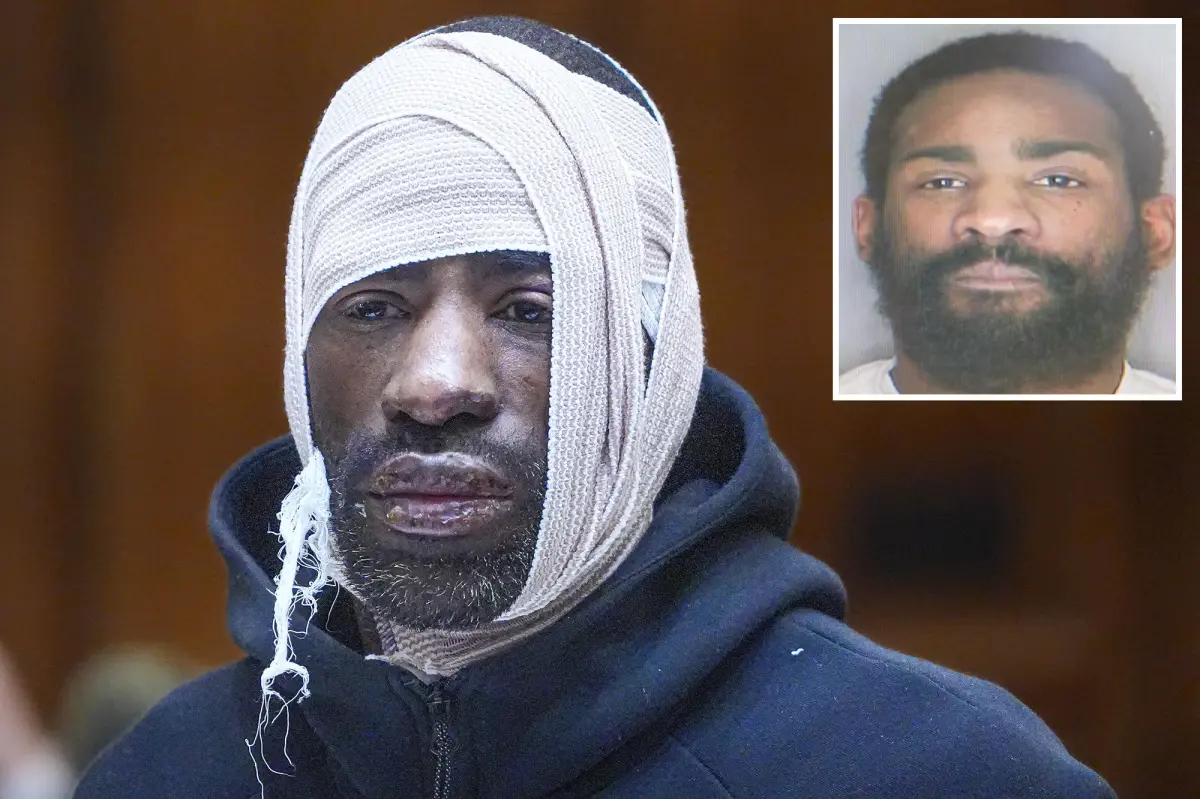
At his arraignment on Monday in Brooklyn Criminal Court, Kenneth Rickenbacker appeared in a striking and unsettling state. Nearly his entire head was wrapped in bandages, which his lawyer said were from burns he had sustained. The image of a bandaged defendant standing before a judge, accused of burning his girlfriend and threatening his daughter, was both tragic and grotesque. His injuries, whatever their cause, were a reminder that fire is indiscriminate—that even the person who lights the flame can be consumed by it. But the court’s focus was not on his medical needs; it was on the charges. Rickenbacker was hit with a sweeping array of offenses, including attempted murder, arson, assault, and acting in a manner injurious to a child younger than 17. Each charge carries serious prison time, and the attempted murder count alone suggests prosecutors believe they have enough evidence to prove he intended to kill his girlfriend when he set her on fire. The child endangerment charge speaks to the presence of the 11-year-old daughter, who was not merely in the apartment but allegedly threatened with a knife and forced to watch her mother burn. The judge remanded Rickenbacker into custody, meaning he will remain behind bars as the case proceeds. For now, the woman he is accused of attacking lies in a hospital bed, her life hanging in the balance, while her daughter faces a future shaped by the violence she witnessed.
This case is more than just another crime statistic; it is a devastating illustration of how domestic violence can escalate to the point of attempted murder in front of a child, leaving scars that go far beyond the physical. The alleged attack in Crown Heights follows a tragically familiar pattern: a father figure using threats, weapons, and violence to control and punish; a mother caught in the crossfire; and a child forced to bear witness to horrors that no child should know. Domestic violence advocates often speak of the cycle of abuse—tension building, explosion, and reconciliation—but here, the explosion was literal. Fire is one of the most terrifying weapons a person can use because it destroys not only flesh but also memories, homes, and a sense of security. The fact that it happened in a public housing apartment, where families are already vulnerable and resources are often scarce, underscores the need for better support systems, earlier interventions, and more robust protection for victims. The young girl at the center of this case will need years of therapy, not to mention the unconditional love of her mother, if she ever recovers from the trauma of watching her father attack her family. The community, too, will need to wrestle with the fear and anger that such an event leaves behind. As Rickenbacker sits in custody, awaiting trial, the justice system is now tasked with holding him accountable for the choices he made on that Saturday evening. But no verdict can undo the pain already inflicted. What remains is the hope that the victim survives her injuries, that her daughter finds healing, and that this tragedy becomes a rallying cry for stronger action against domestic violence—before the next flame is lit.