


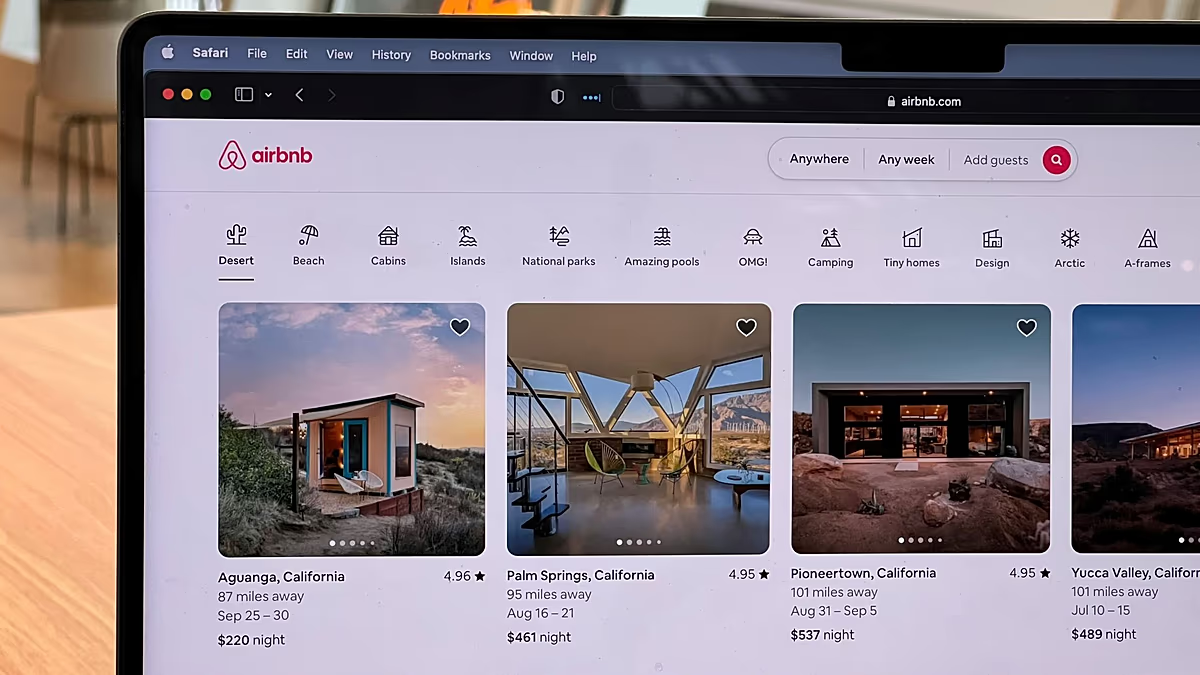
Imagine you’re at the end of a long trip, already dreading the airport line, and you walk into the kitchen of the apartment you’ve rented for a week. There it is, probably taped to the fridge: a list of “checkout duties.” Strip the beds and leave the linens in the hallway. Wash every dish by hand. Load and start the dishwasher. Take out the trash. Wipe down all countertops, including the inside of the microwave. Sweep the floor. Water the plants. And please, please, do not forget to remove the used towels and start a load of laundry. It’s a scene that has become almost meme-like in the travel world, but for many guests it was deeply unfunny. It transformed the final morning of a vacation into a scramble through someone else’s housekeeping routine, all while you were paying a significant amount of money for the right to be there. Last week, Airbnb announced that this era is coming to an end. In a significant policy shift, the company said it will no longer allow hosts to ask guests to complete chores that require “significant effort or time,” or that would usually be handled by a professional cleaner. That means no more stripping beds, no more washing dishes, and no more loading the washing machine on your way out the door. The response from guests has been overwhelmingly joyful, with travellers across social media sharing photos of absurd checkout lists they had complied with in the past, and celebrating the fact that a paid accommodation is no longer supposed to turn you into an unpaid housekeeper.
But if guests are cheering, hosts are not. The host reaction has been, to put it mildly, intense. In fact, some Airbnb hosts are so upset that they are calling for a boycott of the platform, timed specifically for the moment the new rules take effect on 20 November. Their frustration is understandable if you look at it from their side of the fence. They open their homes to strangers. They clean obsessively before every arrival. They replace burned-out light bulbs, restock toilet paper, and deal with broken alarms at odd hours. And many of them feel that asking a guest to strip the sheets is not a form of slave labour but a basic social courtesy. It’s the kind of thing you would do when leaving a friend’s house after a weekend visit. So why, they ask, would a paid platform make it impossible to request something that simple? Some hosts are now threatening to remove their listings or to schedule fake bookings as a form of protest. Others are posting angry messages about how this policy rewards lazy guests and punishes thoughtful hosts. There are even those who say Airbnb is moving away from its original promise of “home sharing” and turning into just another hotel booking site—except with none of the hotel perks and all of the hotel costs. The tone is raw, and the sense of betrayal is real. For these hosts, the ban on checkout chores feels less like a sensible update and more like a declaration that guest convenience will always matter more than host dignity.
Thankfully, not every host sees it that way. A significant and increasingly vocal group of Airbnb hosts is actually in favour of the new policy, and they’re not afraid to say so. On the Airbnb Hosts subreddit, one of the most upvoted posts since the announcement makes a very simple and sober point: the new rules mean “nothing” to the average host, because the average host already doesn’t ask guests to do much more than be respectful. These hosts understand that a modest request like taking out the trash is reasonable, but a nine-item checklist is not. They also see the broader picture perfectly clearly. The hosts who demand that guests wash bedding and scrub frying pans are not making guests feel responsible—they’re making them feel resentful. And that resentment ends up hurting Airbnb as a whole. When travellers get burnt by an unreasonable host, they don’t necessarily complain only about that host; they complain about Airbnb itself. They go back to hotels, or they never book an Airbnb again. So, from this perspective, the new policy is not a giveaway to guests. It’s a way of punishing the “bad hosts” who have given the entire platform a bad name. The top subreddit post makes the point that if you run a decent home, maintain it properly, and treat guests like adults rather than servants, you have nothing to fear from the new rule. In fact, you should welcome it, because it clears the air and sets a professional standard for everyone. The reasonable hosts are betting that in the long run, this will lead to better guest behaviour, better reviews, and more bookings for the people who deserve them.
Now let’s get into the specifics, because the new rules matter in more than just symbolic ways. In case you missed the original announcement, Airbnb has officially updated its policy to state that guests cannot be asked to do anything that requires a significant investment of time or effort, or anything that would “typically be performed by a cleaner.” This is a deliberately broad line, but Airbnb has provided a useful example. A host can no longer require a guest to wash dishes, but the host can ask the guest to leave dirty dishes in the sink before checking out. That one example says a lot. It draws a clear distinction between basic decency and actual work. It’s the difference between making sure you don’t leave the place trashed, and making sure the place is ready for the next guest. The former is a reasonable human request; the latter is a job. Airbnb’s official statement, shared with Euronews Travel, framed the change in careful and diplomatic language: “House rules help guests understand what hosts expect, but we’ve heard from our community that they can be confusing, onerous and hard to manage. So we’ve redesigned them to make them easier to discover and clearer to set, alongside a new policy that keeps requests reasonable, with no surprises.” The phrase “no surprises” is important here. Under the old system, you might book a lovely-looking flat in Lisbon, pay a hefty cleaning fee, and only find out on the last morning that you were expected to vacuum. The new system is designed to make expectations clearer before you book, and it stops hosts from adding hidden burdens along the way. If a request is normal, it can stay. If it feels like work, it’s gone. That is a cultural shift, not just a policy shift.
As the dust settles, the debate has largely boiled down to a simple question: what should a guest actually owe a host? And there is one reaction that seems to capture the middle ground better than any angry thread or triumphant post. It comes from Patrick Vlaskovits, whose perspective on the situation seemed to sum up the entire debate in a way that neither side could ignore. The point, stripped down, is this: guests are not housekeepers, and hosts are not servants. A guest who leaves a mess is being rude. A host who demands the work of a maid is being unreasonable. The new policy doesn’t choose between cleanliness and laziness; it chooses between respect and exploitation. It says, in effect, that you cannot buy an accommodation and then be treated as unpaid labour. It says that a host cannot use a guest’s fear of a bad review to pressure them into scrubbing the oven before catching a flight. This is a matter of power, and the policy is ultimately about balancing it. Airbnb is a marketplace, and marketplaces only work when both sides feel like they are getting something fair from the exchange. If guests begin to see Airbnb as a place where they’re treated like a problem to be managed, they will leave. If hosts see Airbnb as a place that disrespects their work and their property, they will also leave. The company is aware of this. In designing the new house rules, it is trying to find the narrow path between the two. Patrick Vlaskovits’s take resonates so strongly because it reminds everyone that hospitality is not a struggle for dominance. It’s a mutual agreement to behave well toward each other without needing a written list of instructions.
In the end, the new checkout policy is probably good news for the future of travel, even if the transition is painful. There will inevitably be some hosts who try to bypass the rules by sending WhatsApp messages before check-in: “Just a gentle reminder, my cleaning service is off this week, so if you could just take the sheets off, that would be amazing.” And there will be some guests who take the policy to mean they can leave the place looking like a tornado hit it. These are the extremes, and the extremes are always noisy. But the centrists—the vast majority of travellers and hosts—will likely adapt quickly. They will continue to treat each other with decency, not because a policy forces them to, but because that’s what good humans do. What the policy does change is the baseline. It removes the expectation that a guest owes time, labour, and physical effort in exchange for a good review. It shifts the financial and professional responsibility back to the host and the platform, where it belongs. And it sends a message that travel, no matter how we book it, should not feel like a final exam. Checkout should be the easiest moment of the entire stay. Wake up, pack your bag, look around one last time, maybe remember the view from the window, close the door behind you, and carry on with your life. That’s it. No waiting by the washing machine. No scrubbing the sink. No panic about whether you folded the towels the right way. The change goes into effect on 20 November, and until then, guests may still find themselves eyeing the instructions taped to the fridge. But by the end of this year, the long, dreaded chore list should be gone for good. That is a win for everyone who has ever gone on holiday and somehow ended up doing laundry. In the end, it’s not about whether the bed gets stripped. It’s about whether we remember why we travel in the first place: to rest, to see new things, to feel welcomed. That is the only thing that should matter at the end of a trip.