



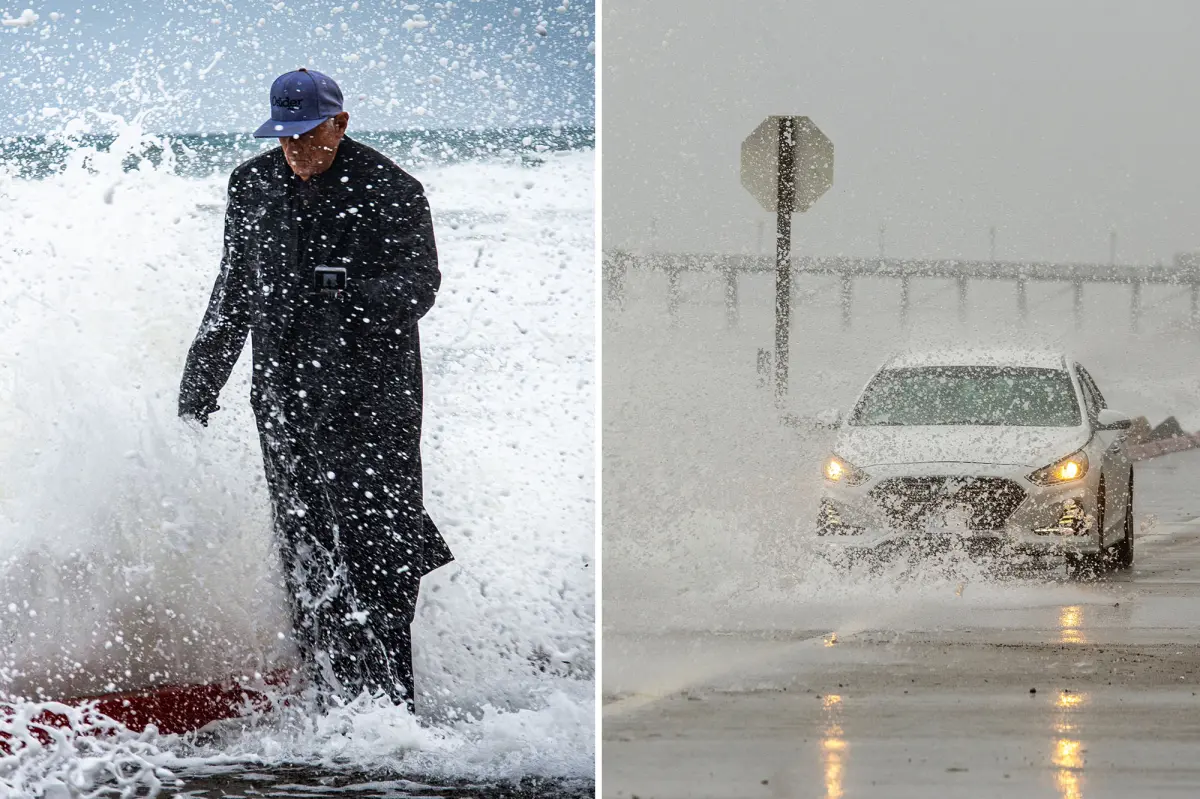
Along California’s beautiful but fragile coastline, the ocean is making itself impossible to ignore this week. A series of very high king tides—those dramatic, naturally occurring surges in seawater driven by the gravitational pull of the sun and moon—has prompted officials to urge residents and visitors to stay alert and stay safe. The National Weather Service has issued a coastal flood advisory that begins at 5 a.m. Sunday and runs through 1 p.m. Thursday for beaches across Los Angeles, Ventura, Santa Barbara, and San Luis Obispo counties. In plain language, that means the sea is expected to push far higher onto shore than usual, and the everyday places people use to enjoy the coast may suddenly be underwater. The advisory warns of minor to moderate flooding in low-lying coastal areas, especially around the time of high tide each morning. Beach parking lots, winding bike paths, and narrow harbor walkways are all likely to feel the ocean’s reach. For locals, these are familiar scenes: waves spilling over seawalls, water pooling at the end of a street, sandbags stacked outside beachfront homes. But familiarity does not make it any less dangerous. Even a shallow-looking flood can hide strong currents, sharp debris, or unseen damage beneath the surface. Officials are asking everyone to respect the power of the tide, keep a safe distance, and never turn their back on the ocean. In communities where the coastline is woven into everyday life, this is more than a forecast—it is a quiet reminder that the sea is never truly tamed, no matter how many seawalls or parking lots we build to hold it back.
Forecasters are expecting high tides each morning to reach up to eight feet, which is roughly one to one and a half feet higher than normal astronomical predictions. That might not sound like a dramatic difference, but along a coastal landscape already shaped by erosion and rising sea levels, those extra inches and feet can transform familiar terrain. The National Weather Service’s advisory describes the likely impact with careful, measured language: minor to moderate flooding of seawater over vulnerable low-lying areas, especially around the time of high tide, including beach parking lots, bike paths, and harbor walkways. It also warns of moderate to significant beach erosion. For surfers, photographers, and early-morning joggers, these conditions can be both thrilling and treacherous. There is something awe-inspiring about watching waves roar over rocks and spill onto pavement, but that same force can undercut cliffs, wash out sand, and leave behind debris-strewn shores. Businesses along the coast are used to keeping an eye on the horizon, but this week many are taking extra steps, moving outdoor furniture, raising equipment, and reminding employees not to park too close to the water. Residents in neighborhoods that have flooded before are checking their supplies, clearing storm drains, and reviewing their insurance policies. No one is panicking, exactly, but there is a shared understanding that the ocean decides where the line is drawn. When the tide arrives each morning, it will not check the calendar or ask permission. It will simply rise, and the people of California’s coast will have to rise with it.
Further south, the sense of urgency is even greater. The National Weather Service has issued a coastal flood warning for San Diego County and Orange County, a more serious alert that tells coastal residents to be prepared for rising water and to take appropriate action to protect life and property. In those warning areas, high tides are expected each morning and could run anywhere from one to 1.7 feet above normal astronomical tide predictions. That extra water may be the difference between a damp sidewalk and a flooded street, between a bike path strewn with seaweed and a harbor walkway that is completely impassable. For people who live in waterfront communities or low-lying neighborhoods near lagoons and estuaries, the warning is a call to action. It means moving vehicles to higher ground, securing outdoor belongings, and making sure that anything valuable isn’t left where the tide can reach it. It also means paying close attention to local alerts and being ready to change plans at a moment’s notice. The National Weather Service office in San Diego has stressed that coastal residents should remain alert, especially during the morning hours when high tides are at their peak. There is a certain vulnerability that comes with living so close to the sea, and this week is a reminder that no amount of beautiful weather can erase the ocean’s raw power. Even on a sunny day, the water can reach beyond its usual boundaries, and the best defense is not guesswork but preparation. For many, that means listening to officials, checking tide charts, and making smart choices rather than taking unnecessary risks.
Adding to the unease this week is the weather expected for Halloween. Southern California is likely to have a wet Halloween weekend, according to the National Weather Service, which says there is high confidence that measurable rainfall will fall for most, if not all, of the region from Friday through the weekend. At the same time, confidence in the exact timing and totals remains very low. That forecast uncertainty is frustrating for families, event planners, and anyone hoping to take children out for a night of trick-or-treating. The message from officials is simple: residents should expect Halloween activities to be impacted by rain to some level. That does not mean the holiday is ruined, but it does mean that costumes might need to include raincoats and umbrellas, and that indoor celebrations may be a safer bet in some communities. For coastal areas already dealing with high tides and potential flooding, the combination of rain and elevated water levels could create additional problems. Storm drains that are already struggling with seawater may have a harder time handling runoff from rainfall, and slick roads combined with flooded intersections make driving more hazardous. Parents will need to be extra careful when walking children from house to house, especially in neighborhoods near the water where even small puddles can hide slippery surfaces or deeper drop-offs. The best approach is to treat this Halloween as a weather-aware celebration. Check forecasts before heading out, keep an eye on the sky, and remember that the spookiest thing about the night should be the decorations, not a flash flood or a sudden wave. The ocean and the rain are both forces of nature, and this week they are reminding everyone that coastal living comes with weather that cannot be fully controlled.
Perhaps nowhere has the threat been taken more seriously than in Newport Beach, one of Orange County’s most iconic coastal communities. Earlier this week, city officials declared a local emergency in advance of exceptionally high king tides expected to hit later this month. The emergency declaration is not just symbolic—it allows the city to access additional resources, coordinate response efforts, and move quickly if conditions worsen. Newport Beach has also activated its emergency operations center to coordinate flood prevention and response efforts. The forecast for the area shows coastal water levels cresting at elevated heights from October 26 through October 28. On the first day, tides are predicted to reach 6.5 feet but could potentially crest as high as 8.3 feet. The peak is expected on October 27, when tides are forecast at 6.7 feet with potential crests up to 8.5 feet. Elevated conditions are expected to continue on October 28, with a predicted tide of 6.6 feet. For those who live, work, or play in Newport Beach, these numbers are more than just data points. They represent the very real possibility of water surging onto roads, under homes, and across the sand. The city has moved to prepare, but the ocean does not always follow predictions exactly, and emergency managers know that the difference between a close call and a disaster can come down to a few inches. Residents are being encouraged to stay informed, avoid flooded areas, and take proactive steps to protect their properties. The declaration of a local emergency can sound alarming, but it is also a sign of responsible leadership—acknowledging the risk early and mobilizing efforts before the water arrives, rather than waiting until the last minute when panic replaces planning.
For all the disruption these king tides can bring, they also offer a rare glimpse into the future. King tides are a natural phenomenon that has occurred for millennia, but scientists say their impact is being amplified by climate change and rising sea levels. What was once a dramatic high tide every few years now can feel like a preview of a normal day by the middle of the century. The water that spills across a parking lot on a sunny morning is not just an inconvenience; it is a lesson about how the coastline is changing and how communities will need to adapt. That means thinking about managed retreat, living shorelines, better drainage, and more resilient infrastructure. But it also means something simpler on a human level: respecting the ocean’s boundaries and recognizing that our shared landscape is vulnerable. When a beach parking lot floods, when a harbor walkway disappears under the sea, when a family has to shuffle their Halloween plans because of rain and tides, it is easy to feel overwhelmed. But there is also strength in those moments. Neighbors check on neighbors. Volunteers fill sandbags. Emergency workers stand ready through the night. Local news outlets and official alerts keep the public informed, and residents learn to trust the warnings rather than dismiss them. The sea will keep rising and falling, as it always has. But how we respond is up to us. This week, along the California coast, that response is one of caution, patience, and quiet resilience—an understanding that we cannot control the ocean, but we can prepare for its moods, and we can weather the storm together.