


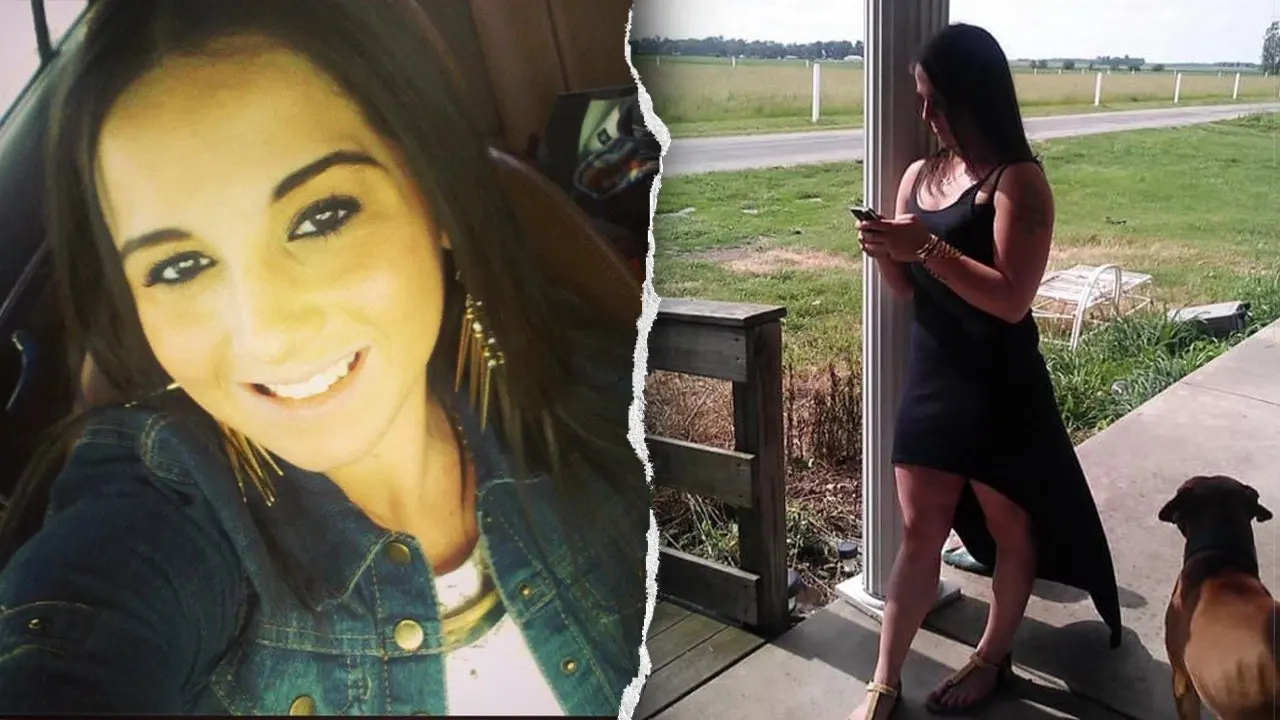
For a decade, Christina Kramer has been living in a kind of limbo, caught between the unbearable memory of her daughter’s last moments and the frustrating absence of any real answers. Her daughter, Angie Barlow, was only 23 years old when she disappeared from Indianapolis on October 26, 2016. On that night, Angie sent a text message to her roommate that would forever haunt her family: “About to work this private party in case I go missing LOL.” It was a casual, almost joking message, the kind a young person might send without a second thought. But Angie was heading to a private dancing gig at the Landmark Apartment and Townhomes, a job she had accepted because she needed quick cash. She never came home. For nearly eight months, Kramer was suspended in a nightmare of uncertainty, hoping her daughter would walk through the door, hoping the worst had not happened. Then, in June 2017, that hope was shattered. Searchers found Angie’s remains in the backyard of a residence on Harcourt Avenue in Indianapolis. The young woman had been fatally shot. For Kramer, that moment was not the beginning of closure but the start of a long, painful fight for justice that continues to this day. She describes the grief as something that never truly fades, only changes shape, becoming a constant companion that she has learned to carry while trying to be strong for her surviving daughters.
The years since Angie’s murder have been marked not only by loss but by an agonizing silence from the very people responsible for finding her killer. Kramer says she has been desperate for updates, but the flow of information has dried up almost completely. A special prosecutor who had been assigned to the case eventually left the office, and with that departure, Kramer lost her last meaningful point of contact. She estimates that it has been about two years since she last heard from the Marion County Prosecutor’s Office. In the time since, she has sent countless emails into a void, with no replies and no acknowledgement. She has tried repeatedly to reach Marion County Prosecuting Attorney Ryan Mears, but her messages have gone unanswered. The prosecutor’s office itself has not responded to requests for comment, leaving a grieving mother to wonder if her daughter’s case has been forgotten. The Indianapolis Metropolitan Police Department maintains that the investigation remains open, with Detective Jose Torres as the lead investigator, but they have declined to share further details. For Kramer, this silence is almost as painful as the loss itself. It sends a message that Angie’s life, and her death, do not matter enough. It leaves a family with no closure, no direction, and no sense that anyone is fighting for them. She says she feels like she is shouting into an empty room, and the echoes of her own voice are the only response she gets.
In the absence of answers from investigators, Kramer has spent years piecing together the fragments of what happened that night, trying to make sense of a senseless crime. Surveillance footage from the apartment complex offered a glimpse into the early hours of October 27, 2016, showing two vehicles leaving around 3:30 a.m. One of those vehicles was Angie’s blue Pontiac G6, a car Kramer identified immediately. The other was a black sedan, which she believes belonged to a female acquaintance who had worked with Angie at Club Rio in Indianapolis. Because of the vehicles’ tinted windows, the footage did not allow investigators to identify the drivers or any passengers. It was a frustrating dead end. But Kramer refused to wait passively. Days passed with no word of her daughter, and she decided to take matters into her own hands. She contacted the dealership where Angie had purchased the car and asked if the vehicle had a GPS tracker. It did. Using that technology, she helped locate the car about eight miles from the apartment complex. When the vehicle was recovered, it was not the pristine car Angie had loved. It was completely trashed inside, with the interior torn apart and dirt and debris scattered everywhere. It looked as though it had been driven under a fence, perhaps through rough terrain. Kramer said the condition of the car told a story of chaos and desperation. “That car had been on some kind of journey,” she said, her voice heavy with the weight of what that journey might have meant for her daughter. The discovery raised more questions than answers, and no one has ever been arrested for the murder.
Perhaps one of the most painful moments in this long ordeal came in January 2017, months after Angie disappeared. Kramer received a phone call from the female acquaintance who had been at the private party that night with her boyfriend. Angie knew the pair, but they were not friends. She had taken the job because she needed quick cash, and Kramer later learned, with deep regret, that her daughter would never have accepted the gig if she had known who would be there. During that January phone call, Kramer asked the woman what she and Angie had talked about at the party. She was searching for any fragment of her daughter’s last hours, any small detail that might offer comfort or clarity. Instead, the woman delivered a chilling response: “Oh, you want to know what her last words were.” Kramer said the remark stayed with her because it felt less like an answer and more like a taunt, a cruel reminder that someone out there knew more than they were saying. The woman later denied making the call and denied having the conversation at all. But for Kramer, the damage was done. That single sentence became another layer of torment in an already unbearable experience. It came to symbolize the callousness and indifference she has sometimes felt from the world around her, and it reinforced her determination to keep pushing for answers, even when the people she trusted to help her have remained silent. She cannot shake the feeling that someone knows what happened to her daughter, and that the truth is hiding just out of reach.
But Angie Barlow was so much more than the circumstances of her death, and her mother wants the world to remember her that way. Despite standing under five feet tall, Angie was a fierce and gifted athlete. She excelled as a softball catcher, a position that requires toughness, quick reflexes, and a strong will. She also competed in basketball, shot put, volleyball, and bowling. There was no sport she would not try, and no challenge she would not meet. Kramer remembers her daughter as a determined, vibrant young woman who loved life and loved her family. Angie was the eldest of four sisters, and she had moved away from the family home in Muncie to build her own life in Indianapolis. She was close to her siblings, and her absence has left a hole that will never be filled. The weight of her loss has been especially heavy on Kramer’s youngest daughter, who was only four years old when Angie disappeared. That child, now older, has tried to process the trauma in her own way. Kramer said her youngest daughter turned to violent video games, not out of a love of violence but as a strange coping mechanism, a way to learn “how to escape the bad people.” It is a heartbreaking reminder that murder does not just end one life; it ripples outward, touching every person who loved the victim, shaping the way they see the world and their own safety. Kramer said that talking about her daughter’s accomplishments brings her joy, but the joy is always tinged with sorrow because Angie should still be here, living the life she deserved.
Through all the years of silence, all the unanswered emails, all the dead ends and painful memories, Christina Kramer has made a decision. She will not let her daughter become just another unsolved case, a name on a file collecting dust. She will continue to speak, to push, and to demand justice. “When you remain silent, you’re a victim. When you have a voice, you’re a survivor, and I refuse to be a victim of my circumstances,” she said. “My daughter was the victim. She can’t speak for herself. I’m her survivor. I’m her voice, and I speak for her.” Those words are not just rhetoric. They are the anchor of her existence now. She has become an advocate for her daughter, a one-woman force determined to make sure that Angie is not forgotten. The Indianapolis Metropolitan Police Department continues to urge anyone with information to come forward through its homicide office at 317-327-3475. Tipsters can also contact Crime Stoppers of Central Indiana at 317-262-TIPS (8477), where callers can remain anonymous. Kramer hopes that someone, somewhere, will find the courage to share what they know. She believes that the truth is still out there, buried beneath the silence, waiting to be uncovered. And until that day comes, she will keep speaking for the daughter she loved, keep holding onto the hope that justice will finally arrive, and keep reminding the world that Angie Barlow was not just a victim. She was a daughter, a sister, an athlete, a young woman with a future that was stolen far too soon.