


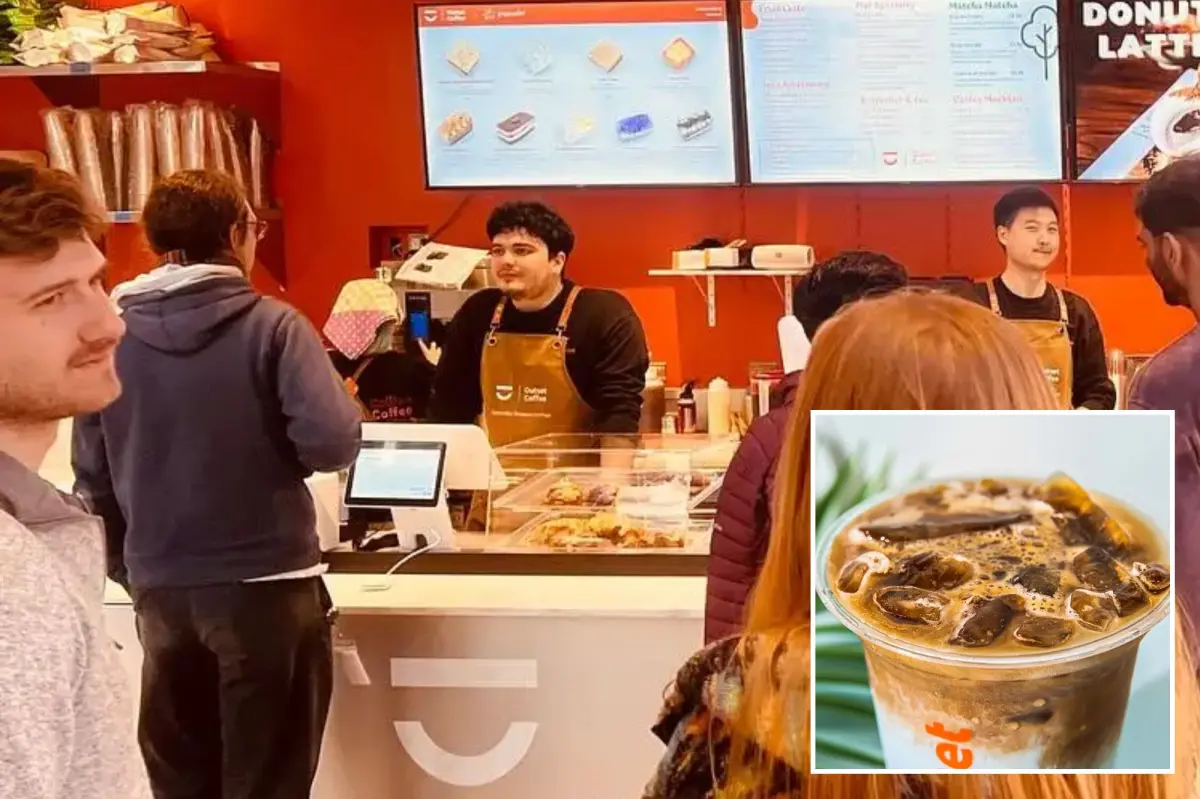
It started like so many beloved San Francisco institutions do: with promise, with flavor, and with a line of regulars who made the shop part of their daily rhythm. Outset Coffee was the kind of place that felt both fresh and familiar—an Asian-inspired menu of blended coffees, delicate matcha, and vibrant fruit juices that stood out in a city crowded with cafe options. For a time, it seemed like a natural evolution of the Bay Area’s food-and-drink scene, a modern, stylish addition to the neighborhood landscape. Then, almost without warning, it was gone. No grand farewell, no official announcement, no final send-off on social media. Just locked doors, a hushed wave of disappointment, and the quiet unraveling of a business that had once seemed destined for bigger things. The story behind that silence is not simply one of a failed coffee shop; it is a story about ambition, financial pressure, legal battles, and the unforgiving economics of running a small business in one of the most expensive cities in America.
At the center of it all is Toby Sun, a name familiar to anyone who followed the explosive rise of micromobility in the late 2010s. Sun co-founded Lime, the scooter company that became a ubiquitous part of urban transportation, with its bright green scooters scattered across sidewalks from San Francisco to Paris. For a time, Lime was the poster child of venture-backed growth, raising hundreds of millions of dollars and redefining how people moved through cities. Sun served as CEO before stepping down in 2019, a transition that marked the end of one chapter and the beginning of another. Rather than retire or simply ride out his success, Sun pivoted to the consumer food-and-beverage world, a notoriously difficult industry where margins are thin, competition is fierce, and survival depends on a thousand small decisions. He raised millions of dollars to launch Zero&, a fruit-focused tea shop that expanded aggressively into the Bay Area, Southern California, and Boston. He then launched Outset Coffee in June 2023, with a second location following in 2024. On the surface, it looked like a tech founder bringing his energy, capital, and growth mindset to the hospitality sector. But behind the sleek storefronts and Instagram-worthy drinks, the foundation was already beginning to crack.
The cracks became impossible to ignore when the legal disputes started piling up. Outset Coffee’s downtown location at 90 New Montgomery Street became the site of one of the most public—and painful—struggles. According to court records first reported by the San Francisco Chronicle, the landlord gave the shop three days’ notice in October 2025 to pay rent or vacate the premises. The unpaid rent at that point had reached approximately $121,000, a staggering sum for any small business. The base rent itself was $9,500 a month in that year, which may not sound like much for a commercial property in the heart of San Francisco, but when combined with operating costs, payroll, inventory, and the endless small expenses that come with running a cafe, it becomes a heavy weight to carry. An initial eviction attempt in January was unsuccessful, offering a glimmer of hope that Outset might somehow pull through. But hope is not a business plan. Eventually, the inevitable arrived. In August, Outset vacated the downtown space, and the dream of a thriving coffee shop in that location came to an end. For the landlord, it was a financial blow. For the employees who had shown up every day to make drinks and greet customers, it was the loss of a livelihood. And for the customers who had come to rely on that morning coffee, it was another small heartbreak in a city that has seen too many.
The Mission District location told a similar story, but with its own painful twists. Outset’s presence on Valencia Street had made it a favorite among locals who appreciated the inventive menu and the comfortable, welcoming atmosphere. But behind the counter, the business was struggling to keep up with its obligations. The landlord of the Mission outpost filed a lawsuit claiming that the coffee shop had stopped paying rent after 2024, and that by April 2025 the unpaid balance had climbed past $100,000. The lease was supposed to run until 2028, which should have provided years of stability for both the business and the property owner. Instead, according to the lawsuit, Outset eventually stopped communicating altogether and simply abandoned the space. A judge ordered the coffee shop to pay $200,000 in back rent, fees, and interest—a number that no longer felt abstract, but instead represented the full weight of the collapse. Across both locations, the landlords claimed Outset owed at least $223,000 in rent. What made the situation even more striking was that Outset reportedly did not respond in court to either lawsuit. No legal defense, no motion to explain, no attempt to negotiate. Just silence. That silence can be read many ways: perhaps a founder too overwhelmed to fight, perhaps a business with no remaining resources, perhaps a decision that the battle was no longer worth fighting. Whatever the reason, the absence of a response made the outcome inevitable. The evictions moved forward, the judgments were entered, and Outset Coffee quietly slipped away from the San Francisco landscape.
What makes this story even more troubling is that Outset was not the only business in Sun’s portfolio to end this way. Zero&, the fruit-focused tea shop he founded after leaving Lime, also shuttered roughly a dozen locations. Multiple landlords filed claims of rent delinquencies against those sites, and evictions followed there as well. It is difficult not to see a pattern. This was not a single location that ran into trouble because of a bad corner or a sudden drop in foot traffic. It was a broader collapse across a mini-empire of food-and-beverage ventures, all tied to the same founder, all facing the same kinds of legal and financial pressures. For Sun, who had once been celebrated as a visionary in the tech and transportation worlds, the fall has been steep. The transition from tech CEO to restaurant and cafe owner is never easy, and many successful tech entrepreneurs have discovered that the skills required to scale a digital platform are very different from the skills required to run a profitable coffee shop. Rent, spoilage, labor costs, customer loyalty, seasonal fluctuations, and the sheer physical labor of hospitality are unforgiving. Even the most well-funded ventures can fail if the fundamentals are ignored. And when the money runs out, the legal notices arrive, and the doors close, leaving behind empty storefronts and unanswered questions.
For the people who loved Outset Coffee, the closure has been especially difficult because it came without warning. There was no email to loyal customers, no sign on the door explaining what had happened, no final chance to order one last matcha latte. One social media user summed up the feeling perfectly, writing, “I loved their drinks and was so sad to find the Valencia one closed.” That sense of sadness echoes far beyond a single cafe. It is a reminder that behind every storefront, every menu, every small business, there are human beings—owners with dreams, workers with rent to pay, and customers with memories. The story of Outset Coffee is not just a cautionary tale about the dangers of expansion or the importance of paying rent on time. It is also a story about how quickly things can fall apart when the numbers stop working, when communication breaks down, and when the people in charge are no longer able—or willing—to hold the pieces together. San Francisco has always been a city of dreamers, but it is also a city where dreams are routinely crushed by the cost of doing business. Outset Coffee was a small but meaningful part of that landscape, and its absence will be felt by those who knew it. In the end, the closure was not announced, but it was heard—in the empty spaces, in the disappointed comments, and in the quiet recognition that yet another piece of the city’s character has slipped away.