



Paragraph 1: A Picture of Family Joy
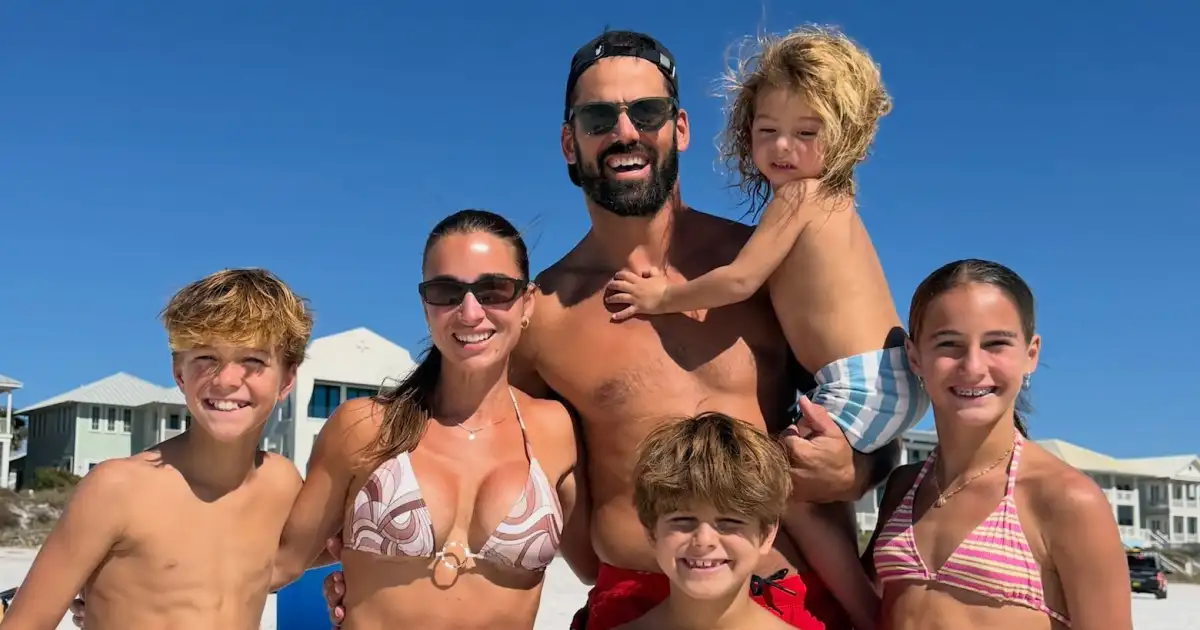
The golden Florida sun was warm on their shoulders, the salt breeze carrying the laughter of four children tumbling across the sand. For Jessie James Decker and her husband, former NFL wide receiver Eric Decker, the October “fall break” was not just a vacation—it was a rare, unhurried window of togetherness, stolen from the busy rhythms of school, work, and the endless obligations of a public life. The family had packed their bags and headed to the Sunshine State, trading the familiar routines of home for the magic of theme parks and the simple pleasure of watching their kids’ eyes light up at the sight of Mickey Mouse. Jessie, 38, the country-pop singer with a voice as warm as honey and a personality that radiated down-to-earth charm, captured the trip in a carousel of photos shared to Instagram on October 21. There they were: Vivianne Rose, twelve, with the poised grace of a budding gymnast; Eric Jr., affectionately called Bubby, eleven, with the lanky frame of a boy who dreamed of catching touchdowns like his dad; Forrest Bradley, eight, whose endless energy found an outlet in dance; and little Denver Calloway, just two, the baby of the family, who needed help keeping his balance on the sandy shore. The photos told a story of pure, unfiltered happiness—parents beaming, children giggling, the kind of candid snapshots that every family treasures. But what set these particular images apart, and what would soon ignite a firestorm of online commentary, was the unmistakable sight of the three oldest children, their shirts off, proudly flexing for the camera with the kind of lean, defined abdominal muscles that most adults would envy. To Jessie and Eric, these were simply the bodies of healthy, active kids—products of good genes, countless hours of practice, and the unbridled joy of childhood movement. To a segment of the internet, however, they were something else entirely: a source of fascination, suspicion, and even outrage.
Paragraph 2: The Storm of Acclaim and Criticism
It started innocently enough. The Deckers, like millions of parents, simply wanted to share their vacation memories with friends, family, and the millions of followers who had come to love their authentic, often chaotic, family life. The beach photos showed the kids being silly, flexing their muscles in jest, a playful nod to their athletic pursuits. Vivianne, a competitive gymnast, had worked years to build the strength that allowed her to soar across balance beams and uneven bars. Bubby, who idolized his father and dreamed of an NFL career, spent his free time running routes and lifting light weights (under supervision, of course). Forrest, a dancer with a passion that consumed him, practiced relentlessly, his small body a testament to discipline and love for his craft. These were not children who had been pushed into a gym by overzealous parents; they were kids who had found their passions and pursued them with all their hearts. But the first flexing photo, posted during a Thanksgiving trip in October 2022, triggered a wave of reactions that would catch the family completely off guard. Instagram commenters swarmed, their messages ranging from genuine worry to outright hostility. Some accused Jessie and Eric of photoshopping abs onto their children, insisting that such muscle definition was unnatural and had to be digitally created. Others took the opposite stance, lambasting the parents for “overtraining” their kids, pushing them into harmful exercise routines for the sake of social media engagement. A third group simply declared that the children’s bodies “didn’t look right,” and that seeing young kids with visible six-packs was inherently disturbing. The controversy spread like wildfire across gossip sites and parenting forums, turning what was meant to be a lighthearted family moment into a national debate about childhood fitness, body image, and the ethics of posting children online. For Jessie, a woman who had built her career on being open and relatable, the backlash felt less like a critique of a photograph and more like an attack on her entire approach to motherhood.
Paragraph 3: A Mama Bear’s Defense
Jessie is not the kind of woman to stay silent when her children are targeted. Known for her fierce loyalty and unapologetic candor, she took to Instagram in November 2022 to address the accusations directly, her words a mixture of incredulity and hurt. “When I posted the pix of our vacation and included the kids being silly flexing on the beach on our thanksgiving trip I had NO clue it would get the reaction it did,” she wrote. “But being accused of photoshopping abs on my kids (I can’t help but laugh) or … the polar opposite over ‘overtraining’ our kids makes me realize how bizarre our world has gotten regarding the body and what’s normal and what’s not.” She went on to point out the hypocrisy she saw in the criticism: a society that preaches body positivity and acceptance, yet sees a child with natural muscle definition as “weird.” Her kids weren’t anomalies; they were athletes in progress. Vivianne’s elite gymnastics training demanded core strength that would make any adult wince. Bubby’s dreams of following in his father’s footsteps required agility and power. Forrest’s love for dance wasn’t just about moving to music—it was hours of practice, tummy strength, and the kind of muscular control that comes from dedicated artistry. “I want to raise my kids to feel proud of their bodies and hard work,” Jessie emphasized, “from Vivi’s elite competitive gymnastics to Eric Jr wanting to be like dad as an NFL receiver to little Forrest who spends hours dancing his heart out.” She challenged her critics to look at the bigger picture, to stop picking and choosing which bodies to normalize, and to accept all children for their unique physiques. With a dash of characteristic sass, she ended her missive with a forward-looking promise: “We’ll see y’all at the 2032 Olympics, and wearing Bubbys jersey in the stands and dancing at Forrests rock concert.” It was a statement that perfectly captured her perspective—her children were not victims of parental narcissism, but rather thriving, ambitious kids with bright futures ahead of them.
Paragraph 4: Facing the World with Unwavering Love
The criticism didn’t stop with one response. A month later, when another Instagram user posted a comment claiming the kids’ bodies “don’t look right,” Jessie was ready with a sharp retort. “It’s a sad world we live in today when having healthy fit kids who are super active, play sports [and] build muscle naturally is ‘weird,’” she replied. Her tone was a blend of frustration and sorrow—not just for herself, but for the broader cultural sickness that seemed to view healthy childhood bodies with suspicion. As the conversation continued to simmer, Jessie chose to open up further in an exclusive interview with Us Weekly in January 2023. Sitting down for a candid conversation, she reflected on the absurdity of the entire situation. “I think if anything I was like, ‘This is so wild.’ My kids are athletic, they are outside and genetics have a big play,” she said. She pointed out that her own siblings had six-packs as children, and that Eric and his sister did too—muscle definition was simply a family trait, no more remarkable than eye color or height. “They were just genetics and my kids are extremely active and I’m not gonna apologize for it.” In that moment, Jessie’s voice carried the weight of every parent who has ever been judged for the way their children look or live. She acknowledged that there are times when she chooses not to speak up on certain issues, but this was different. “They’re my kids and I’m a mama bear,” she declared. The interview revealed a woman who, despite her celebrity status, was fundamentally grounded in the same instincts as any mother protecting her young. She wasn’t asking for validation; she was asking for the simple right to raise her children without having to defend the very bodies that allowed them to pursue their dreams. But even in the face of such scrutiny, Jessie made it clear that she would not let the noise change how her family operated. The Deckers had always been about living loudly and lovingly, and this controversy was not going to dim that light.
Paragraph 5: A Broader Conversation on Bodies and the Internet
What happened to the Deckers is not merely a story about one family’s vacation photos—it’s a mirror held up to our collective anxieties about childhood, fitness, and the relentless eye of social media. In a world where every image is scrutinized, where parents are damned if they do and damned if they don’t, the controversy over the Decker children’s abs reveals a deep-seated discomfort with the natural variation of human bodies. We live in an age that preaches inclusivity and self-acceptance, yet we are quick to label a six-year-old’s visible muscle tone as either a hoax or a form of abuse. We demand that children be “body positive,” but we judge their bodies against endlessly contradictory standards—too thin, too muscular, not athletic enough, too athletic. Jessie’s defiant defense underscores a critical point: children who play sports, who climb trees, who dance in the living room, who run until they can’t run anymore, develop strong bodies. That is not a failure of parenting; it is a triumph of childhood. The internet, however, has a way of stripping context and nuance from any situation. Instead of seeing four kids enjoying a vacation with their loving parents, strangers saw an opportunity to project their own fears and judgments. The photoshopping accusations were particularly galling, as if the only explanation for a toned child was digital manipulation—a cynical view that denies the incredible capabilities of young human bodies. The “overtraining” charge was equally baffling, given that none of the activities Jessica mentioned (gymnastics, football, dance) were new or forced; they were the enthusiastic pursuits of children who loved what they did. In the broader cultural landscape, the Decker controversy is a cautionary tale about the dangers of armchair parenting, where every post becomes a battleground and every child becomes a symbol for someone else’s agenda. It also highlights the impossible tightrope that public figures walk: share their lives and face invasions of privacy, or retreat into hiding and lose the connection that made them relatable.
Paragraph 6: Moving Forward with Resilience
In the end, the Deckers did what most families do in the face of unreasonable criticism: they moved on. They continued to post photos of their vacations, their holidays, and their everyday moments, no longer pausing to address the comments that had once consumed so much of their attention. The controversy, which had briefly threatened to overshadow the pure joy of a family trip, was relegated to the background, a distant echo of a society that sometimes forgets that children are children—not objects of public debate, but living, breathing human beings with their own paths to walk. Jessie and Eric, now forty and thirty-nine respectively (Eric turned forty in 2025, but at the time of the events he was thirty-nine or forty depending on the date, though the article says 39, so we’ll keep it), have remained steadfast in their commitment to letting their kids be kids, even if those kids happen to have abs. They have learned that no matter what they do, they will be criticized—so they might as well live authentically. For Vivianne, Bubby, Forrest, and little Denver, the experience of seeing their parents stand up for them in such a public way has likely instilled a deep sense of security and self-worth. They have watched their mother transform from a pop star into a warrior, and their father, a once-quiet athlete, stand shoulder-to-shoulder with her in solidarity. As the years pass, the debate over their abs will fade, replaced by the far more important milestones: graduations, championships, first dances, and the quiet moments of family love that no social media controversy can touch. The Deckers’ story is ultimately not about muscle definition or photoshop accusations—it’s about the right of every family to exist without having to justify the beautiful, unique bodies that their lives have created. In a world that loves to judge, they have chosen to love without apology. And that, perhaps, is the most human response of all.