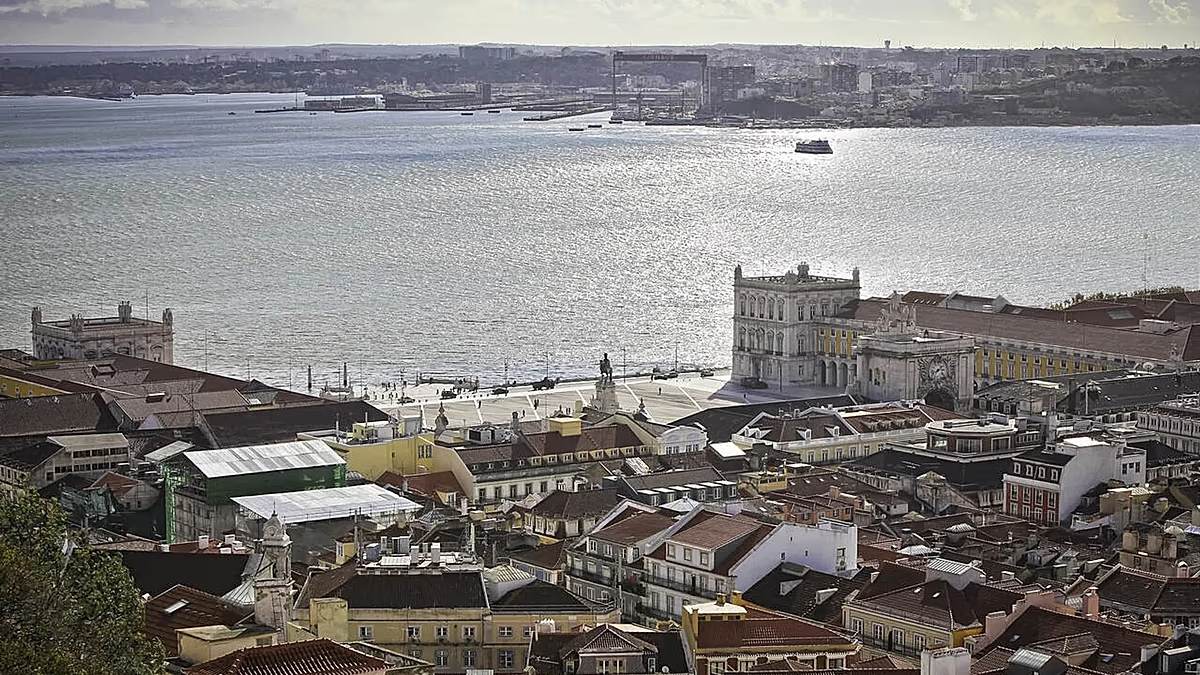




I still remember what it felt like to travel through Europe before everything got complicated. As a Brit who voted Remain, I sometimes catch myself drifting back to those blissful, uncomplicated days when the only thing standing between me and a weekend in Lisbon or a slow train through the Italian countryside was the balance in my bank account. No passport stamp anxieties. No mental arithmetic about how many days I’d already spent in France or Spain that year. Just a ticket, a bag, and the open continent. Those days are gone, of course, and dwelling on them is probably pointless. But every so often, I find myself hoping for some kind of miracle — maybe Andy Burnham will decide to go “all the way” and push for rejoining, and we will all wake up from this national nightmare. Please, and thank you. Or perhaps someone with an EU passport will take pity on me and get down on one knee, offering a path back to the Schengen freedom I once took for granted. I’m not proud; I’d say yes in a heartbeat. But until then, I have to play by the rules that now govern British travellers, and those rules are a lot less romantic than the dreamy, borderless Europe I used to wander.
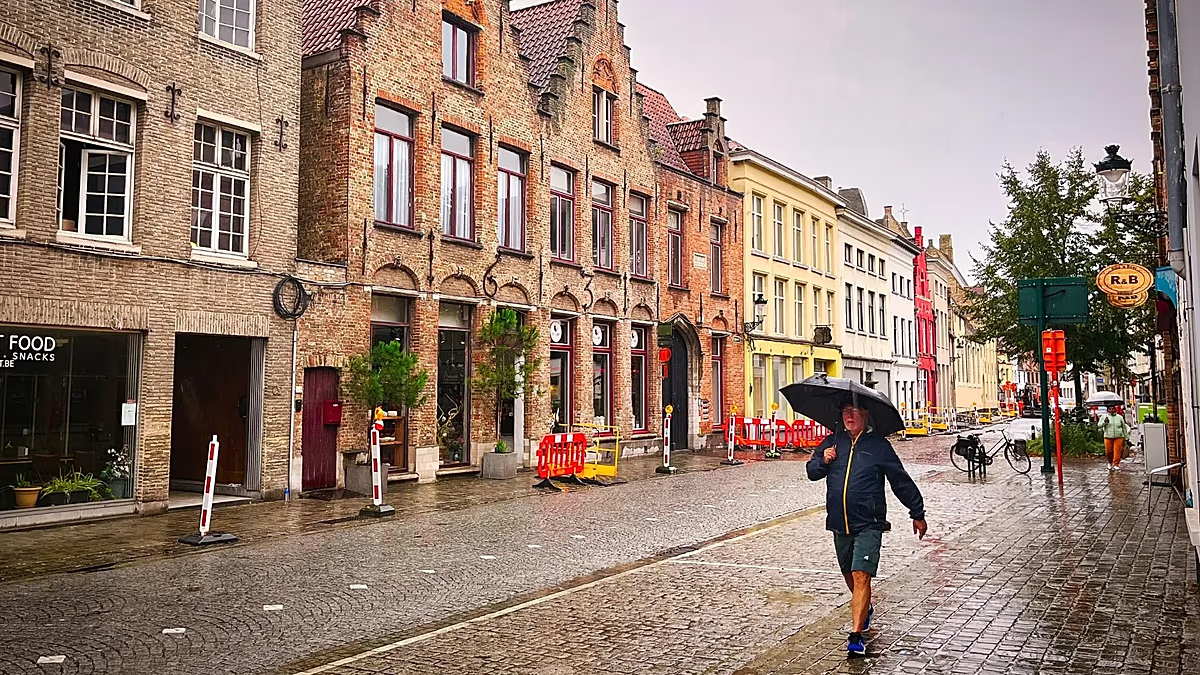
For those of us who are now considered citizens of third countries, the maximum time we can spend inside the Schengen Area is ninety days within any one-hundred-and-eighty-day period. That sounds simple enough when you read it, but in practice it can become an absolute obsession. I travel to the EU frequently — for work, for friends, for the sheer joy of sitting in a Viennese coffeehouse or wandering through the streets of Bruges — and tracking my days has turned into a strange, ongoing ritual. I have a note on my phone, a spreadsheet on my laptop, and a faint, constant hum of anxiety in the back of my mind. Am I overcomplicating this? Probably. But I know I’m not alone. There is a whole tribe of us out there, a scattered community of wanderers attempting what people affectionately call the “Schengen shuffle.” The idea is simple: alternate between Schengen and non-Schengen countries, flitting in and out, so you never quite hit the limit and never have to leave Europe completely. You spend a week in the Netherlands, then hop over to Dublin for a few days. You soak up the sun in Portugal, then fly to Cyprus to reset the clock. It’s exhausting, but it’s also a kind of game — a logistical puzzle with no reward except the chance to stay a little longer in a place you love.
Let’s talk about the rules, though, because they’re worth understanding if you want to keep your sanity. The Schengen Area isn’t quite the same as the European Union, although the two overlap in a way that confuses a lot of travellers. It covers twenty-nine countries: twenty-five of the twenty-seven EU member states — Austria, Belgium, Bulgaria, Croatia, Czechia, Denmark, Estonia, Finland, France, Germany, Greece, Hungary, Italy, Latvia, Lithuania, Luxembourg, Malta, Netherlands, Poland, Portugal, Romania, Slovakia, Slovenia, Spain and Sweden — plus four non-EU countries that have joined the club: Iceland, Norway, Switzerland and Liechtenstein. That means you can travel between all of these countries without internal border checks, which is wonderful when you’re on holiday and utterly terrifying when you’re trying to keep track of your allowed days. The two EU countries that sit outside this arrangement are Cyprus and Ireland, which is why the Schengen shuffle often revolves around those destinations. If your passport is from the UK, the United States, Australia, New Zealand or a handful of other nations, you can enter the Schengen Area without a visa for short stays. If you’re from China, India, Indonesia, the Philippines or many other places, you’ll need to apply for a visa before you board the plane. The rules are laid out clearly on the EU’s law website, but reading legal text isn’t everyone’s idea of a fun afternoon. So let’s just say the key takeaway is this: don’t assume anything. Check your passport, check your nationality, and check the latest guidance, because the last thing you want is to be turned away at an airport in Berlin because you didn’t read the fine print.
Now, the most important thing to understand about the ninety-day limit is that it doesn’t simply reset every six months like some kind of travel allowance from the government. It works on a rolling basis, which is exactly as confusing as it sounds. Imagine a window of one hundred and eighty days that moves forward every single day. To know how many days you have left, you have to look backwards from today, count every day you’ve spent in the Schengen Area during that period, subtract that number from ninety, and then hope the remaining number is bigger than your next planned trip. It’s the kind of arithmetic that should come with a warning label. Happily, there are tools to help. The European Union’s Entry/Exit System — the much-maligned EES — was introduced last year and fully enforced from April, much to the despair of frequent travellers everywhere. Its original purpose was to automate border checks and catch people who overstay their welcome. But it also gives us a way to see exactly where we stand. If you visit the EES website, you can enter your passport details, type in the intended dates of your next journey, and tell the system which country you’re planning to visit. It then calculates your remaining days upon entry and exit. Easy peasy, at least in theory. In practice, I always half-expect the website to crash or deliver some cryptic error message, but so far, it’s worked surprisingly well. Still, I keep my own manual records too, because I’m a cautious traveller and because part of me enjoys the strange satisfaction of watching the numbers add up in my spreadsheet.
The penalties for getting this wrong are not something you want to experience. Overstaying your permitted ninety days is not treated as a minor bureaucratic slip; it can have real consequences, and they vary from country to country. Germany, for instance, can fine you up to three thousand euros, which is enough to ruin any holiday. Other countries may impose a ban on re-entering the Schengen Area for a few months, and some can keep you out for years. It all depends on how strict the authorities are feeling and how badly you’ve blown past the limit. Even if you escape a formal penalty, you’ll almost certainly face stricter border controls the next time you try to come back. Expect extra questions. Expect your bags to be searched. Expect long, uncomfortable moments while a stern-looking officer flips through your passport and asks why you were in the area for so long. I’ve never overstayed myself, but I’ve read enough stories online to know that it’s not worth the risk. The Schengen shuffle may be exhausting — the constant planning, the carefully timed exits and entries, the mental gymnastics of calculating windows and dates — but it’s a much better alternative than explaining yourself to a border guard in a language you barely speak.
In the end, I’ve learned to treat the whole thing as a strange kind of adventure. Yes, it’s frustrating that my own country chose to leave the European Union and turn my carefree travel life into a bureaucratic puzzle. Yes, I still sometimes mourn the days when I could hop on the Eurostar without checking how many days I had left. But there is something almost poetic about the way we adapt. The ninety-day rule has forced me to be more intentional about my travels. I plan more carefully. I savour each place a little more deeply. I’ve even discovered corners of Europe I might never have visited if I hadn’t needed to shuffle out of the Schengen Area for a few days. So if you’re a fellow Brit yearning for the old days, or an American trying to stretch your European adventure as long as possible, take heart. Keep a spreadsheet. Bookmark the EES website. Learn the names of the non-Schengen countries. And most of all, don’t let the rules steal your joy. Europe is still there, waiting for you, with all its beauty and chaos and history. You might have to plan a little harder and count a little more carefully, but the places are still magical. And who knows? Maybe one day the political winds will change, Andy Burnham will do the right thing, and we’ll be free again — crossing borders as easily as we cross the street. Until then, I’ll keep shuffling, keep counting, and keep dreaming, because the alternative is staying home. And that’s no kind of life at all.