




Bitcoin at a Crossroads: Glassnode Data Shows Selling Pressure Easing While Buyer Conviction Remains Elusive
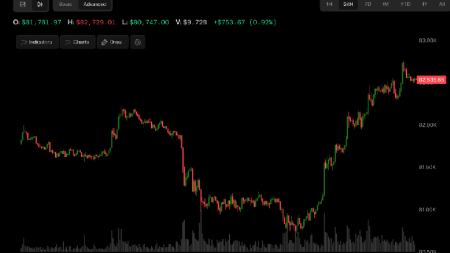
Cryptocurrency markets are rarely at rest, but Bitcoin has entered a peculiar state of equilibrium in recent weeks — one that analysts at blockchain intelligence firm Glassnode describe in their latest assessment as a limbo between fading distribution and tepid demand. The firm, widely regarded for its deep-dive on-chain analytics, reports that the intense selling pressure that had gravitated over the digital asset in previous months has materially subsided. And yet, according to the same dataset, the buying appetite required to launch Bitcoin into a fresh upswing has not returned with anything resembling conviction. In short, sellers are stepping back, but buyers are not filling the gap. Bitcoin, for its part, has managed to hold its ground around the closely watched ranges that have defined the market over recent weeks. That stability, while encouraging for bulls nursing hopes of a broader trend reversal, carries a double-edged implication. A declining flow of coins to exchanges — commonly interpreted as reduced readiness among holders to sell — historically reduces negative price pressure and underpins a floor. But without a corresponding surge in acquisition activity, the market risks drifting into an extended consolidation that could bore impatient capital out of positions, or, more dangerously, accelerate the next dislocation if sentiment cracks. The Glassnode report is being parsed with extra scrutiny by institutional and retail investors alike at a moment when the entire crypto ecosystem is recalibrating its expectations. The industry has navigated a difficult stretch: regulatory turbulence, a reshuffling of ETF flows, and broader macroeconomic volatility have all left their imprint on price discovery. In this environment, the insight that supply dynamics are tightening is meaningful — but the signal that demand has failed to respond is an equally significant warning. Reading the two together provides a view of a market that is stable, but far from settled, and where the next meaningful trend could hinge on which force yields first.
To appreciate the significance of Glassnode’s conclusions, a brief primer on on-chain market mechanics is useful. The company tracks a suite of metrics that follow every coin transaction, analyzing the movement of funds across wallets and exchanges, and ultimately measuring behavior at the individual wallet level. Exchange netflow, for instance, is a critical early warning system: when Bitcoins pour into trading platforms’ addresses, the overwhelming assumption is that holders intend to sell — which then adds overhead supply to the market. When the direction reverses, with coins migrating out of exchanges and into self-custody wallets, it implies accumulation. The recent easing of selling pressure detected by Glassnode aligns with a measurable decline in these exchange inflows. Complementing that picture is the behavior of long-term holders. On-chain data demonstrates that the cohort of Bitcoin investors who have held their positions for extended periods has shown increasing reluctance to part with their assets at prevailing price levels. This is visible in the dampened levels of realized losses and the reduced volume of old coins being moved to exchanges — the kinds of signals that historically align with the late stages of a sell-off rather than its initial descent. For market observers, this is the texture of a bottoming process, albeit one that has yet to deliver positive confirmation on the demand side. The absence of buyer energy reflects a broader state of hesitation. Spot markets have seen subdued volume relative to prior cycles, with price action driven increasingly by thin order books. This can be read as both risk and opportunity. Thin markets can whipsaw violently with modest order sizes, but they are likewise capable of explosive upward moves when demand re-ignites and the available supply — already constrained by exits from exchanges — is quickly absorbed. What Glassnode’s data implies is that the market now sits at this cusp. The question is what factor will break the standoff: a catalyst from the macro world, a decisive shift in institutional positioning, or an increase in retail participation.
The reduction in selling pressure has not materialized in a vacuum. Over the preceding months, the Bitcoin market processed what can reasonably be characterized as a broad de-risking event — an aggressive unwind in ETF-linked positions after earlier waves of inflows, a resurgence of macroeconomic uncertainty, and the usual combination of leveraged long liquidations routing panic through the derivatives market. Those events likely acted as a release valve, forcing leveraged players to the exits and providing distressed buyers a window to accumulate at lower price points. The Glassnode data suggests that much of that forced distribution has now concluded, leaving behind a market with fewer motivated sellers. Yet the return leg — renewed buying — remains absent because the conditions that typically prompt aggressive accumulation have not yet fully aligned. Macroeconomic uncertainty persists, and the possibility of further restrictive policy action by central banks continues to blunt enthusiasm among institutional capital allocators. Meanwhile, retail traders, badly bruised by a string of whipsaw moves, have returned to the sidelines, opting to watch rather than participate. It is a classic post-de-risking environment: the people who needed to sell have sold, but those who need to buy are not yet confident enough to step forward. In such conditions, the cryptocurrency in question often finds itself pinned in a tight range, technically stable but strategically vulnerable. This is where the market now finds itself, with Bitcoin holding noted support levels while repeatedly failing to mount a credible challenge against overhead resistance. Follow-through days, during which the asset rallies on meaningful volume and consolidates those gains, have been scarce. The interpretation that market observers are increasingly settling upon is not that Bitcoin lacks a foundation, but that it lacks a spark. And in the absence of that spark, the equilibrium — however comfortable it may appear — carries a distinct tint of fragility.
Historical precedent offers a useful lens through which to view the current juncture. Bitcoin’s prior market cycles have each featured a prolonged period in which on-chain metrics told a similar story: supply tightening, aging coins staying put, and reduced exchange flows, while prices meandered sideways for weeks at a time. In several notable instances, these quiet stages have been the prelude to substantial upward moves. The closing months of 2015, the second half of 2019, the summer of 2020 immediately preceding the run toward new highs, and the long grind that preceded the ETF-fueled surge of late 2023 all exhibited the fingerprints of such distribution-to-accumulation transitions. There is, in the historical rhythm of the asset, reason to believe the current base-building could become the launching platform for a new advance. But historical analogy is never a precise map, and this cycle contains structural differences that complicate the comparison. The presence of spot exchange-traded funds has introduced an entirely new class of capital flows that did not exist in prior cycles. These instruments amplify moves in both directions — rapid inflows during bullish crescendos and visible outflows during moments of acute fear. Additionally, the regulatory environment has tightened considerably, and institutional engagement with the digital asset space is now deeper, more diverse, and more dependent on macro conditions than it has ever been. This makes the market’s response to easing supply pressure less predictable; the old rules of thumb still apply, but they operate through a more complex system of valves and filters. Nonetheless, the underlying logic of on-chain behavior remains a crucial tiebreaker. When coins leave exchange wallets in rising quantity and long-term holders cling to their inventory even as prices dip, a wall of resupply is being built — a wall that, when absorbed, can fuel rapid price appreciation. The data from Glassnode suggests that this wall is currently under construction. It is simply not yet complete, and the masons are waiting for a signal that it is worth finishing.
What would change the picture? On-chain analysts and chart technicians tend to converge on a similar checklist of triggers. First, a sustained break above the key resistance zone on high volume would alert the market that the demand side had regained the initiative. Such a move is generally accompanied by a jump in spot bid volume, aggressive upticks in stablecoin transfers toward exchanges, and the appearance of a fresh cluster of short-term buyers willing to pay up for immediate exposure. Second, the derivatives market would need to show a reset of sentiment — funding rates stabilizing at neutral, or even mildly positive, without the speculative froth of previous bull phases. Third, the ETF flow narrative would have to shift from sporadic redemptions to a consistent stream of net inflows. Should any combination of these elements materialize, the market’s structure would shift from defensive to offensive. Conversely, the risk scenario cannot be dismissed. A sudden deterioration in macro conditions, a pronounced equity selloff, or a renewed regulatory assault could reinvigorate the selling impulse. In a market where trading volumes have thinned and buyers are already skeptical, the velocity of a downside move can be amplified. This is the asymmetric trap of consolidation phases: they can appear serene on the surface while the hair-trigger mechanisms beneath remain primed for a snap reaction. Investors who interpret the easing selling pressure as a blanket green light may be ignoring the other half of Glassnode’s equation — the quiet, but unmistakable, absence of buyers. The range-bound behavior of Bitcoin has, accordingly, become a subject of intense commentary. Every rebound attempt is met with a shrug of resistance; every dip is caught at the floor. In the vocabulary of market structure, this is the coiling phase — energy accumulating within a defined boundary. Whether it finally winds upward or unwinds downward is a question the data alone cannot answer, and it is precisely this human-input ambiguity that keeps markets genuinely open. But for those positioning based on the on-chain evidence at hand, the Glassnode report offers a clear summary of the battlefield: soldiers departing the field mean the fighting has abated, but war’s end is not yet announced.
For the broader investor community, Glassnode’s latest Bitcoin assessment serves as a calming yet cautionary data point. The encouraging reading is that the market’s supply side is exhibiting the hallmark features of consolidation — the material that is available for sale is shrinking, and the conviction of core holders appears resilient. This is the kind of underlying strength that ultimately represents the bull case in any market. But the equally important acknowledgment is that demand has not matched the moment, and that mismatch leaves the price narrative vulnerable to external shocks and internal inertia alike. In practical terms, this suggests a market in a waiting posture. Long-term investors may find the current environment to be a period of unglamorous accumulation — a time when the most strategic action is often patient inaction. Shorter-term traders, however, are likely to continue experiencing a low-signal environment where exaggerated moves are forgiven quickly, and where discipline, rather than conviction, determines survival. For the cryptocurrency ecosystem at large, the Glassnode data reinforces a message that bears repeating: Bitcoin’s chief characteristic, across its entire trading life, has been its capacity to transition from quiet to volatile with very little warning. The most compelling takeaway is therefore one of attentiveness. The easing of selling pressure is real; the return of buying pressure is pending. These two observations define the range in which Bitcoin now operates, and the resolution of the tension between them will, in all likelihood, dictate the direction of the next major market cycle. For now, the token sits at a crossroads — fortified by the retreat of sellers, challenged by the timidity of buyers, and awaiting the catalyst that will tip the balance. In a market that has never lacked for drama, the quietest moments have often proven to be the most portentous. Bitcoin’s current calm, by Glassnode’s own analysis, deserves to be watched — but not yet celebrated.