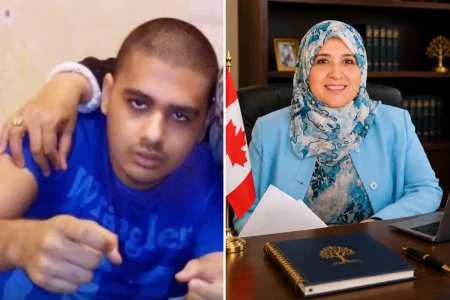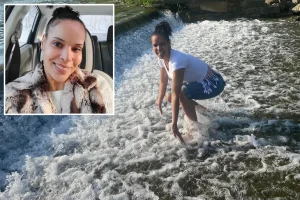



Clearwater, Kansas, sits in the quiet expanse of the American plains, a community where neighbors wave as they pass, where the grain elevator stands taller than any building, and where the biggest stories are usually about a high school game or a fondly remembered local business. It’s a town that embodies the idea of the heartland—hardworking, unassuming, and far removed from the fevered political crowds that gather in sprawling arenas. But on Saturday, October 19, that calm was violently interrupted when federal agents arrested Jaden J. Read, a 24-year-old local man, on charges that he threatened to shoot President Donald Trump. The charge, announced by the U.S. Attorney’s Office for the District of Kansas, alleged that Read made explicit and graphic murder threats in the comments section of local news articles about Trump’s upcoming appearance in Wichita. What made the case particularly alarming was the specificity of Read’s claims—he not only expressed a desire to kill the president but asserted he had already mapped out rooftops near the planned venue, a statement that law enforcement took as a potential strategic preparation for an assassination attempt. The arrest was executed with the kind of speed and seriousness reserved for the gravest federal offenses, occurring just two days before the Commander-in-Chief was set to land in the region. The news left many in Clearwater grappling with a jarring juxtaposition: this was their home, their neighbor, their familiar slice of Middle America, and yet it had suddenly become the focus of a Secret Service security operation and national headlines. Some recalled Read as a quiet, unremarkable presence; others remembered occasional run-ins with him venting frustrations about money and life. None could fully reconcile the man they saw in line at the grocery store with the dark portrait painted by federal prosecutors. For a community that prides itself on knowing everyone’s name, the realization that a former neighbor, classmate, or friend’s son could be accused of plotting to kill the leader of the free world was a profound and disorienting shock. The town’s innocence was lost, replaced by a dawning awareness that in the hyper-connected digital age, even the most distant corner of Kansas could become the backdrop for a national security drama.
The case against Jaden Read did not emerge from nowhere; it began with a small, anonymous act of civic responsibility that would ultimately unravel the entire scheme. According to prosecutors, the investigation was triggered on October 15, when a Crime Stoppers tip directed federal authorities to a disturbing thread of comments posted beneath a KAKE News Facebook article announcing President Trump’s planned visit to Wichita. In the seemingly anonymous wilderness of social media, amid a sticky crowd of political opinions and keyboard courage, one comment stood out as an unmistakable call to violence. “Let’s shoot Trump honestly, where’s our shooter? I’m tired of living this money life,” Read allegedly typed. The words were raw, angry, and ambiguous enough to be dismissed by some as exaggerated online venting—but read in sequence, they took on a far more sinister meaning. Prosecutors alleged that Read immediately followed up with a second comment, one that referenced possessing ammunition and explicitly threatened to kill the president. This two-part pattern was critical in the legal analysis: rather than a single outburst, it suggested a coherent intention, a desire to move from expression to action. The Crime Stoppers tip was now a full-blown federal investigation. Agents from the FBI and the Secret Service began working in tandem, assisting local law enforcement in what would become a frantic race against the clock. The logic was straightforward: if Read was truly serious, he was preparing for an act that could not be undone, and the consequences of waiting were too terrible to contemplate. The digital breadcrumbs he had left behind became the focus of intense scrutiny, as investigators sought to understand his mindset, his capabilities, and, most urgently, whether he possessed the means to make good on his threats. As the investigation deepened, a troubling picture began to emerge. Read’s social media presence revealed a man simmering with resentment—over money, over life, over the direction of a country he felt had left him behind.
If the first batch of comments raised alarms, what investigators discovered in a separate Facebook thread pushed those alarms to emergency volume. Beneath another news article—this time from KWCH 12 News—the account attributed to Read allegedly continued its disturbing trajectory. “Can we shoot him in Kansas please I will myself,” read one post. The phrasing was informal, punctuated with a pleading tone that twisted the ordinary language of request into something grotesque. Taken alone, critics might argue it was dark humor or hyperbolic internet banter; but law enforcement operates on the totality of circumstances, and Read’s timeline was building a case that left little room for benefit of the doubt. Sixty seconds later, the tone shifted from hypothetical to declarative. “IK where your speech will be. Already mapped out roofs around. Finna get kirked since yall couldn’t help him.” For prosecutors, these were the four words that changed everything: “mapped out roofs around.” This was no longer the abstract fury of a frustrated citizen complaining about politics. It was the specific, geographic reconnaissance of a person who wanted to position himself physically in relation to a presidential motorcade, a speech venue, and the surrounding environment. The references to being “kirked”—street slang for intoxicated or deranged—and the odd construction of the sentence highlighted the fragmented mental state of the writer, but did nothing to undermine the gravity of the claim. Law enforcement swiftly cross-referenced the location data, searched public records, and placed Read under surveillance. The fact that the comments were posted just days before the president’s scheduled appearance gave each passing hour added weight. Every rooftop in Wichita became part of a mental checklist; every high vantage point near the venue was scrutinized. The question facing the authorities was not whether these words were ugly or offensive—they undoubtedly were—but whether they represented a genuine risk requiring concrete action. The answer, in a world shaped by previous tragedies where online warning signs were tragically ignored, was a resounding yes. Read’s digital trail had made him a person of immediate national interest, and the investigation shifted into high gear, culminating in his arrest and removal to federal custody.
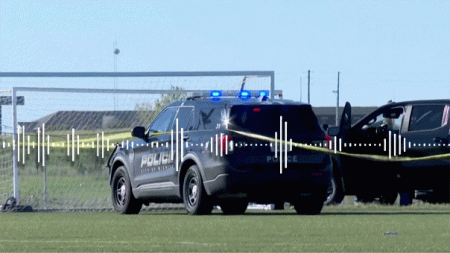
The arrest itself was a model of quiet, efficient law enforcement. There were no dramatic confrontations on courthouse steps, no televised SWAT teams repelling from helicopters. Instead, Read was taken into custody in Clearwater on Saturday, October 19, in an operation that officials described as calm and professional. By Monday, he was scheduled to appear before a federal judge in a detention hearing where prosecutors would argue that he posed a dangerous flight risk and, more importantly, a threat to the safety of the President and the public. The decision to hold Read without bail—at least until the hearing—reflected the seriousness with which the federal judicial system treats threats against the Commander-in-Chief. In the allocation of federal resources, the protection of the President is a top-tier priority, and any credible threat triggers an immediate, methodical response. For Read, the reality of his situation was now starkly different from the faceless bravado of his Facebook comments. The online persona that typed “Finna get kirked” was now sitting in a federal facility, facing up to five years in prison under the applicable threat statutes, the weight of his words finally and irrevocably real. The speed of the proceedings—from offense to investigation to arrest to charging documents in a matter of days—underscored how the justice system handles such matters with deliberate urgency. At the same time, the case raised inevitable questions about due process. Federal public defenders would likely argue that Read’s statements, while deeply disturbing, were protected political hyperbole or the ramblings of a frustrated individual not capable of carrying out an act of violence. They would point to the lack of actual weapons, the absence of a concrete plan beyond the words themselves, and the fundamental principle that thinking or saying terrible things—without a true threat—must not be criminalized. Yet the government’s counterargument was equally powerful: Read did not merely say he disliked the president; he said he wanted to shoot him, that he had ammo, and that he had mapped out the physical terrain. In a post-September 11 world and after several high-profile assassination attempts on U.S. leaders, secretaries, and judges over the years, the margin for error is impossibly thin. The legal system would now have to weigh these competing interests, ensuring that justice was served while protecting the hard-won freedoms that define American society.
The arrest of Jaden Read immediately thrust an old, uncomfortable tension back into the national spotlight: the boundary between the First Amendment’s robust protection of free speech and the legitimate need to prevent political violence. The United States has a long tradition of fiery rhetoric, often hyperbolic, sometimes aggressively angry. Political opponents have been called every name in the book, threatened with everything from impeachment to hanging, yet for centuries the republic has endured because those fiery words rarely translated into physical action. But the digital age has changed the calculus. An online statement that would once have been shared with a dozen people at a local bar can now reach thousands, echo through algorithmic echo chambers, and—in the worst cases—inspire a disturbed individual to take matters into his own hands. In response to the Read case, U.S. Attorney Ryan A. Kriegshauser issued a statement that carefully navigated this constitutional tightrope. “Political violence and threats of political violence will not be tolerated,” he said, before offering a crucial caveat: “The First Amendment allows for robust disagreement but there are constraints. I caution people to stay within the bounds of constitutionally protected speech.” This was not a call to silence dissent; it was an attempt to draw a clear line in the digital sand. The difference, as lawyers might put it, lies between saying “I hate the president” and saying “I’m the one who will shoot the president.” The former is the very essence of democratic debate; the latter is a “true threat” jurisprudence, a category of speech that has long been excluded from constitutional protection. The courts have repeatedly held that threats of violence, even if made in jest or frustration, are not protected when a reasonable person would interpret them as serious. The Read case, however, also serves as a cautionary tale about the cost of those constraints. For every genuinely dangerous individual who is caught and prevented from doing harm, there may be a young man who just posted something reckless, who will now carry the burden of a federal conviction for years to come. It is a necessary cost, perhaps, but a heavy one. The intent of the rule of law is not only to punish but also to deter—and in an age of political polarization and social media rage, the message to ordinary citizens is clear: words have consequences, online and offline, and the government will not wait to find out whether a threat is real until it is too late.
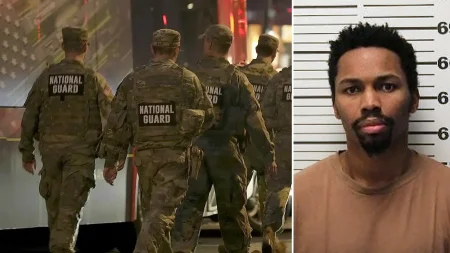
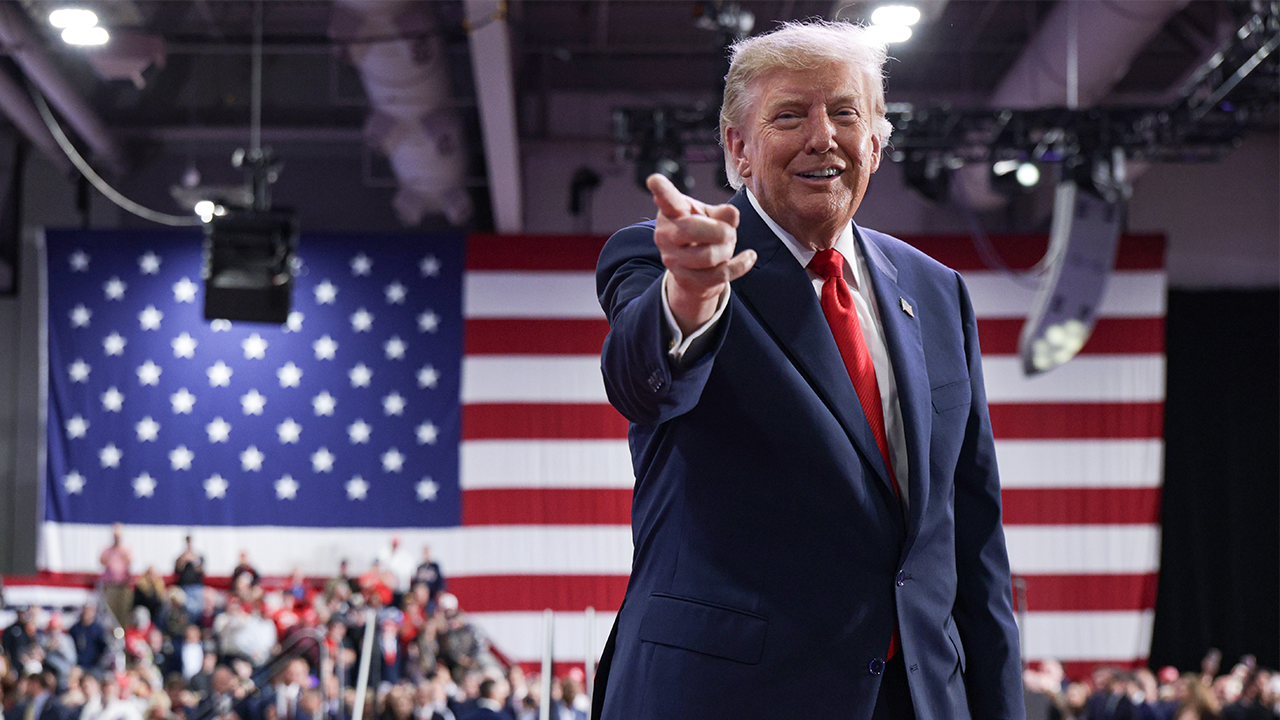
As President Donald Trump made his scheduled appearance in Wichita on Monday, the echoes of the Read case accompanied the event like a shadow. The security perimeter was tightened, the screening expanded, and the eyes of every federal agent scanned the rooftops with a new level of diligence. In some ways, this is the new reality of American political life: every public rally, every campaign speech, and every major political figure moves through a world where threats are a constant, where social media is monitored, and where local police departments are integrated into a vast national security network. And yet the Read case also offers a moment for reflection—not about politics, but about culture. We live in a time when anger finds immediate expression, when the keyboard replaces the soapbox, and when the lines between online persona and real-world action are frequently blurred. A person like Jaden Read, described by some acquaintances as outwardly ordinary but internally tormented, becomes a dark mirror of these times. The anonymity and distance of the internet can make it dangerously easy to forget that there is a human being in the crosshairs of one’s words. For the people of Clearwater, the lesson is intensely personal. They have seen how quickly the fabric of a community can be tested, how a familiar face can be transformed into a national cautionary example. Yet they also reflect the resilience of that community, coming together to process the shock and to reaffirm their own values of neighborliness and civic responsibility. The case will wind through the federal courts, transcripts will be read, experts will debate mental health and intent, and the sentence will reflect the severity of the offense. But the underlying message is both stark and simple: in a democratic society, disagreement is sacred, but violence is impermissible. The U.S. Attorney’s office promised a hard line for those who cross it, and the case of a small-town man who claimed to have mapped out rooftops stands as a reminder that the nation’s leaders walk among us, protected not only by federal agents but by the unwritten pact that we as a people will argue, debate, criticize, and ultimately choose our path through ballots, not bullets.