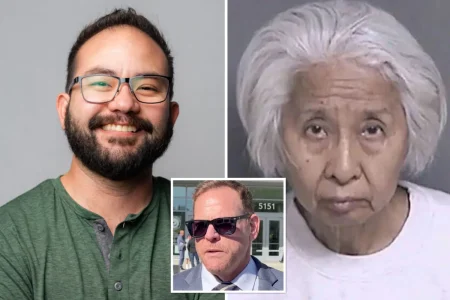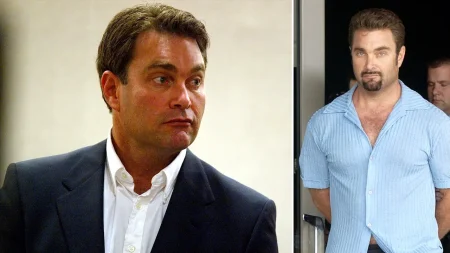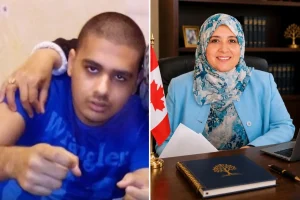


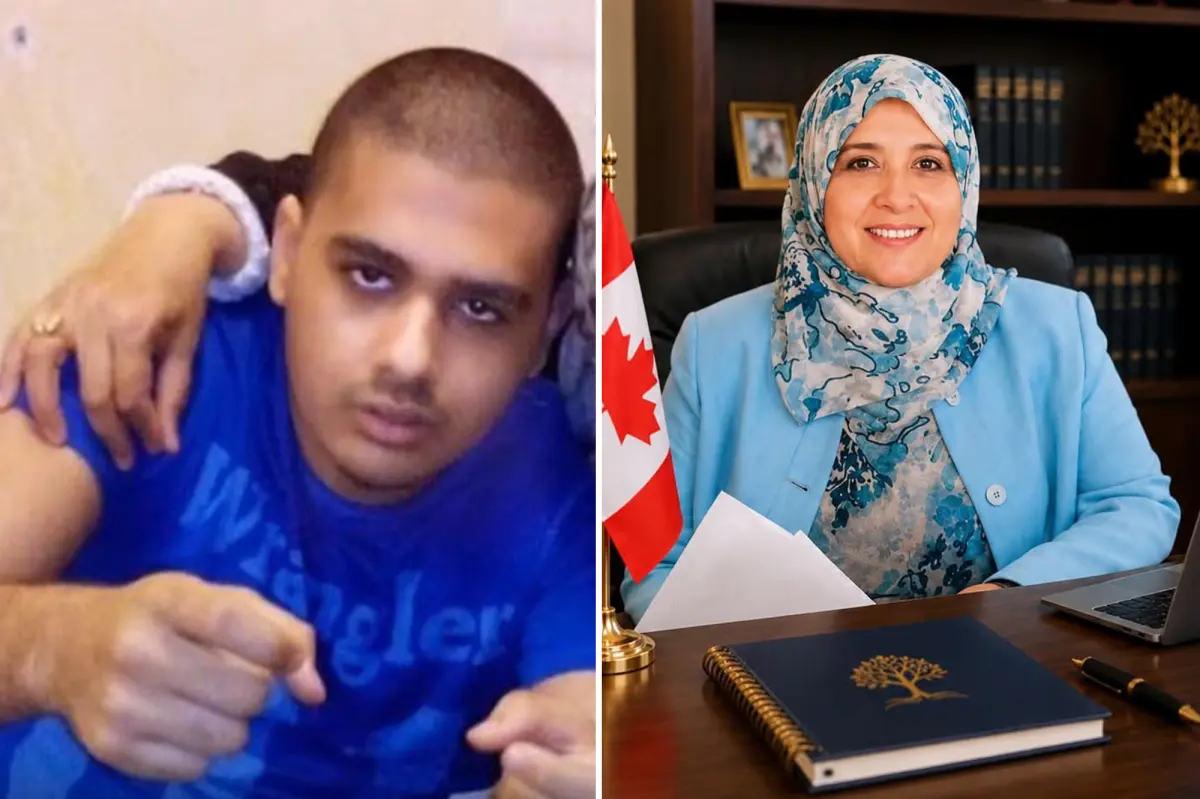
Abdulrahman El Bahnasawy was a teenager when he dreamed of outdoing the deadliest terror attack in American history. By Monday, he was a 28-year-old man standing in a federal courtroom, learning that he would likely die behind bars. A judge imposed an additional 50-year sentence on top of the 40 years he was already serving, giving Bahnasawy a combined total of 90 years in federal custody. The new punishment came after he pleaded guilty to attacking two correctional officers with a crude steel weapon in a Pennsylvania prison. The assault was savage: one officer was stabbed in the head and face and lost his right eye; a second was stabbed in the hand when she rushed to help. It is hard to reconcile that brutality with the young man’s origins—a suburban upbringing in Ontario, Canada—or with the ordinary family details that have surfaced in recent days. While Bahnasawy’s fate was being decided, his mother, Khadiga Metwally, was running for a school board seat in the Toronto suburbs, in the same district that had already made international headlines because of a shop teacher named Kayla Lemieux and her prosthetic breasts. The juxtaposition is almost absurd: a parent campaigning for the education of children while her own child, once a student himself, was being sentenced for a violent act inspired by the Islamic State. The image is a reminder that terrorism and mental illness and family grief are not abstract; they are lived, often in ways that defy easy narratives. Bahnasawy’s path from a seemingly unremarkable Canadian teenager to a federal prisoner facing the rest of his life is not linear, but it has now reached a point of almost unbearable finality.
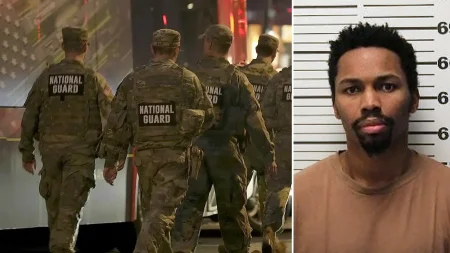
His original conviction came out of a plot that law enforcement described as a direct descendant of al-Qaeda’s 2001 attacks. In 2016, Bahnasawy was arrested after traveling from Canada to the New York metropolitan area to prepare for what he imagined would be an ISIS-inspired assault during Ramadan. Federal prosecutors said the conspirators planned to detonate bombs in Times Square and the subway system, and then open fire on crowds at concerts. Bahnasawy reportedly spoke of wanting to “create the next 9/11.” He was just 19 at the time, an age when many young people are thinking about college or their first jobs; he was instead scouting targets for a terrorist organization and pledging allegiance to a death cult. The plot was disrupted before anyone was hurt, and investigators arrested him in May 2016. A judge later sentenced him to 40 years in prison. You might think that would have ended the story. But the prison system that was supposed to contain him proved unable to stop his descent. Behind bars, Bahnasawy did not become less dangerous. Instead, according to prosecutors, he became more radicalized and more violent. The sentence of 40 years was not a turning point; it was merely an interlude. The man who had wanted to make history by mass murder was now confined in a small cell, but his mind was still at war—and the object of his violence shifted from American civilians to the people paid to guard him.
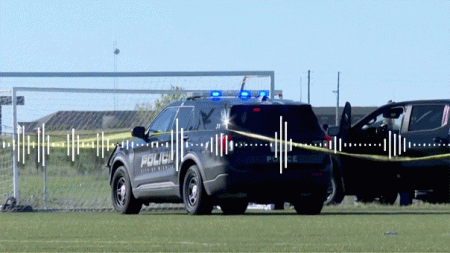
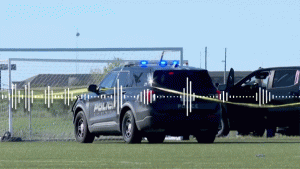
On December 7, 2020, at USP Allenwood in Pennsylvania, that war turned physical. Bahnasawy used part of a steel desk in his cell to craft a makeshift weapon. When a correctional officer came into reach, he stabbed the man in the head and face. The injuries were catastrophic; the officer ultimately lost his right eye. A second officer who responded to the scene was stabbed in the hand before Bahnasawy was subdued. The aftermath was even more chilling than the attack itself. After he was restrained, correctional authorities found a note inside his sock. It read: “This is a terrorist attack for the Islamic State.” Taped inside a locker in his cell was a written pledge of allegiance to ISIS. In other words, this was not a random act of prison violence, not a heated argument that escalated, not a spontaneous outburst of frustration. It was a calculated act of terrorism, aimed at the people whom the state had placed in arm’s reach of a dangerous man. The injuries to the two officers will remain with them for the rest of their lives. One of them has already undergone the loss of an eye—a daily, irreversible reminder of what Bahnasawy did. The other carries the psychological weight of having been attacked while trying to save a colleague. Their valor did not stop the attack; their resilience would be tested in the years of court proceedings that followed.
The judicial reckoning took time. In November 2025, Bahnasawy pleaded guilty to multiple charges: assault with intent to commit murder, possession of prison contraband, and providing material support to ISIS. The plea opened the door for Monday’s sentencing, in which the judge added fifty years to his existing forty-year term. That means a combined sentence of ninety years—a number that is effectively a lifetime. Even if he somehow survived to old age, he would not be released before the middle of the next century. Assistant Attorney General for National Security John A. Eisenberg described the sentence as a necessary measure of public protection. “Today’s sentence will further ensure that Bahnasawy remains in prison, where he can do much less harm, for a very long time,” he said. For the prosecutors and the injured officers, justice was finally served. But the court proceeding also laid bare a bitter conflict over who Bahnasawy really is and what drove him to commit this second brutal act. The prosecution’s version is simple: he is a terrorist who has remained committed to ISIS even in captivity, and he attacked prison staff in furtherance of his ideology. The defense’s version is more complicated and far darker—a story of a young man whose radicalization was inseparable from mental illness, and who was abandoned by the very system charged with caring for him.
Bahnasawy’s attorney, Andy Frisch, did not dispute the facts of the assault. But he argued that the context matters. According to Frisch, his client suffers from longstanding mental health problems, including schizophrenia and psychotic disorders—diagnoses that Frisch says were confirmed by a government expert. “He’s not a terrorist,” Frisch told The Post. The claim sits uneasily against the ISIS note and pledge, but Frisch insists that those artifacts are symptoms, not ideologies: manifestations of a mind in collapse. He said Bahnasawy’s parents had repeatedly emailed prison officials about the medication and treatment their son required, and those warnings were ignored. The lawyer blamed inadequate psychiatric care, extended segregation, and repeated transfers between prisons for worsening his client’s deterioration. “He had a psychotic episode, which has resulted in this most recent sentence,” Frisch said. If true, the tragedy runs in two directions. The correctional officers were victims of a brutal attack, and their injuries are permanent. But Bahnasawy, too, was a victim of a different kind—of untreated illness, of a carceral system that too often warehouses the mentally ill rather than treating them. Frisch’s plea was not merely for mercy for his client; it was a broader challenge. “My hope is that respect for corrections officers requires more than imposing a serious sentence. It requires that the United States reconsider how it manages mentally ill inmates,” he said. Asked about an appeal, Frisch said Bahnasawy and his parents are “considering their options.” The Department of Justice, for its part, had no immediate comment.
Ultimately, this case leaves us with uncomfortable questions. It is easy to call Bahnasawy a monster, and there is abundant evidence of monstrous behavior. But that label does not explain how a Canadian teenager became so consumed by a death cult that he plotted mass murder, nor why prison—a system designed to isolate and punish—failed to interrupt his slide into psychosis and further violence. The added sentence may be warranted; correctional officers must be protected, and prison violence has consequences. But if the only lesson is that Bahnasawy will now spend the rest of his life in a cell, we have missed a deeper opportunity to ask what went wrong before that cell became inevitable. His mother’s school board campaign, strange as it seems, is a reminder that even the most horrifying criminals are someone’s children. Parents send emails begging for help, and those emails are ignored; wardens transfer inmates like packages; untreated delusions fester until they explode into tragedy. The United States now has a man who will likely never be free again. The two officers have scars that will never fully heal. And a family on another continent continues to grieve a son they believe was failed by everyone who should have helped him. Justice has been done in the narrow legal sense. The human story, though, remains unsettled—and it calls on us to recognize that punishment alone cannot solve the tangled problem of violence, extremism, and mental illness inside America’s prisons.