



Paragraph 1: The Shock of a September Morning
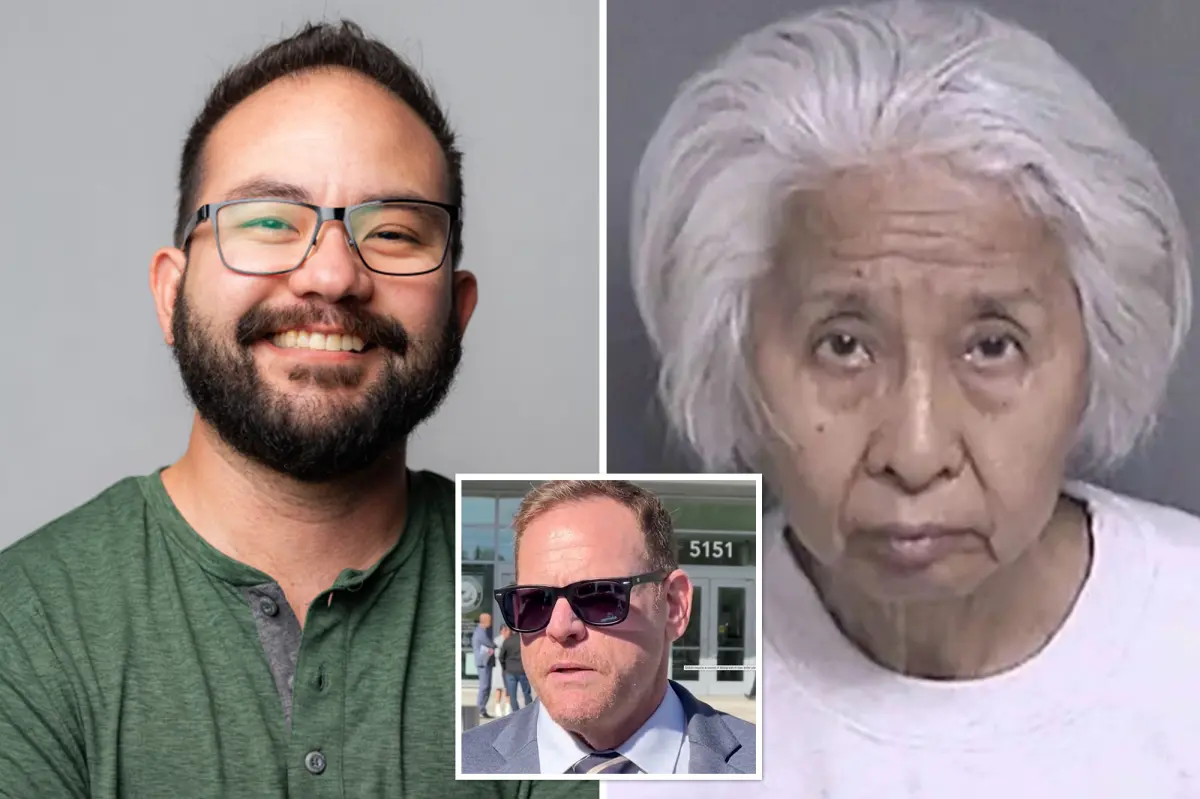
On a quiet late-September morning, the Dublin Sports Grounds in California should have been a place of routine and recreation, filled with the sounds of footsteps on track lanes or the distant laughter of a community enjoying the open air. Instead, that ordinary setting became the backdrop for a tragedy so unsettling it would ripple far beyond the small city in Alameda County. Jonathan McKinsey, a prominent transgender executive at The New York Times, lay mortally wounded after being shot, his life ending not in a hospital but on the grounds where he had been moments earlier. The initial reports were bewildering enough: two elderly individuals, 77-year-old Shili Chen and 77-year-old Shouyong Zhang, were taken into custody and charged with murder. The ages of the accused, combined with the stature of the victim, made the story almost impossible to process. How could a man in the prime of his professional life, someone who had navigated a deeply personal journey of identity and risen to a position of influence at one of the world’s most respected newspapers, meet such a violent end at the hands of his own in-laws? The question hung in the air, unanswered, as friends, colleagues, and family members tried to piece together a narrative that made sense. For the wider public, the case was a stark reminder that tragedy does not discriminate by background, success, or class, and that even the most accomplished lives can be shattered by conflicts hidden far beneath the surface. In the days that followed, the focus slowly shifted from the immediate horror of the shooting to the murky, painful history that might have led to it.
Paragraph 2: The Defense Attorney’s Explosive Allegation
As the legal process began to unfold, the case took a startling turn that transformed an already tragic story into a labyrinth of accusations, bitterness, and long-simmering family warfare. Curtis Briggs, the defense attorney representing the elderly mother-in-law, Shili Chen, stood before reporters outside an Alameda County courthouse and made a claim that immediately captured headlines: Jonathan McKinsey had, at some point in the past, allegedly hired a hitman to “get rid of” Chen. The words were stark, theatrical even, but they carried the weight of a desperate defense strategy aimed at reframing the narrative. Suddenly, the elderly woman charged with murder was no longer just a grieving mother-in-law caught in an unimaginable situation; she was, in her attorney’s telling, a woman who had been living in fear, the target of a chilling plot orchestrated by the very person she now stood accused of killing. The allegation, as stunning as it was unproven, opened a door onto a hidden dimension of the family’s conflict. It suggested that the tension between McKinsey and his in-laws had not been a series of petty disagreements or occasional coldness, but a deep, festering hatred that had escalated to the point where one side allegedly sought lethal resolution. Briggs offered no immediate evidence, and law enforcement officials remained tight-lipped, but the courtroom of public opinion was already buzzing. Was this a last-ditch effort to humanize an elderly defendant facing life in prison? Or was it a genuine revelation that would rewrite the entire case? For now, the allegation remains exactly that, an allegation, but it has indelibly colored the way the public views the tragedy.
Paragraph 3: The Hidden Histories of a Family in Turmoil
Behind every headline, there is a human story, and the story of Jonathan McKinsey, Shili Chen, and Shouyong Zhang is one of profound complexity. McKinsey was not just a random victim or a symbol; he was a person with a history, relationships, and a journey that had shaped him. As a transgender man in a high-profile corporate environment, he had likely faced his own share of struggles, finding the courage to live authentically in a world that is often unkind to those who challenge conventional norms. His marriage, presumably to a daughter of Chen and Zhang, should have been a bridge between worlds, but instead, it became a battleground. Family dynamics involving in-laws can be delicate in the best of circumstances, with cultural differences, generational gaps, and personal expectations creating friction. In this case, those ordinary tensions appear to have spiraled into something far darker. The defense’s claim that McKinsey once sought to hire a hitman suggests a level of animosity that goes beyond normal familial discord. It speaks of a relationship so poisoned that ordinary communication had broken down completely, replaced by suspicion, anger, and, allegedly, fantasies of violence. For Chen and Zhang, both in their late seventies, the image of them as cold-blooded killers seems incongruous, yet the charges insist that on that September day, something inside them snapped or perhaps had been planned. The human mind struggles to reconcile the image of an elderly couple with the act of gunning down a younger, successful executive, yet the facts, as presented by prosecutors, suggest that they did exactly that. What led to such a desperate act? Was it years of accumulated grievances, fear for their daughter’s safety, or something more sinister? The full history may never be known, but the fragments that have emerged paint a picture of a family that had been slowly tearing itself apart.
Paragraph 4: The Legal Battle Begins
Inside the courthouse, the proceedings were somber and tense. Chen and Zhang, both wearing expressions that betrayed a mix of exhaustion and defiance, appeared before a judge to face the charges against them. Murder charges are always serious, but when the defendants are elderly and the alleged victim is a prominent media figure, the stakes become even higher. The prosecution would need to prove not only that the couple was responsible for McKinsey’s death, but that they acted with malice and intent. The defense, led by Briggs, signaled early on that they intended to fight aggressively, floating the explosive claim about the alleged hitman as a way to suggest that the couple had acted in self-defense, or at least under the belief that they were protecting themselves from a genuine threat. It is a classic, if unusual, legal strategy: cast the victim as the aggressor, paint the defendants as vulnerable souls pushed to their breaking point, and hope that a jury will see the case through the lens of empathy rather than strict legal formalism. The elderly couple’s age added an uncomfortable dimension to the proceedings. Could they realistically have carried out a shooting at a public park? Did they have access to a firearm, and if so, how did they manage to use it with deadly accuracy? These were questions that would likely dominate the trial, along with the credibility of the defense’s claim. For the family of Jonathan McKinsey, the legal battle would be another layer of grief. They had lost a loved one in a violent, senseless act, and now they would have to sit through weeks or months of testimony that would attempt to tarnish his memory, painting him as a man who allegedly conspired to murder his own mother-in-law. The courtroom, as always, becomes a theater where narratives compete, where the truth is elusive, and where justice, whatever that may mean, is a fragile and hard-won prize.
Paragraph 5: Community, Grief, and the Search for Understanding
In the wake of the shooting, the communities that knew Jonathan McKinsey were left to grapple with a profound sense of loss and confusion. His colleagues at The New York Times remembered him as a dedicated professional, a trailblazer in the truest sense, someone who had broken barriers and inspired others in the LGBTQ+ community. To them, the allegations of his alleged involvement in a murder plot were unfathomable, a cruel distortion of a man they knew as kind, driven, and committed to the truth. His friends spoke of his warmth, his intelligence, and his ability to connect with people from all walks of life. The dissonance between the public obituary, full of praise and sorrow, and the defense attorney’s portrayal of a man scheming to have his mother-in-law killed, was almost impossible to reconcile. And yet, both images now existed side by side, competing for belief. For the wider community, particularly in the Bay Area, the case became a somber meditation on the nature of family conflict. How many families are hiding secrets that could erupt in violence? How often do we fail to see the pain behind closed doors? The tragedy of McKinsey’s death was not just the loss of a life, but the exposure of a fractured family so damaged that love had turned into something resembling hatred. There were no easy answers, only a sense of collective sorrow for all those involved, even as the exact allocation of blame remained uncertain.
Paragraph 6: A Reflection on Justice and the Fragility of Life
As the legal process grinds forward, with hearings, motions, and inevitable delays, the deeper truth is that no verdict will ever truly resolve the grief or the questions left behind. The case of Jonathan McKinsey, Shili Chen, and Shouyong Zhang is a human tragedy in every sense, a story of identities, family ties, cultural expectations, and the terrifying capacity for violence that lies dormant in even the most ordinary lives. Whether the defense’s claim about the hired hitman is proven or not, it has already served its purpose: it has complicated the narrative, forcing us to think about the victims and the accused in shades of gray rather than black and white. In the end, we are left with the reality that a man died on a sunny morning in a place meant for recreation and connection. We are left with an elderly couple facing the end of their lives in a prison cell, accused of an act that seems to defy their age and appearance. We are left with a family torn asunder, one daughter perhaps now without a spouse and with parents accused of his murder, some siblings without a brother-in-law, parents without a son. The ripple effects of that single, violent moment will be felt for generations. In humanizing this story, we must remember that every person in this tragedy was once loved, was once a child with dreams, was once part of a family that hoped for happiness. The paths that led them to that Dublin sports ground were long and winding, filled with choices, regrets, and moments that could have turned differently. Justice, whatever it may mean, must be tempered with compassion, not just for the victim, but for the broken souls who find themselves on all sides of this sorrowful narrative. And perhaps, in the end, the greatest lesson is a simple one: life is fragile, love is hard, and family, for all its promise, can also be the source of our deepest wounds.