



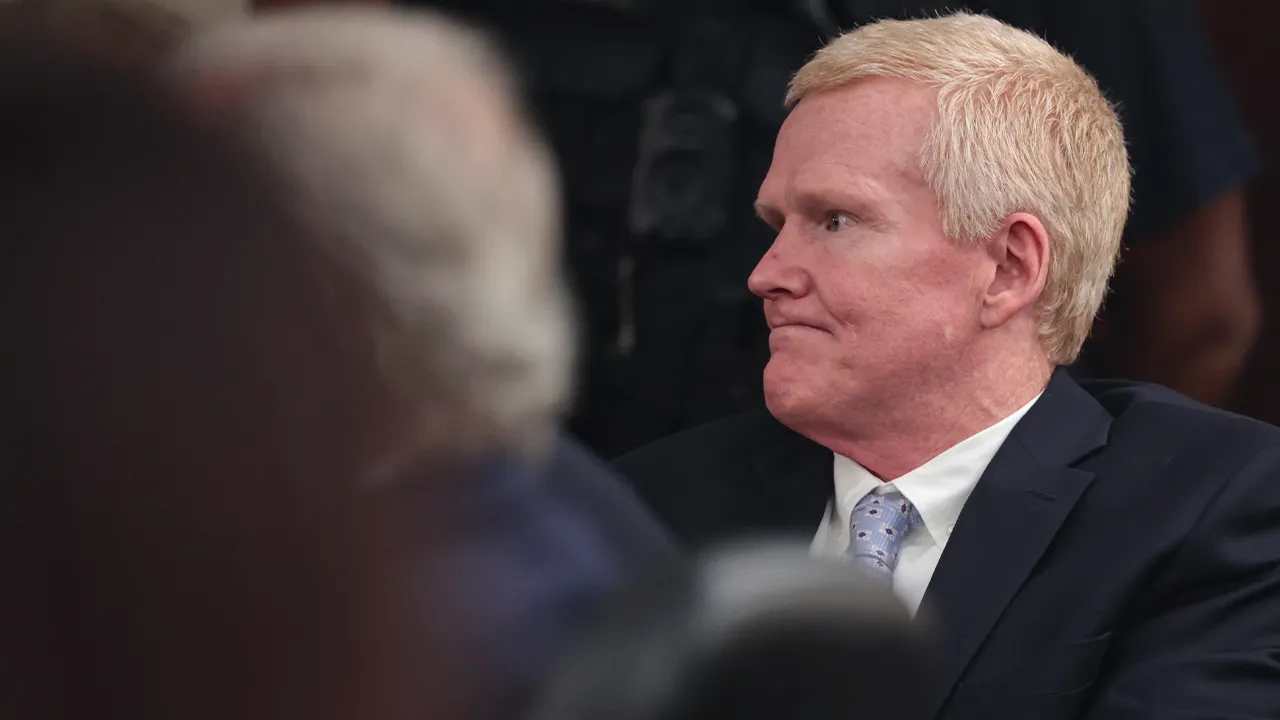
The courtroom in Lexington, South Carolina, felt less like a legal proceeding and more like the latest act in a true-crime saga that refuses to end. Alex Murdaugh, the disgraced former attorney once synonymous with power in the Lowcountry, sat with his defense team as Judge Debra McCaslin delivered a stark warning to both sides: she would not allow the retrial of the murder case to become a circus. The hearing, raw and sometimes combative, offered a glimpse into the long, messy road ahead before Murdaugh stands trial again on April 5, 2027, for the murders of his wife, Maggie, and son, Paul. That road has already been strange. Murdaugh was convicted in 2023, only to have the South Carolina Supreme Court overturn the verdicts after finding that Colleton County Clerk of Court Becky Hill improperly influenced the jury. Now, with a new trial date on the horizon, the lawyers are fighting over evidence, testing, and the reliability of every single piece of the state’s case. Murdaugh has maintained that he did not kill his family, and his attorneys are leaving no stone unturned in their effort to raise doubt—even if that means asking the court to allow DNA tests that could destroy the last remaining samples. To the outside world, the case already has all the elements of a pulpy crime novel: a wealthy legal dynasty, a double killing on family property, allegations of financial fraud, and now the bizarre possibility that the murder weapon was once hidden in a police station. But Judge McCaslin made clear that this is not entertainment. It is a trial. And before it begins, the rules must be set.
The most important ruling of the day was a victory for Murdaugh’s defense team, though it came with a steep cost. The judge sided with the defense over prosecutors’ objections and granted a request to conduct DNA testing on swabs taken from Maggie Murdaugh’s phone. The catch, as prosecutors pointed out, is that such testing will likely consume the last testable samples from that piece of evidence. McCaslin, however, was unmoved by that concern, citing due process and Murdaugh’s right to a “full and complete defense.” The defense says the analysis will take about 90 days, which means the evidence will be tied up in a lab as the trial clock inches forward. The judge also ruled that Murdaugh’s lawyers do not have to share the results of those DNA tests with prosecutors unless they plan to use the findings at trial. This matters deeply to a defense strategy that has already raised questions about unknown male DNA found under one of the victims’ fingernails. For Murdaugh’s team, the presence of unexplained genetic material is a door—perhaps a narrow one—through which they can argue that investigators focused too quickly on Murdaugh and ignored other possibilities. For prosecutors, the judge’s decision is a risky concession. They lose control over the sample, and they cannot know what else might be hiding in the data. But McCaslin framed her ruling in terms of fundamental fairness. In a case of this magnitude, she suggested, the defense must be given the chance to test evidence that might point in another direction. It was a small but meaningful reminder that even a defendant who has already been convicted once is presumed innocent until the next jury says otherwise.
On the other side of the evidentiary ledger, the judge rejected Murdaugh’s broader request for ballistic information—a request that, if granted, could have opened the door to a sprawling investigation into unsolved crimes across two judicial circuits. The defense wanted a list of every crime since 2021 involving .300 Blackout ammunition, the caliber linked to the murder weapon, along with every such firearm recovered and every casing from other shootings. McCaslin called that theory speculative, noting that it was based solely on news reports. She also pointed out something more practical: the South Carolina Law Enforcement Division does not have a convenient list like that, and asking agents to manually review years of records would be unfair, impractical, and potentially intrusive into active investigations. It was a decisive no. The judge also denied defense expert physical access to the shell casings from the crime scene, but she ordered the state to hand over all raw data to the defense. In the same breath, she ordered prosecutors to provide 3D crime scene scan data by Monday, while warning them not to make the defense repeat the same requests. She told Murdaugh’s lawyers to have their staff sign for discovery materials because she would not order the state to produce the same thing multiple times. She issued a similar warning regarding cellphone extraction data from Maggie and Paul’s phones, promising this would be the last time such material is handed over. The message was clear: discovery is not an endless buffet. Both sides need to get their act together. The judge was trying to keep a sprawling case from spinning into an unmanageable mess, but every ruling seemed to leave someone frustrated and ready to keep fighting.
Then came one of the most striking moments of the hearing: a correction of the record involving Murdaugh’s own lawyer, Dick Harpootlian. At an August hearing, Harpootlian had publicly claimed that Murdaugh had passed a polygraph test “with flying colors.” That statement reverberated in the news and among true-crime followers, seeming to bolster Murdaugh’s credibility. But Judge McCaslin clarified Friday that Murdaugh actually failed that polygraph—and, crucially, the test was not about the murders at all. It concerned a separate financial matter, namely whether Murdaugh had concealed assets. The judge stated plainly that Murdaugh has never taken a polygraph related to the killings of Maggie and Paul. That is a significant difference. Harpootlian submitted a letter apologizing for any confusion, but McCaslin did not simply wave it away. She cautioned both sides that “candor with the court is not optional.” In a case already stained by accusations of jury tampering and questionable conduct, the last thing anyone needs is an attorney making claims that do not hold up under scrutiny. Polygraph tests are not generally admissible in court anyway, but the public perception mattered. A jury pool can be influenced by headlines, and the judge was making sure that the record, at least, reflected the truth. The moment was a reminder that even the most experienced lawyers make mistakes—and in this case, those mistakes become part of the legal history.
The judge also addressed a defense motion that sounded like it came straight from a conspiracy thriller. Murdaugh’s lawyers had asked prosecutors to turn over evidence related to the handling, transport, concealment, or disposal of the murder weapons—weapons that have never been recovered. According to their motion, press reports indicated that a state grand jury had heard testimony alleging that Yemassee Police Chief Greg Alexander was seen in possession of the murder weapons shortly after the June 7, 2021, killings. The defense also pointed to a report from The Post and Courier that a Lowcountry official had told SLED agents that Chief Alexander “spoke of arriving early to the murder scene and talked about providing a change of clothes to Murdaugh.” The official reportedly believed the guns and clothing were brought into the police station and stored there. It is the kind of allegation that could create reasonable doubt if true, but it remains uncorroborated. The Post and Courier itself could not verify the story, and Alexander, through his attorney Joe McCulloch, emphatically denied the accusations. McCulloch told Fox News Digital that the same explanation had already been provided to SLED, adding, “That truth will outlive any ridiculous rumors and gossip.” Former prosecutor Joshua Ritter called the allegation a “wild goose chase,” suggesting that the defense was reaching for anything that might lead them somewhere useful. Judge McCaslin ultimately ruled in prosecutors’ favor: the state is required to hand over material related to the disposal of the weapons only if it proves favorable to Murdaugh’s defense. In other words, no fishing expedition into unsubstantiated rumors. The decision was a measured rejection of the defense’s attempt to make the case about possible police misconduct rather than the evidence against Murdaugh.
As the hearing drew to a close, the overriding feeling was that this retrial will be a marathon, not a sprint. Murdaugh’s defense team is clearly trying to flood the case with alternative narratives: unknown DNA, missing weapons, questionable witnesses, and even a police chief who allegedly offered the defendant a change of clothes. Prosecutors, meanwhile, are trying to hold the line, insisting that the original evidence remains strong and that these new requests are little more than distractions. Judge McCaslin is trying to manage it all with a firm hand, granting requests when due process demands it but refusing to let the proceedings veer off into baseless speculation. Her warning about the “circus” was not rhetorical. She seems determined to ensure that the retrial is conducted with dignity and fairness, no matter how much noise surrounds it. But the road to April 2027 is long, and there will be more hearings, more motions, and more moments where each side tries to tilt the playing field. For Murdaugh, this is his second chance at freedom. For the families of Maggie and Paul Murdaugh, it is another painful chapter in a story that never seems to end. And for the public, it is one of the most closely watched criminal cases in recent memory—a case where the legal system is being tested as much as the defendant. In the end, the only certainty is that the truth, whatever it is, will have to survive the chaos.