


‘Tis the season. No, not that season—there are still eleven weeks until Christmas, and Halloween is still lurking just around the corner. We’re not even talking about Gilmore Girls-rewatch time, though that’s always acceptable. We’re talking about the glorious stretch of late autumn when the travel industry collectively decides to tell us what we’ll all be doing for the next twelve months. It’s prediction season, the time when trend reports bloom like golden leaves, and one of the most anticipated arrivals is Expedia Group’s annual Unpack edition. This latest edition, Unpack ’27, pulls insights from Expedia, Hotels.com, and Vrbo, along with a survey of 26,000 travelers across 16 countries and social media listening, to identify five key trends that will shape how we wander in 2027. As Expedia Group CEO Ariane Gorin put it, “Travel is about creating memories, and Unpack ’27 uncovers the destinations and experiences shaping those moments. In 2027, travelers are being more intentional in choosing their next adventure, seeking experiences that are more personal and purposeful to them.” That word—intentional—is crucial. The days of simply picking the most famous Instagram spot and following the crowd are fading. Instead, the report suggests travelers are asking deeper questions: What will make me feel alive? What kind of travel matches my actual personality? What kind of trip can I squeeze into a busy life without waiting for a two-week vacation? The answers are refreshingly human, sometimes playful, sometimes moody, and often wonderfully unexpected. So let’s unpack the future of travel together, one trend at a time, because 2027 is shaping up to be less about showing off and more about feeling good.
The first big trend, and quite possibly the most joyful, is what Expedia calls “un-adulting.” In other words, get ready to indulge your inner child. This isn’t about being irresponsible; it’s about intentionally swapping the mundane adult concerns of daily life for playful getaways that involve theme parks, water parks, or anything that makes your ten-year-old self wildly excited. The numbers make it clear that this isn’t a niche niche. Fifty-seven percent of travelers say they will book an un-adulting trip in 2027, and among Gen Z and Millennials, that number rises to a striking seventy-one percent. This is a generation that seems to have collectively decided that being a grown-up shouldn’t mean giving up fun. The top destinations for this trend are wonderfully varied: Tokyo Disneyland, Color Factory Chicago, and Park Xcaret in Mexico. Tokyo Disneyland is the classic dream factory, where nostalgia and fresh magic blend seamlessly. Color Factory Chicago is a playful, interactive art museum full of vibrant rooms, confetti, and immersive installations designed to be touched and experienced. And Xcaret, in the Riviera Maya, offers an eco-archaeological park where you can swim in underground rivers, observe multicolored butterflies, and soak up Mexican history and culture in one action-packed day. The common thread is pure, guilt-free play. In a world where travel content often feels carefully curated and filtered, un-adulting gives us permission to laugh, to be a little silly, and to rediscover the wonder that adulthood sometimes pushes aside. It’s not an escape from life, but a return to the part of life that made everything feel magical.
The second trend is “trip snacking,” and it speaks to a growing appetite for small, frequent travel experiences. If you were online in 2026, you probably saw the trend called “snackpacking,” which was all about trying local crisps, chocolates, and supermarket treats while on holiday. Trip snacking takes a similar idea but applies it to the structure of travel itself. Instead of saving all your precious time and money for one massive holiday, you take quick, spontaneous getaways that serve as satisfying little snacks between the bigger feasts. It’s travel as tapas: small plates, full of flavor, scattered throughout the year. The data in the report is compelling. Seventy-nine percent of travelers are planning to book a one-night stay in the next year, and searches for one-night stays on Hotels.com are up by ten percent. That’s a significant shift from the old mindset that a trip doesn’t “count” unless it’s at least a week long. Trip snacking embraces the idea that a single night in a nearby city, a random Friday in a boutique hotel, or a spontaneous staycation in a different neighborhood can do wonders for your mood and your sense of adventure. You don’t need to fly across the ocean to get that “I’m on vacation” feeling. You just need to give yourself permission to treat a short escape as a genuine pilgrimage, not a guilty indulgence. This trend also makes travel more accessible to people with limited budgets, demanding jobs, or family obligations that make long trips difficult. It’s the difference between waiting months to eat at a fancy restaurant and simply enjoying a delicious little snack whenever hunger strikes. The result is a year full of mini adventures that keep you curious, refreshed, and constantly looking forward to the next tiny journey.
The third trend is deliciously dark: “Gothic Getaways.” The 2026 film adaptation of Wuthering Heights clearly had an impact, because the report identifies a growing revival in all things Gothic, from atmospheric castles to folklore-drenched landscapes. According to Expedia Group, fifty-six percent of travelers say they have booked a hotel specifically for its atmosphere or aesthetic. And of that group, sixty-five percent are interested in staying in a Gothic-style hotel—whether that’s a historic castle, a former monastery, or a destination with a rich vein of supernatural legend. This is the trend for everyone who has ever scrolled past a photo of a misty Scottish highland castle and felt a pull to be there, wrapped in a cozy sweater, holding a cup of tea, and pretending they live in a Brontë novel. Hotels.com has seen a twenty percent year-on-year increase in demand for castles, which suggests that this isn’t just a quirky cottage industry; it’s a genuine movement. People want atmosphere, mystery, and a little bit of history. A Gothic getaway might mean actual ghost hunting, but it can also simply mean staying in a property with creaky floors, heavy velvet curtains, ancient stone walls, and oil portraits that seem to watch you from across the room. It might mean exploring a village with a legend about a mysterious figure, or choosing a hotel with turrets, secret passageways, and candlelit drawing rooms. In an era when many hotels look cloned from the same minimalist Pinterest board, Gothic properties offer something rare: character, drama, and a sense of storytelling. They invite you to step into a different world, one where the weather is moody, the walls hold secrets, and the ordinary rules of modern life feel temporarily suspended. It’s a beautiful, slightly eerie way to recharge.
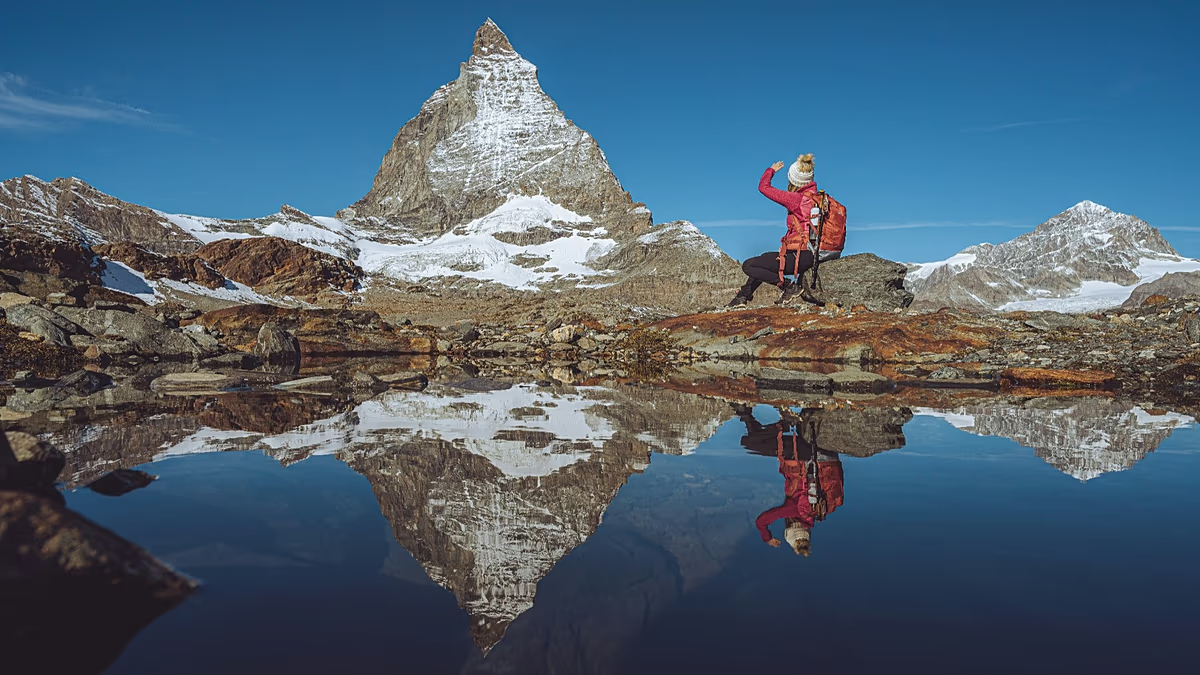
The fourth and fifth trends are perhaps the most personal of all, because they revolve around individual passions and overlooked places. “Skillcations” were a major theme in 2026, and they’re evolving into “hobby hubs” in 2027. Instead of just taking a class or attending a workshop, travelers are now booking entire holiday homes around their favorite hobbies. That could mean renting a countryside cottage with beautiful natural light for a photography retreat, gathering a group of friends for a mahjong game night in a cozy cabin, spending a weekend antique-hunting in a charming small town, or turning a quiet house into a sewing circle with panoramic views. These trips are active, intentional, and wonderfully specific. They aren’t about lying on a beach and doing nothing (though that’s always allowed, of course). They’re about bringing your passion with you into a new environment, deepening your craft, and sharing it with like-minded people. Travel hosts are clearly taking notice, and we can expect more properties to advertise craft tables, gaming sets, dark rooms, and proximity to flea markets and vintage shops. Then there are “heartland hideouts,” which are hidden-gem destinations that are landlocked. For years, our travel dreams have been dominated by coastlines: the Amalfi Coast, Santorini, the Maldives, the cliffs of Big Sur. But the report says travelers are increasingly looking inward—quite literally—towards destinations that don’t require a beach to be memorable. Think alpine villages, riverside towns, high desert plateaus, and mountain valleys. Landlocked destinations often come with lower costs, fewer crowds, and a more authentic cultural experience, because they haven’t been completely overrun by mass tourism. The term “hideout” is key: people want places that still feel undiscovered, where you can wander without queuing for a photo opportunity, and where the locals are actual residents rather than hospitality staff rotating through on seasonal contracts. It’s a quieter, slower, and often more meaningful way to travel.
When you look at all five trends together, a clear portrait emerges of the 2027 traveler. This is someone who is tired of cookie-cutter vacations and eager to make travel fit their real life, not the other way around. Whether they’re un-adulting at a theme park, grabbing a spontaneous one-night escape, checking into a haunting castle, turning a weekend into a creative hobby retreat, or wandering through a landlocked hidden gem, the underlying motivation is the same: to create memories that feel personal, joyful, and full of purpose. It’s no longer enough to simply visit a place; travelers want to feel something while they’re there. They want their trips to reflect their interests, their quirks, and even their inner children. They want to be able to say, “That was so me,” rather than, “That was so Instagrammable.” And perhaps the best part is how accessible these trends are. Trip snacking can be done close to home. Hobby hubs can turn a local rental into a meaningful escape. Heartland hideouts often cost less than a week in a coastal resort. You don’t have to wait for the big vacation of the year, and you don’t have to fly halfway around the world to feel transformed. You just need to be a little more thoughtful about why you travel and what you truly love. Expedia Group’s Unpack ’27 is ultimately a reminder that travel is not a luxury reserved for special occasions; it’s a continuous source of joy, wonder, and self-discovery. So as you plan for the year ahead, give yourself permission to be playful, spontaneous, a little gothic, a little crafty, and pleasantly off the beaten path. Pack your curiosity, chase your passions, and let 2027 be the year you stop waiting for the perfect trip and start creating it.