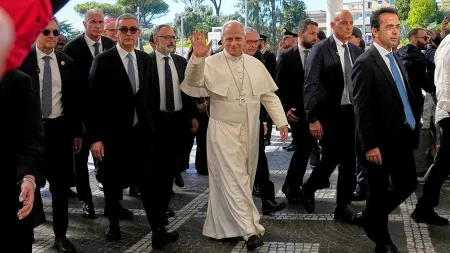


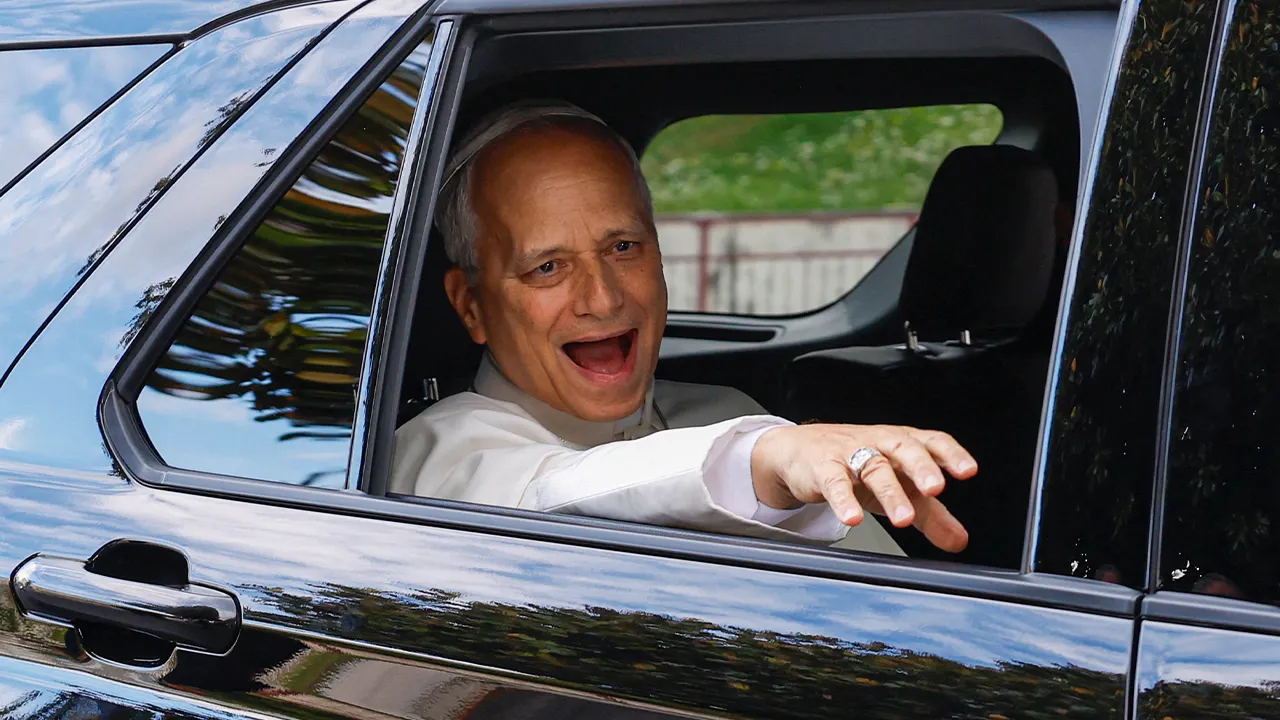
The morning air outside Rome’s Gemelli Hospital was thick with hope and nervous energy. For days, the faithful had gathered, keeping vigil, clutching rosaries and holding up handmade signs, their eyes fixed on the windows of the tenth floor where Pope Leo XIV was recovering from a delicate lung operation. Then, on Saturday, the crowd erupted. “Papa! Papa!” they shouted, their voices rising in a joyful chorus as word spread that the Holy Father was finally coming home. The Holy See confirmed the news early that day, announcing that after a thorough assessment by his medical team, Pope Leo would be discharged and would return to the Vatican. For the thousands of supporters who had turned the hospital’s surroundings into a sanctuary of prayer, it was an answer to their hopes. The Vatican’s statement was simple but deeply reassuring: following the doctors’ evaluation, the Pope was well enough to leave, and he would lead the Angelus prayer from the window of the papal apartment the very next day. It was a sign not only of his physical recovery but of his determination to resume his spiritual duties without delay. The scene was a striking blend of modern medicine and ancient faith—a beloved spiritual leader, vulnerable and human, yet surrounded by the unwavering devotion of a global flock.
The medical journey that led to this moment had been swift and serious. Just days earlier, Pope Leo had undergone thoracic surgery to remove a cancerous node in his right lung. The operation, which took place on Tuesday, lasted about three hours in total, with the surgery itself taking roughly ninety minutes. The Holy See’s press office later confirmed that the procedure was successful and that there were no complications. After the surgery, doctors delivered the diagnosis: lung adenocarcinoma, a form of lung cancer. The news sent ripples of concern around the world, but the Pope’s resilience became immediately apparent. He awoke normally after the operation and, after a brief period of observation, was moved back to his room on the hospital’s tenth floor. By Saturday, blood tests and a chest X-ray confirmed that he was strong enough to return to the Vatican. For a man who leads billions in faith, the recovery was a reminder that even the most revered figures must rely on the skill of surgeons, the care of nurses, and the quiet strength of their own bodies. Yet Pope Leo’s time in the hospital was not spent solely on rest. Even as he healed, he reached out to others—first to the youngest and most vulnerable patients in the very hospital where he was being treated, and then to a world leader in a desperate plea for peace.
Before leaving Gemelli, Pope Leo made a point of visiting the children’s oncology ward. It was a gesture that spoke volumes about his character—a man who, despite his own pain and uncertainty, chose to spend time with children facing their own battles. The visit was deeply moving, and the children, in turn, reached out to him. Letters released by Vatican News revealed the tender exchange. One girl named Eleonora, who had been receiving treatment in the oncology ward, wrote to the Pope with words that seemed to carry the weight of a much older soul. “Pope Leo, our prayers are for you,” she wrote. “May God, the Most Holy Virgin, and the guardian angels always protect you.” Her mother, according to the Vatican, told the Pope that she was now healthy—a small miracle that filled the room with gratitude. Eleonora’s letter continued with a simple, powerful declaration: “Faith moves mountains. God has heard our prayers.” In that moment, the roles seemed to blur. The Pope, the spiritual father of millions, was being comforted by a child who understood the power of hope. It was a profound reminder that faith is not a one-way street. Even the holiest among us need the prayers of the young, the sick, and the innocent. The visit also highlighted the Pope’s deep connection to human suffering. He did not see himself as above the pain of others; rather, he shared in it, drawing strength from the very people he had come to bless.
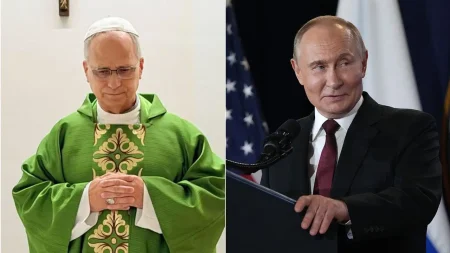
But Pope Leo’s concern extended far beyond the walls of the hospital. Even as he recovered from surgery, he picked up the phone and called Russian President Vladimir Putin. The conversation was not about politics in the abstract; it was about a city called Oleshky, in the Kherson region of Ukraine, where the humanitarian situation had become catastrophic. The Vatican released a statement describing the Pope’s deep concern for the grave conditions in the city. He called for a ceasefire to allow the delivery of food and medical assistance, and for the voluntary and safe evacuation of civilians. It was a striking act of compassion—a man lying in a hospital bed, his own body still healing, using his voice to advocate for strangers trapped in a war zone. The Holy Father reaffirmed the Holy See’s commitment to promoting dialogue and peace, but his words were not abstract diplomatic language. They were a cry from the heart, rooted in the belief that every human life is sacred. The call to Putin was not the first time Pope Leo had used his moral authority to intervene in global conflicts, but it was perhaps the most poignant, coming as it did during his own moment of physical weakness. It showed that his papacy would be defined not by power or prestige, but by a relentless, almost stubborn insistence on compassion, even when it would be easier to rest.
The situation in Oleshky is a tragedy that has largely faded from the headlines, but for the people living there, it is an everyday nightmare. Russia has controlled the southern Ukrainian city since May, and in that time, no humanitarian food deliveries have been allowed in. The city has no electricity, no gas, and no running water. The hospital is barely functional, and the civilian population is struggling to survive under conditions that are difficult to imagine. Families are trapped, unable to flee and unable to receive even the most basic supplies. Pope Leo’s call for a ceasefire was not a political maneuver; it was a plea for basic humanity. He asked for nothing more than the opportunity for food to reach the hungry, medicine to reach the sick, and safety for those who wished to leave. The Vatican’s statement made clear that the Pope’s concern was not about territory or strategy, but about people—real people, with names and faces and stories, who were enduring unimaginable hardship. In calling Putin directly, Pope Leo was using the only power he truly had: the power of moral persuasion. Whether it would change anything remained uncertain, but the gesture itself was a testament to the Pope’s understanding of his role. He is not just a spiritual leader who preaches from a pulpit; he is a pastor who reaches out to the margins, even when the margins are on the other side of the world.
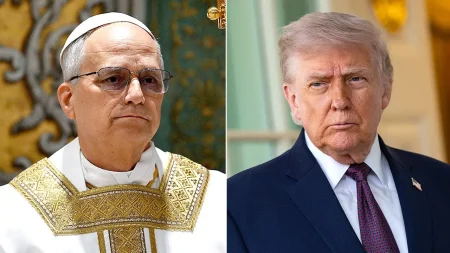
As Pope Leo returned to the Vatican, the world watched with a mixture of relief and admiration. Leaders from across the globe sent their well-wishes, including former President Donald Trump, who wished the Pope a speedy recovery and spoke highly of the pontiff’s brother. The outpouring of support was a reminder that the Pope, for all his spiritual authority, is also a human being—a brother, a friend, a man who laughs and worries and hopes like anyone else. His recovery from lung cancer is not just a medical story; it is a story about the intersection of faith and modern medicine, about the courage to face one’s own mortality while still reaching out to others. Dr. Marc Siegel, a medical expert, noted that the Pope’s surgery puts modern medicine alongside faith, a combination that has always been central to the Catholic tradition. The Pope’s own actions during his recovery—visiting sick children, writing letters, calling world leaders—demonstrated that his faith is not passive. It is active, engaged, and deeply rooted in the belief that even in our weakest moments, we are called to serve others. As he stood at the window of the papal apartment to lead the Angelus prayer, his voice may have been tired, but his spirit was unmistakably strong. For the faithful who had gathered outside the hospital, and for millions more watching from afar, his recovery was a sign of hope. It was a reminder that even in the face of cancer, war, and suffering, the human spirit—sustained by faith and the prayers of others—can endure. And in that endurance, there is a quiet, unshakable peace.