


There’s a magical window of time, just after sunrise and just before sunset, when the world seems to soften into a warm, golden glow. Even amateur photographers know it as “golden hour,” that fleeting moment when ordinary scenes suddenly look cinematic, when skin looks luminous and landscapes seem painted with honey and amber. But here’s the thing: not all golden hours are created equal. Some last for only a blink, while others stretch out into an unhurried 30 minutes of pure visual bliss. Clouds can completely swallow the effect, turning that promised glow into a flat grey disappointment. Rain can chase you indoors, and light pollution can muddy the warm tones with an artificial neon haze. Even wind and humidity play their part. So what if you could plan a trip around experiencing the absolute best golden hour on Earth? That’s exactly what travel company Kuoni set out to discover. They teamed up with meteorologist Jim Dale from British Weather Services to dig into the science behind those perfect sunset and sunrise moments, creating a ranking of the world’s most golden-hour-worthy destinations. The result is a poetic mix of sprawling deserts, ancient ruins, wetlands, and national parks — places where the atmosphere, landscape, and weather all conspire to deliver something truly unforgettable.
To find the world’s best spots, Kuoni didn’t just rely on postcard reputations. They analysed 165 destinations using a list of surprisingly precise metrics: cloud cover, light pollution, rainfall, artificial brightness, wind speed, and the average duration of sunset. That last one matters more than you might think. A sunset that lingers gives you more time to soak it in, to watch the light shift from gold to rose to deep purple. Clear skies are obviously essential, but a location can be stunning and still miss the list if there’s too much haze or too little darkness around it. After all the data was crunched, 20 places made the final cut — and they aren’t all the famous photography hotspots you might expect. Greece dominated the rankings, with four locations claiming a spot, followed by Namibia with three, while the United States, Australia, and Botswana took two spots each. Marco Rocha, Kuoni’s product, commercial and operations director, summed it up beautifully: there is something about that soft, warm light that makes a destination feel truly unforgettable, whether you’re watching the sun dip below the Acropolis in Lindos or over the dunes of the Namib Desert. But he also noted something fascinating: the best golden hour locations aren’t always the most obvious ones. Clear skies, low light pollution, and a bit of local knowledge often matter more than a destination’s reputation.
At the very top of the list sits Wadi Rum in Jordan, a vast desert valley that feels like another planet. With little cloud cover and almost no rain, it offers consistently perfect conditions for golden hour, and the red sand and massive rock formations only amplify the glow. Not far behind is Sossusvlei in Namibia, home to towering orange dunes and those famous dead camel thorn trees. This desert landscape has virtually no light pollution, and sunsets here last an average of 27.9 minutes — nearly half an hour of pure, unbroken magic. Namibia is clearly a golden-hour paradise, because Damaraland takes third place, a rugged, remote region where ancient rock art and open gravel plains become dramatic silhouettes as the light fades. In fourth place is Chile’s Atacama Desert, which Kuoni notes is made even more special by the presence of flamingos, alpacas, and Andean foxes that move through the otherworldly landscape. And rounding out the top five is Wahiba Sands in Oman, a sea of golden dunes that catch the low sun in ripples and curves, turning the entire desert into a living sculpture. These places are not just beautiful; they are engineered by nature to offer some of the longest, clearest, most atmospheric golden hours you will ever witness.
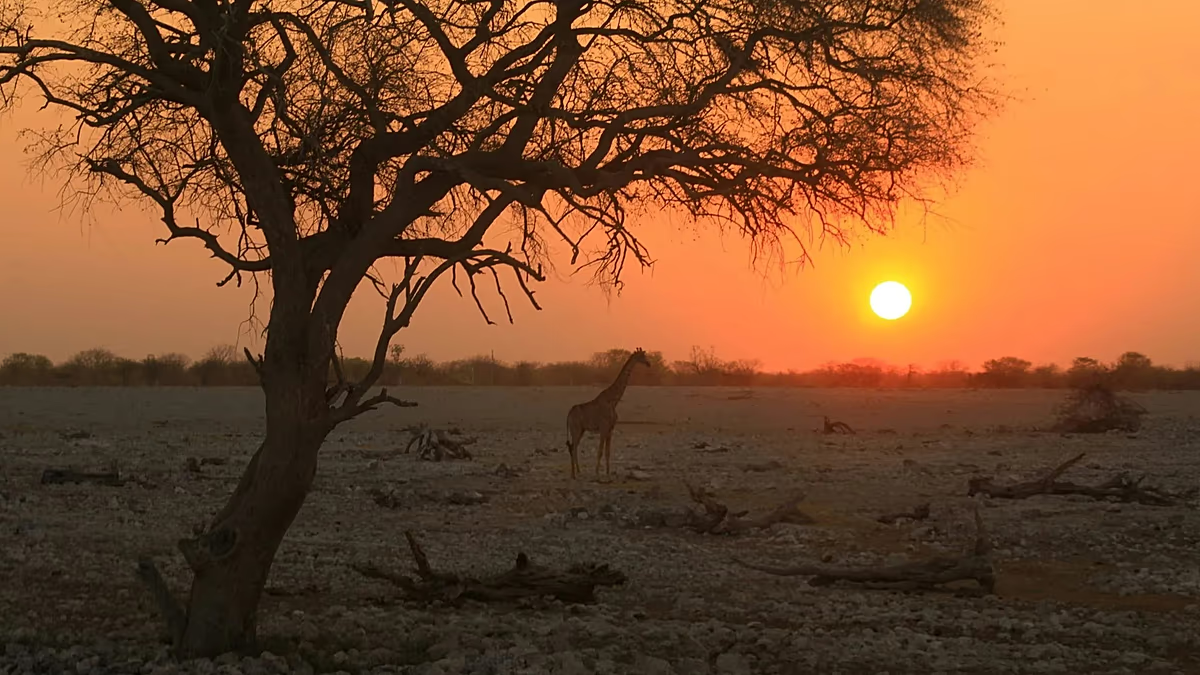
The African continent continues to shine further down the list, with Etosha National Park in Namibia taking sixth place, a sprawling salt pan and wildlife haven where elephants and giraffes wander through warm evening light. Botswana claims two spots: the Okavango Delta at number seven, where the channels and lagoons reflect every drop of colour in the sky, and the Chobe River at number thirteen, where sunset boat cruises offer front-row seats to elephants drinking along the shoreline as the sky turns blazing orange. The United States and Australia also make their mark. California’s San Joaquin Valley ties with Australia’s Uluṟu-Kata Tjuṯa National Park at number eight, which is fitting because both are vast, open spaces where the horizon seems to go on forever. Uluru, the great red monolith in the Northern Territory, is particularly famous for the way it seems to change colour with the light, glowing deep crimson at dusk. Sedona, Arizona, known for its red rock formations and spiritual energy, lands at number fifteen, while South Australia’s Flinders Ranges takes fourteenth place. Then there’s Victoria Falls in Zimbabwe at eleven, where the spray from the falls creates misty rainbows at sunset, and Ras Al Khaimah in the UAE at twelve, a quieter desert-and-mountain destination that feels a world away from Dubai’s skyline. The inclusion of these places reminds us that golden hour isn’t just about the sun — it’s about the landscape, the atmosphere, and the way the light interacts with everything around it.
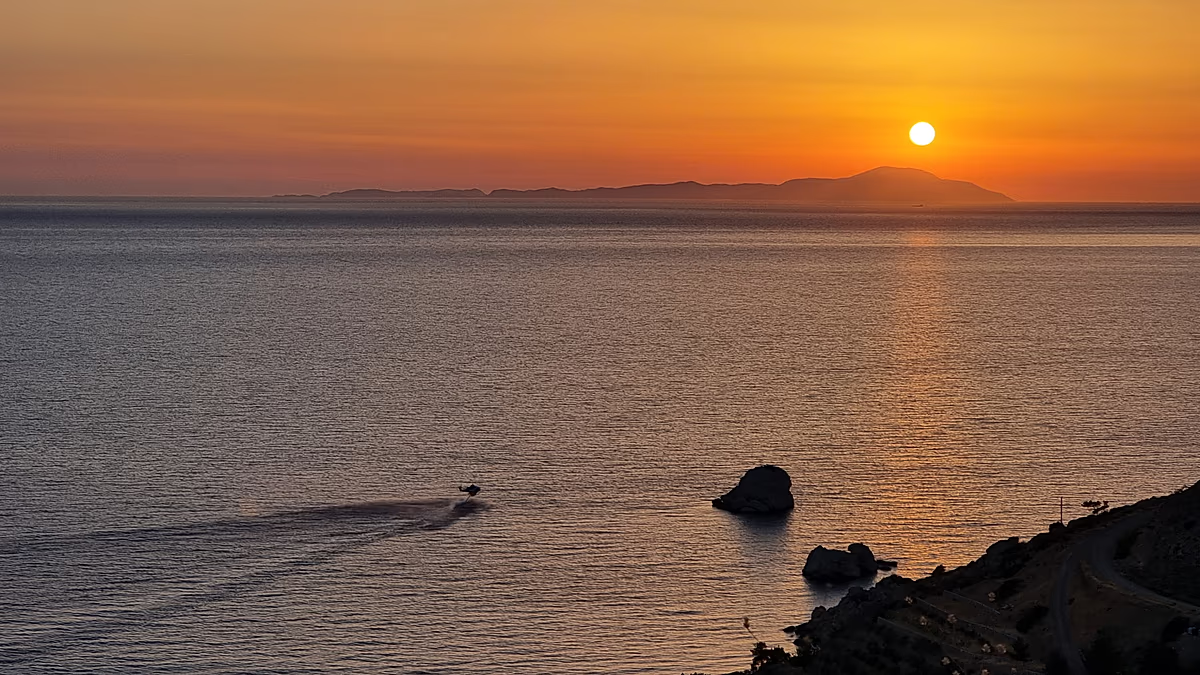
For those who prefer ancient history with their photography, Europe has a few treasures on the list. Lindos Acropolis in Rhodes barely made the top ten, but it earned its place because the temple sits 116 metres above the sea, offering uninterrupted views of the sunset most evenings. It’s one of those rare places where you can watch the sun slip below the Aegean horizon, with whitewashed houses and the Mediterranean spread out below you. Paphos City Centre in Cyprus follows at number sixteen, where coastal ruins and harbourside promenades soak up the golden glow. Rhodes Town comes in seventeenth, which makes sense — the old medieval city is full of stone arches and cobbled lanes that catch the light in beautiful, unexpected ways. Cape Sounion in Athens, perched on a cliff overlooking the water, takes nineteenth place, and the Temple of Poseidon there is one of the most iconic sunset spots in Europe. Finally, Zante’s Navagio Shipwreck Beach in Greece closes out the list at number twenty, a stunning cove with a rusting shipwreck and dramatic limestone cliffs that turn honey-gold as the sun sinks. These European locations prove that you don’t need to travel to a remote desert to find truly magical light. Sometimes all you need is a little elevation, a clear view of the horizon, and the patience to wait for that perfect moment.
What makes these destinations so special is not just the fact that they made a list — it’s what the list teaches us about how to chase beautiful light. Perfect golden hours are a combination of weather conditions, geography, and timing. Cloud cover matters, but so does the angle of the sun and the way dust or moisture in the air refracts the light. A place like Wadi Rum works because the desert air is dry and clear, while a place like Cape Sounion works because the sea breeze keeps the sky clean. The ranking also highlights the importance of getting away from artificial light. Some of the most magical sunsets happen in the middle of nowhere, where there’s no streetlamp or car headlight to compete with nature’s show. It’s a reminder that while we often think of prime sunset spots in terms of famous landmarks, the real magic lies in the places where the sky itself takes centre stage. So whether you’re planning a once-in-a-lifetime trip to Namibia or simply hoping to catch a beautiful sunset closer to home, take a page from Kuoni’s book: look for clear skies, avoid light pollution, and give yourself time to watch the light change. Golden hour is fleeting, but when you find it in the right place, it stays with you long after the sun has set.