


Megan Lambert had always believed that home was a place you could carry in your pocket, a small, warm warmth that lived just beneath your ribs and guided you back when the world felt too big. When she walked across the graduation stage twelve years ago, cap tilted at a jaunty angle and her diploma pressed tightly against the thin fabric of her gown, she had looked out at the familiar faces of her neighbors, her former teachers, and the families who had watched her scrape her knees on the same playground she would later watch over. She didn’t leave. She stayed. She became the kind of teacher who remembered every pencil stub, every scraped knee, and every wobbly first-day-of-school smile, because she had once been that kid in those very same seats. The hallways smelled of the same floor wax and construction paper she remembered from her own childhood—a scent of damp chalk and ambition—and she found a profound comfort in that cyclical rhythm of life. She knew the names of the janitors, the exact shade of the fire drill signs, and the particular way the morning light slanted through the gymnasium windows. She had planted her life here, like a tree sinking its roots into familiar soil, believing that her presence could offer the same stability her own favorite teacher, a woman named Mrs. Alvarez, had offered her during a particularly turbulent middle school year. Megan wanted to be that anchor for others, a steady hand in a world that seemed increasingly unsteady.
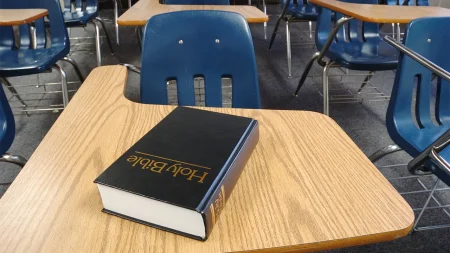
Her classroom was a sanctuary of sanctioned chaos and vibrant color. On the walls, cursive letters danced above a shelf of battered encyclopedias, and in the corner, a goldfish named Captain Bob swam slow, lazy circles in a bowl decorated with hand-painted clouds. Among the twenty-five desks, stained with the ink of a hundred forgotten poems, one was undeniably reserved for Rhoam Summer, a boy who arrived each morning with his hair sticking up in three different directions, his backpack unzipped and spilling out crumpled drawings of spaceships that he insisted were authentic blueprints. Rhoam had a laugh that bubbled up like a brook, unexpected and pure, and he would often save Megan a slice of his birthday cake, holding it aloft like a champion’s trophy, insisting she take the piece with the most frosting. Beside him sat two other children—a girl who wore glittery shoes and carried a tiny, chipped dollhouse chair in the pocket of her cardigan, saving it for imaginary guests, and a boy who asked unanswerable questions like “what does a star taste like?” and “if I jump high enough, will gravity get tired?” They were not just students to Megan; they were extensions of her own heart, small, fragile mirrors of her own childhood hopes and fears. She knew which of them was scared of the dark, which one needed an extra snack before recess, and which one hummed softly to themselves when they were concentrating. She watched them grow, watched their handwriting get neater, watched their arguments over crayons melt into shared laughter.
The morning of the tragedy had been unremarkable, wrapped in the ordinary chatter of reading circles and the soft scratch of crayons against construction paper. The sun had poured through the east-facing windows, casting long, warm shadows across the linoleum, and Megan had been crouched at Rhoam’s desk, helping him sound out a particularly tricky word in a story about a dragon. The air was thick with the scent of glue sticks and the gentle hum of a classroom finding its rhythm. Then came the sound—a sharp, percussive crack that split the air like a frozen branch breaking, alien and violent in its suddenness. For a split second, the children froze, their faces bent in confusion. Megan’s body moved before her mind could catch up. She saw the fear bloom in Rhoam’s wide, startled eyes, saw the girl with the sparkly shoes drop her dollhouse chair, saw the boy stop mid-question, his lips parted. In the chaotic, disorienting seconds that followed, Megan did what no training could ever fully capture. She lunged for the door, pushing her students behind her, her arms spread wide as if she could physically erect a barrier against the world’s cruelty. She shouted for them to get down, to hide, her voice cracking with a primal urgency she had never known she possessed. The final image she saw was of Rhoam, his small hand reaching out to her, his mouth forming a terrified, silent word that was lost in the thunderous blast that followed. She placed her body between them and the sound, a final, instinctive act of love.
The news traveled through the district like a black tide, swallowing the chestnut trees and the quiet suburban streets. Parents dropped grocery bags in the middle of the parking lot; grandmothers clutched rosaries as they stood frozen on sidewalks. The school’s PA system crackled into uneasy silence before a choked voice announced a permissive lockdown, and then nothing but the sound of sobbing. Outside, the chain-link fence was lined with faces twisted in disbelief, a human wall of waiting that stretched for hours in the cold air. When the authorities finally released the names—Megan Lambert, Rhoam Summer, and the two other children—the community’s grief solidified into a heavy, suffocating fog that settled over every house and every classroom. Megan’s own former teachers, the ones who had watched her grow up in these very halls, wept openly, remembering her as a bright-eyed girl who once turned in a science project about the solar system with a handmade planet hanging from a string. The empty desks in room 104 stood as silent monuments, their surfaces still scratched with the remnants of name tags. The goldfish swam on, oblivious to the vacuum of missing breath around him. The crayons lay where they had dropped, their vibrant reds and blues mocking the sudden grey pallor of the world. Parents held their own children a little tighter that night, and the silence in the hallways was broken only by the distant wail of sirens fading into the dusk.
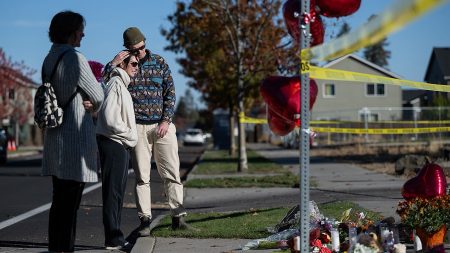
In the days that followed, the town struggled to stitch together a semblance of normalcy, but the seams kept bursting. Megan’s family, overwhelmed by a grief too vast to articulate, found a fragile solace in the testimonials of her colleagues who spoke of her tireless dedication—how she stayed late to decorate the bulletin board, how she brought in a quilt for the reading corner, how she never raised her voice unless it was to sing the school song. Rhoam’s parents spoke of his endless curiosity, his love for spaceships, and how he had insisted on wearing his astronaut shirt that morning, announcing he wanted to be a pilot when he grew up. The two other children, whose names are now carved into granite alongside the others, were remembered for their tiny, beautiful peculiarities—the way the girl lined up her sparkly shoes at the edge of the rug, the way the boy argued that dinosaurs could have lived under the sea. The tragedy transcended statistics and policy debates; it became deeply, achingly personal. The district installed a memorial garden outside the classroom window, where mourners placed pinwheels, teddy bears, and handwritten letters sealed with wax. Megan’s graduation photo, a young woman with a bright, unburdened future, was placed beside a class picture of Rhoam and his friends. Their smiles were frozen in time, a testament to the fragility of life and the fierce, protective love of a teacher who gave everything she had to the very last second.
As the seasons turned and the years began to blur, the quiet returned to the district, but it was a different kind of quiet—a reverential hush that lingers in the corners of hallways where laughter used to echo. The classroom door was sealed, but a pane of glass was left open, as if to allow the memory to breathe. Passersby could still see the chalkboard, bearing the half-finished sentence young Rhoam had been writing that morning: “My teacher is…” The words trailed off, but the meaning lingered, an unfinished sentence that the entire community has spent years trying to complete. Megan Lambert returned to her roots, and in doing so, she became a root herself, anchoring a grieving community in its darkest hour. Rhoam Summer and the two other children will forever be frozen in the golden light of that morning, not as victims defined by a headline, but as the bright, curious, messy, beautiful souls they were. Their story is a stark reminder that in the face of chaos, all we truly have is each other. While the world endlessly debates causes and cures, arguing over policy and blame, the memory of a teacher who shielded her students with her own body, and the laughter of a boy who loved the stars, will remain etched in the heart of a district that will never forget. They are the pinwheels in the memorial garden, spinning in the breeze, whispering that love—no matter how briefly lived—is never truly lost.