


Paragraph 1: The Critical Journey Begins
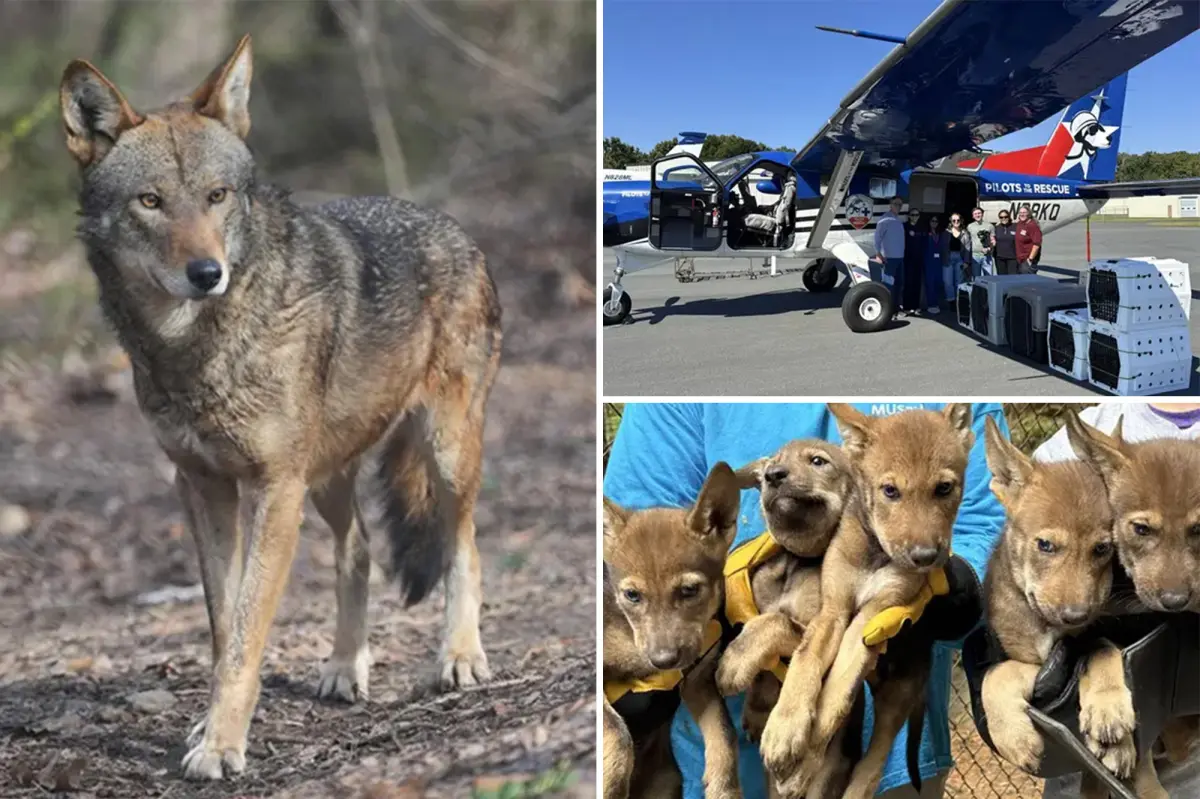
On a quiet Tuesday morning, a remarkable and urgent mission unfolded in the skies above the Eastern United States—a mission that carried the weight of an entire species on its wings. Ten critically endangered American red wolves, each one a vital thread in the fragile tapestry of biodiversity, were carefully loaded onto small aircraft for a journey that would span states and, with any luck, secure a future for their kind. The wolves, moving between the Wolf Conservation Center in South Salem, New York, and the Museum of Life and Science in Durham, North Carolina, were not merely traveling; they were participating in a last-ditch, carefully orchestrated effort to save their species from the brink of total extinction. With fewer than thirty American red wolves remaining in the wild—and some estimates placing that number even lower, at around twenty-one—every single individual is irreplaceable. This particular exchange, facilitated by the nonprofit organization Pilots to the Rescue, was a delicate dance of logistics, biology, and hope. The sky was clear, the planes were ready, and the wolves, though terrified, were unknowingly carrying the genetic keys to their species’ survival. It was a journey that symbolized both the desperation of the moment and the unwavering commitment of the humans who refuse to let this magnificent animal disappear from the American landscape.
Paragraph 2: The Exchange of Lives
The specifics of the exchange were as carefully choreographed as a ballet. Three wolves made the trek from New York to North Carolina: a breeding pair and a lone female, all chosen for their genetic compatibility and potential to contribute to the recovery program. In the opposite direction, a breeding pair and their five puppies—young, impressionable, and full of promise—boarded a plane bound for New York. The puppies, about seven or eight months old, were not strangers to the Wolf Conservation Center; in fact, their parents had originally come from that very facility, so this journey was, in a sense, a homecoming. The exchange was not a random occurrence but part of the American Red Wolf SAFE (Save Animals From Extinction) program, a collaborative initiative under the U.S. Fish and Wildlife Service. Each year, scientists and conservationists review the genetics, health, and social dynamics of every wolf in the program, making recommendations for breeding and exchange that will maximize genetic diversity and population resilience. The wolf centers, zoos, and sanctuaries involved—more than fifty facilities across the country—form a kind of ark, a living reservoir of a species that once roamed the southeastern United States in the thousands. This particular swap was years in the making, driven by meticulous planning and a shared sense of urgency. For the three wolves heading south, the move offered new opportunities to breed and contribute to a growing population; for the pups coming north, it meant rejoining their ancestral line and being integrated into a facility that would prepare them for a life that might one day include freedom.
Paragraph 3: The Human Network Behind the Scenes
Behind this seemingly simple animal transport lies an intricate network of dedicated individuals and institutions. Rebecca Bose, curator of the Wolf Conservation Center, is one of those people—a woman who spends her days balancing the needs of wild animals with the logistical demands of conservation. She explained that the SAFE program is a coordinated effort involving more than fifty facilities, each playing a specific role in the recovery of the red wolf. The Wolf Conservation Center itself is a place where the wolves live a “very wild existence,” as Bose puts it. The humans there are intentionally hands-off, minimizing contact to ensure that the wolves retain their natural instincts and, crucially, their fear of humans. That fear is not a liability; it is a tool. Bose noted that when it’s time to catch the wolves for transport, the caretakers form a human chain to gently corral the animals into a corner, where they are guided into a crate. The process is remarkably effective precisely because the wolves are so wary of people—they cooperate without a struggle, preferring the safety of a dark crate to proximity with the looming humans. But the challenge, Bose admitted, is speed. “The biggest challenge is catching them quickly enough to make the plane,” she said. The wolves are not on a schedule, and their unpredictable movements can turn a simple transfer into a race against the clock. Fortunately, Pilots to the Rescue, the nonprofit that provides the flights, is patient. They don’t leave without their precious cargo, understanding that the success of the mission depends on the animals’ well-being, not on a strict timeline.
Paragraph 4: The Art of Wildness and the Hope for Release
There is a profound irony in the fact that these wolves are saved by their own fear of humans. In a world where many conservation efforts depend on habituating animals to people—through feeding, medical care, and close observation—the red wolf program goes the opposite direction. Every effort is made to maintain the wolves’ wariness, to keep them wild at heart. This is not an exercise in cruelty but a calculated strategy for survival. Some of the wolves transported on Tuesday could, down the line, have the opportunity to be released into the wild. For that release to be successful, they must be able to avoid humans, to hunt, to live without dependence on handouts. A wolf that has lost its fear of people is a wolf that is likely to wander into harm’s way—whether through a collision with a car, a shooting, or a conflict with a farmer. Thus, the human chain, the quick corralling, and the quiet, efficient handling are all part of a larger philosophy: to save the species, you must preserve its essence. The five puppies moving to New York will grow up in this environment of controlled wildness, learning to be wolves in the most authentic way possible—without the comfort of a human touch. It is a lonely existence, perhaps, but it is one that keeps hope alive for their eventual return to the forests and swamps of the wild.
Paragraph 5: Homecoming and New Beginnings
For the five pups, the flight to New York was more than just a change of scenery; it was a return to their roots. Bose explained that the parents of the pups had originally come from the Wolf Conservation Center, so this move effectively brought the family back to their genetic home. The pups, born at the Museum of Life and Science in North Carolina, were now old enough to travel and ready to be integrated into a new pack structure. After landing in Raleigh, the three wolves were taken by car to the Museum of Life and Science, while Bose and her team picked up the wolf family at the airport. The journey home was long—a flight to New Jersey, then a drive back to New York—but it was a labor of love. The pups, about seven or eight months old, were at a critical developmental stage. They would now be introduced to a new environment, meet new wolves, and learn the social nuances that would define their place in the pack. It was a moment of both upheaval and opportunity, the kind of transition that could shape the future of the species. The timing of the exchange was no accident; it was designed to minimize stress and maximize the chances of successful adaptation. As the crate was unloaded at the Wolf Conservation Center, there was a palpable sense of celebration among the staff. They were not just moving animals; they were weaving a new chapter in the long, uncertain story of the American red wolf.
Paragraph 6: A Future Worth Fighting For
Rebecca Bose’s voice carries a mix of urgency and gratitude as she talks about the partnership with Pilots to the Rescue. “We’re so excited to work with Pilots to the Rescue again. They have become a pivotal part of our work, helping us safely transport Red Wolves and connect them with facilities where they can play an important role in the future of their species. When we fly with them, the animals’ well-being is always the top priority, as they deserve,” she said. And then she added a sobering thought: “With fewer than 21 Red Wolves left in the wild, every step we take toward recovery matters.” That number—21—hangs in the air like a warning. It is a number so small that it borders on the unimaginable, yet it is also a number that galvanizes action. Pilots to the Rescue, a nonprofit that typically transports at-risk animals from under-resourced shelters to rescue organizations and adoption centers, has expanded its mission to include these wild passengers. Their pilots volunteer their time, their planes, and their fuel to ensure that no animal—whether a homeless dog or an endangered wolf—is left behind. The exchange on Tuesday was a small victory in a much larger battle. It was a testament to what can be achieved when human ingenuity, compassion, and technology converge. The red wolf may be on the edge of the abyss, but the hand reaching out is strong and determined. As the wolves settled into their new homes, the sound of their calls echoed across the enclosures—a haunting, hopeful sound that reminded everyone involved why this work matters. The flight was over, but the journey had just begun.