



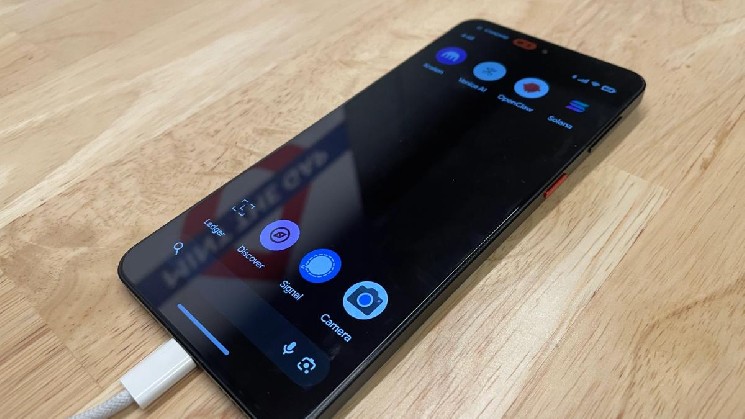
Ledger Unveils Tamper-Proof ‘Atom’ Wallet After Hidden Chips Intercepted Recovery Phrases in CryptoBilis Attack
A Silent Assault on the Ultimate Crypto Safeguard
The 24-word recovery phrase is the closest thing a cryptocurrency owner has to a master key — a carefully ordered sequence of everyday words from which all private keys for a digital wallet are derived. It is the foundation of self-custody, the promise that no bank, exchange, or third party ever needs to be trusted with one’s assets. For more than a decade, hardware wallets have served as the gold standard for safeguarding these phrases, isolating seed generation and transaction signing inside a dedicated, offline device. But a newly documented attack, tracked by Ledger under the codename “CryptoBilis,” has exposed a threat so quiet and so physical that it undermines the industry’s most cherished assumptions. According to research released Wednesday, a number of compromised hardware wallets in circulation were allegedly fitted with hidden microchips engineered to intercept a user’s 24-word recovery phrase as it was entered. The implants reportedly operate as screen readers, decoding the electromagnetic signals emitted by the device’s display to reconstruct the exact words on the fly. The wallet’s secure element is never breached; no malware, phishing, or network-based exploit is involved. Instead, the device itself becomes a silent informant, capturing the sole secret that unlocks a user’s entire digital fortune, one word at a time.
For those who have placed their life savings into cold storage, the notion is deeply unsettling. The seed phrase is the ultimate backstop — the one thing that can restore funds even if a wallet is lost, stolen, or destroyed. It is meant to exist only in the owner’s memory or in a rigorously protected physical backup. The CryptoBilis implants, however, appear to have intercepted those words at the very earliest stage of the input process, before the phrase ever reaches the wallet’s secure processing environment. That means all of the defensive layers customers have been taught to rely on — PIN codes, passphrase encryption, secure element certification — were bypassed without ever being defeated on their own terms. The hardware was compromised before it reached the user’s hands. And the most deeply troubling aspect of the discovery is that a victim could easily go months, or even years, without realizing that their recovery phrase was no longer their own secret.
A Regional Storm: Southeast Asia in the Crosshairs
Ledger’s findings on Wednesday point to a distinctly regional pattern: the incident overwhelmingly affected users in Southeast Asia, while no losses of funds have been reported in Europe. The geographic concentration is a telling detail, offering a glimpse into the attack’s likely origins and its deliberate targeting. Southeast Asia has become one of the world’s fastest-growing cryptocurrency markets, with retail investors, traders, and web3 builders across Vietnam, Thailand, Indonesia, and the Philippines embracing self-custody in ever-increasing numbers. It is also a region where hardware wallets must travel through a patchwork of resellers, grey-market importers, and third-party logistics providers — a supply chain with many possible points of interception between the factory floor and the end user’s doorstep. For the attackers, the calculus may have been simple: compromised devices injected into a specific high-volume distribution corridor could yield a substantial harvest of seed phrases from users who were rightly seeking the most robust protection available. The relative absence of reported European losses could suggest that the tampered units were concentrated within that regional channel, or it could simply mean that the attack has not yet been detected on other continents.
The lack of confirmed fund losses in Europe offers cold comfort. For one thing, a hardware-level breach of this kind is exceptionally hard to identify after the fact. The chip hidden in a compromised wallet leaves no trace on the device’s operating system, produces no anomalous logs, and gives no visible sign of malfunction. Unless an owner happens to notice a suspicious drain on their assets or — as in the CryptoBilis disclosure — learns of the attack through official channels, the interception of a seed phrase might go entirely unnoticed until long after the funds are gone. The regional nature of the incident also raises an uncomfortable question for the broader crypto community: if attackers can successfully plant screen-reading implants in one market’s supply chain, why not elsewhere? The answer, according to security analysts, is that they already have — or soon will. The industry is left to count not just current victims but future risks.
Ledger’s Counterstrike: The ‘Atom’ Wallet
Ledger’s response to the CryptoBilis revelations is emphatic. The company says its next-generation hardware wallet — the Ledger Atom — will incorporate a suite of additional protections purpose-built to counter the screen-reading attack vector that defined the incident. In an email statement to CoinDesk, a Ledger spokesperson detailed several new layers of defense: a protective enclosure around the device’s most sensitive components, sensors designed to detect any attempt to remove the screen or back cover, and packaging engineered to reveal whether it has been opened. Unlike previous generations of hardware wallets, where tamper resistance was largely delegated to the secure element’s internal design, the Atom treats the device’s physical shell as a strategic perimeter. The protective enclosure, which Ledger has dubbed the “Core protection enclosure,” sits directly around the wallet’s most critical internals. Its stated purpose is to block the specific class of screen-reader implants found in the CryptoBilis incident — a direct, named countermeasure against a real, known enemy.
The choice to announce these protections so explicitly is itself a strategic signal. In the highly competitive world of hardware wallets, manufacturers tend to shroud security features in vague marketing language, promising “military-grade” protection without revealing mechanisms. Ledger, by contrast, is publicly describing how its next device will defeat a concrete attack. “The Core protection enclosure will explicitly block the screen reader implants from this weekend’s incident,” the spokesperson said. It is a deliberate attempt to rebuild trust by demonstrating — not just claiming — that the new device is engineered with the latest threat intelligence. For customers who may have spent months or years relying on older hardware wallets, only to discover that the devices could be weaponized before they ever left the box, such specificity is a welcome departure from the norm. It signals that Ledger is treating the hardware supply chain not as an abstract risk, but as the primary attack surface requiring the most rigorous response.
Defensive Engineering: The Wallet That Guards Itself
The technical details behind the Atom’s defense suite demonstrate just how far hardware security has come. Perhaps the most notable element is the tamper-detection system’s independent power source — its own dedicated battery, installed to ensure the sensors remain functional even when the device is switched off. This is a small but crucial detail: in the event of a physical attack at any stage of the supply chain, an attacker who obtains a device while it is powered down, or attempts to surgically alter it before it is ever switched on, will find the sensors already on guard. The security system operates continuously, monitoring for any attempt to pry open the enclosure, detach the screen, or otherwise violate the device’s physical integrity. Should such an attempt be detected, the tamper-detection circuitry would respond instantly — though Ledger, understandably, has not fully detailed the nature of that response.
The inclusion of a self-powered detection system reflects a subtle but essential shift in how hardware wallets are conceived. For years, the default assumption was that threats arrived via the network: malicious websites, phishing emails, compromised dApps, or supply-chain software attacks. The physical device was trusted by definition. The CryptoBilis incident has shattered that assumption, demonstrating that an adversary with access to the hardware before it reaches the customer can compromise the foundation of crypto security without touching a single line of code. The Atom’s independent battery, tamper-evident packaging, and sealed enclosure are designed to close precisely this gap. Even the packaging itself is now an active part of the defense: a package that visibly reveals whether it has been opened ensures that end users can perform a meaningful integrity check upon delivery. For the first time, the security guarantees of the hardware wallet extend beyond the device’s own boot process to the entire journey from factory to hand.
Cutting Out the Middleman: A New Distribution Strategy
Perhaps the most consequential move in the aftermath of CryptoBilis is not in the hardware itself, but in how Ledger plans to bring it to market. The company announced that the Atom will initially be sold exclusively through its own website, bypassing the third-party retailers, marketplaces, and logistics partners that have historically expanded the reach of hardware wallets to mainstream consumers. The logic is straightforward: by owning the entire distribution pipeline, Ledger can dramatically reduce the risk of physical tampering between production and delivery. The compromised units in the CryptoBilis incident are believed to have entered circulation through distribution channels — a vulnerability that a vertically integrated sales model is designed to eliminate. In essence, Ledger is trading broad availability for absolute control over the device’s chain of custody.
This is a strategic choice with meaningful trade-offs. Selling exclusively through one’s own online store is, in many ways, a return to the industry’s roots — a time when hardware wallets were niche tools purchased by early adopters willing to wait for international shipping. Today, however, self-custody has gone mainstream, and many legitimate users rely on the convenience of local retailers and rapid delivery. For those customers, the direct-only model may be an inconvenience. But it is also a powerful signal: at a moment when trust in hardware security has been shaken, Ledger is betting that customers will reward a model that demonstrably safeguards their assets, even at the cost of some convenience. The message is clear — no distribution channel, however lucrative, is worth risking the integrity of the device’s most important secrets. In the long run, the exclusivity may not be permanent, but its immediate implementation tells the market exactly how seriously Ledger views the threat.
What About the Victims? A Long Road Ahead
For those already affected by the CryptoBilis incident, however, the new device offers little immediate comfort. Ledger has confirmed it has no plans to introduce a trade-in program for existing customers whose devices were compromised — though the company has not ruled out upgrade promotions in the future. On its surface, that stance might seem cold, particularly for victims of a breach that depended on a trusted brand’s name to succeed. But it is also a pragmatic reflection of the technical realities of hardware security. Once a device’s physical integrity is compromised, there is no software patch, no firmware update, and no configuration change that can make it safe again. The compromised hardware has to be replaced — and so must the seed phrase it protected. A trade-in program, in that context, would be ceremonial at best and potentially dangerous at worst, encouraging users to return one wallet for another without fully understanding that the old phrase must be abandoned entirely.
The longer-term significance of CryptoBilis extends well beyond the question of customer compensation. It has thrust hardware wallet supply chains into the spotlight and forced an entire industry to reassess what “tamper-proof” actually means in a world of accessible electronics manufacturing and sophisticated hardware implants. For Ledger, the Atom is more than a product refresh — it is a declaration that the company intends to remain at the forefront of hardware security by engineering for adversaries the industry never anticipated. And for users, the lesson is sobering but essential: self-custody is only as strong as the physical chain of custody of the devices that guard it. The future of cold storage will require vigilance not just from users, but from manufacturers who must now view every step of the journey — from the cleanroom to the mailbox — as part of the security perimeter. The 24-word phrase remains the master key, but it now demands a lock that can defend itself from the moment it is forged.