


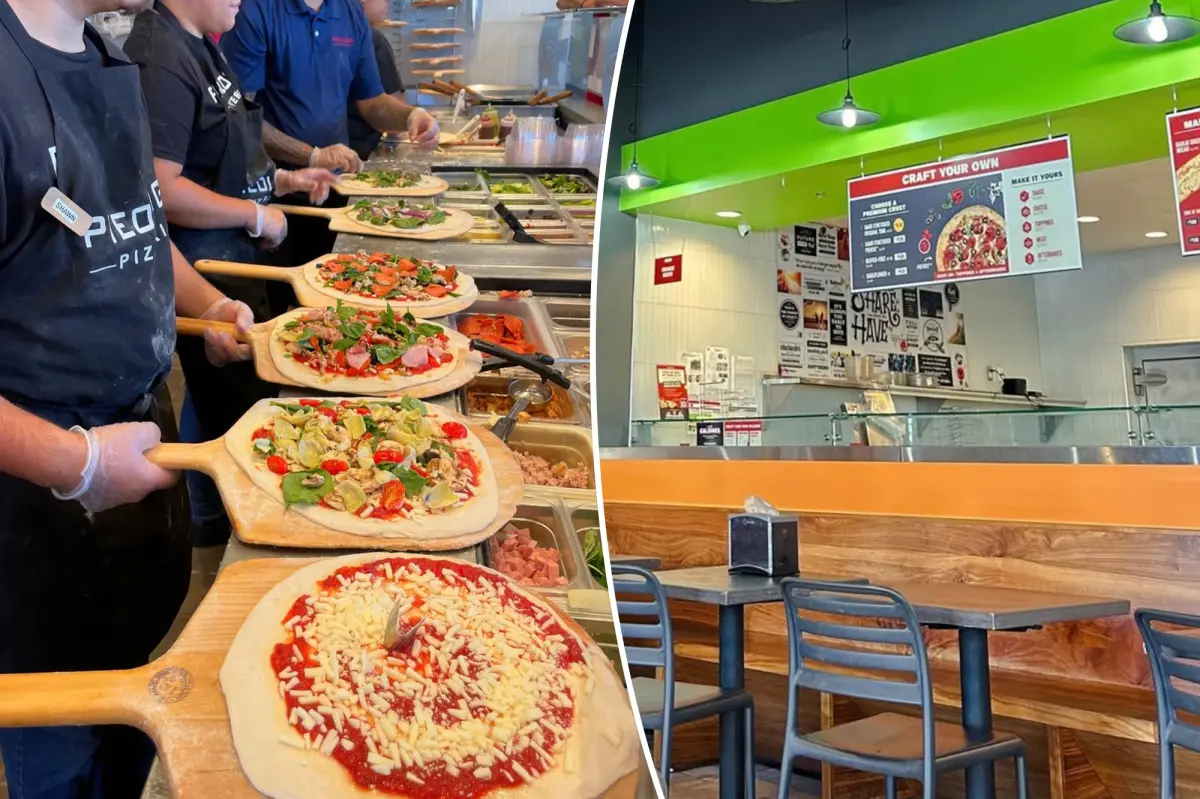
There is something quietly heartbreaking about watching a once-beloved restaurant chain fade away, especially one that made people feel like they were part of the creation. Pieology Pizzeria was that kind of place for a long time, a brightly lit, fast-casual haven where you could stand at a counter, point at a mountain of pepperoni, mushrooms, jalapeños, and pineapple, and watch your personal pizza transform from a flat disk of dough into a bubbling, blistered masterpiece in a matter of minutes. For a generation of pizza lovers, it was more than just a meal; it was a small, satisfying ritual. But now, the chain is getting cooked in the worst way. Once a booming empire with roughly 150 locations across the country, Pieology has been reduced to just 27 restaurants, according to The Street. The latest goodbye happened quietly in Folsom, a suburb of Sacramento, where a decade-old outpost in the Folsom Gateway shopping plaza closed its doors earlier this month. For the people who lived nearby, it was another familiar storefront gone dark, another memory of casual dinners and custom toppings suddenly erased from the map. It is a dramatic fall from grace for a brand that seemed to have everything going for it, and it leaves behind a lingering question: How did a pizza chain with so much promise, so much star power, and so many devoted customers end up with so little left?
The closure of the Folsom restaurant is a particularly human kind of loss, because it wasn’t some faceless corporate decision made in a distant boardroom. It was a local franchisee, someone who had been running the shop since it first opened in 2016, finally deciding enough was enough. The restaurant had been part of the neighborhood for nearly a decade, slinging customizable pies and calzones to families, teenagers, office workers, and anyone else who wanted a hot, made-to-order meal. But when the lease came up for renewal, the operator chose not to sign again. Kelly Rule, senior vice president of leasing at Pappas Investments, the landlord for the shopping center, confirmed to the Sacramento Bee that the restaurant operator simply opted not to renew. There was no dramatic announcement, no farewell party, no final slice for loyal customers. The doors just closed. And while a replacement restaurant is reportedly already being lined up for the now-vacant space, the identity of the new tenant remains a mystery. For the regulars who had their favorite orders memorized, the empty storefront is more than just commercial real estate; it is a small monument to a particular kind of everyday joy. It was the place where kids celebrated after a soccer game, where coworkers grabbed lunch on a Tuesday, where a first date could turn into a shared adventure in topping combinations. The loss is not just about pizza. It is about the quiet disappearance of a gathering spot that once felt permanent.
To understand what Pieology meant to people, you have to go back to the beginning. The chain was founded in Fullerton, California, in 2011, at a time when the fast-casual pizza revolution was just beginning to heat up. The concept was simple but brilliant: instead of choosing from a limited menu, customers would move down an assembly line, building their own personal pizzas with an almost endless variety of sauces, cheeses, proteins, and vegetables. Then the pizza would be sent through a blazing-hot oven, and within minutes, a bubbling, crispy, entirely personalized pie would land on your tray. It was the pizza equivalent of the Chipotle experience, and people loved it. The brand also made an effort to be inclusive, offering cauliflower crusts and gluten-free alternatives for those with dietary restrictions or preferences. In a world where customization was becoming the gold standard of dining, Pieology felt perfectly in tune with the times. It wasn’t just about eating; it was about expressing yourself through food. You could be bold and experimental, piling on unlikely combinations, or you could be a traditionalist who stuck to the classics. Either way, the pizza was yours, and that made it special. The buzz grew quickly, and soon the little chain from Fullerton was being talked about as a major player in the future of American dining.
The promise of that future attracted some serious heavyweight backers. Among the investors were Panda Express founders Andrew and Peggy Cherng, who knew a thing or two about building successful restaurant brands, and none other than NBA superstar Kevin Durant, whose name brought an extra layer of cool to the endeavor. Having a basketball icon attached to the brand generated headlines and social media buzz, and it helped Pieology expand at a staggering pace. At its peak, the chain boasted around 150 locations nationwide, stretching from California to the East Coast. It seemed like the brand could do no wrong. New stores were opening, customers were lining up, and the build-your-own pizza category was exploding with popularity. But as with so many restaurant trends, the rapid expansion came with hidden risks. The market was becoming saturated with competitors offering similar concepts, from Blaze Pizza to MOD Pizza, and the novelty of making your own pie began to wear off for some consumers. Meanwhile, the costs of running a brick-and-mortar restaurant kept rising, and the pressure to keep prices low while maintaining quality grew more intense with every passing year. Pieology had the star power, the investment, and the brand recognition, but it also had a mountain of debt and a business model that was becoming harder and harder to sustain in an increasingly crowded and unforgiving industry.
The cracks started showing long before the bankruptcy filing. Store after store quietly closed, often without much explanation. In the Sacramento area alone, Pieology shuttered its locations in Rancho Cordova, downtown Sacramento, and Roseville in recent years, leaving loyal fans scrambling to find their next favorite pizza spot. By late 2025, the parent company had filed for Chapter 11 bankruptcy, a move that officially acknowledged what many had already suspected: the chain was in serious trouble. The bankruptcy filing was not necessarily an immediate death sentence, but it was a clear sign that the business as it once existed could not survive. For employees who had worked at Pieology for years, the closures meant losing not just a paycheck but a community. For customers, it meant saying goodbye to a place that had been woven into the fabric of their lives. The reasons for the decline are numerous and complex. There was intense competition from other custom pizza chains, many of which offered similar experiences with even more aggressive marketing. There was the rise of third-party delivery apps, which changed the way people ordered food and made it harder for fast-casual restaurants to maintain the in-person experience that made them special. There was also the simple fact that trends in dining are fickle; what feels fresh and exciting one moment can feel tired and overdone the next. Pieology was not the only chain to struggle, but its fall from grace has been especially striking because it started with so much momentum and so many advantages.
Now, with just 27 locations still standing, the future of Pieology remains uncertain. For fans in the Sacramento region who still crave those custom pies, there are a couple of nearby options left, one in the Meadowview neighborhood of Sacramento and another in neighboring Elk Grove. But the Folsom closure is a painful reminder that nothing lasts forever, especially in the restaurant industry. The memory of what Pieology once was, the excitement of building your own pizza, the joy of watching it come out of the oven, the satisfaction of biting into something made exactly the way you wanted it, will linger for a long time. Perhaps the brand will find a way to reinvent itself and rise again from the ashes of bankruptcy, emerging leaner and more focused. Or perhaps the remaining locations will slowly disappear too, becoming a fond memory for those who were lucky enough to experience them. In a world where convenience and speed often trump experience, the idea of a pizza built by your own hands feels almost nostalgic now. The empty space in Folsom Gateway will likely be filled by another restaurant soon, and life will go on. But for the people who once gathered there, sharing laughter and slices, it will always be the place where pizza was more than just food. It was a small act of creation, a moment of choice, and a little bit of joy that is now just another part of the past.