

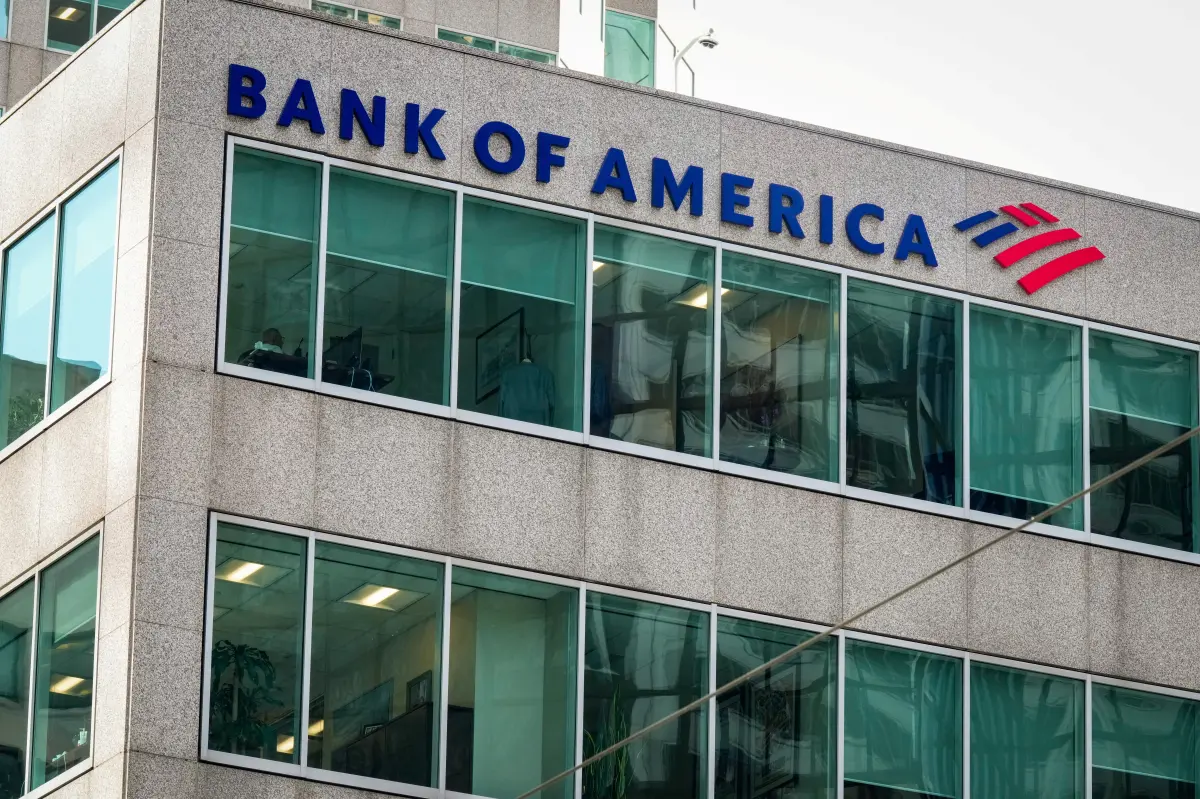
Imagine getting a letter from the government that says you owe more than a billion dollars because you didn’t follow the rules. Now imagine you’re not a person, but one of the largest banks in the United States. That’s essentially what happened to Bank of America this week. The U.S. Treasury Department announced on Tuesday that it is fining the bank $1.2 billion for allegedly violating anti-money laundering laws and sanctions regulations. Bank of America, the second-largest bank in America by assets, is no small player. It’s a name that appears on millions of credit cards, mortgages, and checking accounts. So when the Treasury hits a giant like this with a penalty, it’s not just a headline for Wall Street. It’s a reminder that the rules of the financial system are supposed to apply to everyone, no matter how powerful or wealthy. The $1.2 billion fine is also historically significant. The Treasury says it’s the third-largest penalty the department has ever imposed. That puts this moment in rare company, alongside only a couple of other major enforcement actions. The sheer size of the fine is meant to make people pay attention. And it should. It’s a statement that even the biggest names in banking are being watched, and that regulators are willing to take action when they believe something has gone seriously wrong. Of course, “allegedly” is an important word here. The announcement doesn’t mean the bank has admitted guilt or that a court has made a final decision. It means the Treasury has concluded, after its own investigation, that Bank of America failed to meet its legal obligations. The bank may fight the charges, negotiate, or eventually pay up. But for now, the official story is that one of America’s most trusted financial institutions dropped the ball in ways that could have allowed dangerous money to move through the system. This is the kind of news that can feel distant and complicated, full of jargon and legal terms. But at its heart, it’s about something simple: trust. When you deposit money into a bank, you trust that the bank is following the law. The Treasury’s action suggests that trust was broken.
To understand why this matters, it helps to think about what banks are actually supposed to do behind the scenes. A bank isn’t just a place to store cash or take out loans. It’s also a gatekeeper. Banks are required by law to monitor the money that flows through their accounts, to look for suspicious patterns, and to report anything that could be connected to crime, terrorism, or other illegal activity. This is what people mean when they talk about anti-money laundering, or AML for short. The idea is simple: if criminals and terrorists can’t use the banking system, it becomes much harder for them to move money around the world. Sanctions are related but slightly different. When the U.S. government sanctions a country, group, or individual, it essentially says, “You are cut off from the American financial system.” Banks are expected to enforce those rules by freezing assets, blocking transactions, and refusing to do business with sanctioned people or governments. This is not optional. It’s not a suggestion. It’s the law. When a bank fails to do this properly, the consequences aren’t just theoretical. Money linked to weapons deals, drug cartels, or terrorist networks could slip through. That’s why the Treasury Secretary’s words were so strong. He said, “When a bank of this size fails to meet its anti-money laundering and sanctions obligations, the consequences extend far beyond its own walls, exposing the entire U.S. financial system to significant illicit finance risks.” In other words, Bank of America’s alleged failures weren’t just a problem for the bank itself. They were a problem for the whole country. A leak in one part of the financial system can let dirty water flood into every other part. That’s why regulators treat these cases so seriously, and why the fine is so large.
The Treasury Secretary’s quote deserves a little more attention, because it captures the mood of the moment. He didn’t sound like someone who was making a routine announcement. He sounded like someone who wanted to send a message. “Today’s actions send a clear message that even the biggest financial institutions are not above the law,” he said. That line is the heart of the story. For years, many people have felt that big banks are too big to fail and too big to punish. When a giant company gets in trouble, the fines sometimes look large but end up being a small percentage of what the company earns. The Treasury wanted to push back against that feeling. By imposing a penalty of this size, it’s trying to show that size doesn’t mean immunity. Bank of America made more than $25 billion in profit in recent years, so a $1.2 billion fine won’t put the bank out of business. But it’s not supposed to. The point is to hurt enough to matter, to force the bank to take its responsibilities seriously, and to warn other banks that the same thing could happen to them. There’s also a human side to this. When a bank fails to enforce sanctions or anti-money laundering rules, the victims are often ordinary people. Drug money can fund violence in communities. Terrorist money can support attacks that kill innocent civilians. Corrupt officials can stash stolen wealth in foreign accounts while their own people suffer. Banks are supposed to be the barrier between that kind of money and the legitimate economy. When the barrier breaks, everyone is less safe. So this fine isn’t just about punishing Bank of America. It’s about protecting the rest of us.
There’s another layer to the story that makes it even more complex. In addition to the $1.2 billion in penalties, the Treasury Department also announced that Bank of America reached a separate $11.6 million settlement with the Office of Foreign Assets Control, which is the part of the Treasury that manages sanctions. That settlement was over what the Treasury called “apparent violations of numerous sanctions programs, including on Iran, Russia, narcotics, and global terrorism.” That list is a reminder of how wide and deep these rules go. Iran and Russia are major geopolitical adversaries. Narcotics trafficking is a global crime problem. Global terrorism is a threat that affects nearly every country. For a bank to be connected to all of these areas in a single enforcement action is striking. It suggests that the problems weren’t isolated to one branch or one product. They were widespread. The $11.6 million settlement is much smaller than the $1.2 billion fine, but it’s still significant because it shows the bank was being investigated on multiple fronts. The word “apparent” is another legal caution. It means the Treasury believes the violations happened, but the settlement itself might not be an admission of guilt. Still, the message is clear. The government found enough evidence to act, and the bank chose to settle rather than fight. In the world of financial regulation, settlements like this are common. They allow both sides to move on without a long court battle. But for the public, the details matter. Knowing that the sanctions programs involved Iran, Russia, narcotics, and terrorism makes the situation feel more serious than a technical paperwork issue. It’s not just about missing a form. It’s about the potential for real-world harm. The Treasury’s announcement doesn’t say exactly what Bank of America did or didn’t do, but the mention of these specific programs gives us a sense of the gravity. It’s one thing to accidentally process a transaction for a minor sanctions violation. It’s another thing to have apparent violations across such sensitive and dangerous areas.
For the average person, this story might seem far away. After all, most of us aren’t dealing with millions of dollars or international sanctions. But Bank of America is not a distant, faceless institution. It has branches in almost every major city in America. It holds the savings of teachers, nurses, firefighters, and retirees. It processes payroll for small businesses. It gives loans to families trying to buy their first home. When a bank with that kind of reach is accused of failing to follow anti-money laundering and sanctions laws, it touches all of us in ways we might not immediately see. It affects the stability of the financial system. It affects the government’s ability to track down illegal money. It affects national security. And it affects trust. If we can’t trust our biggest banks to follow the law, how can we trust them with our life savings? That’s the deeper question behind this announcement. Regulators are trying to answer it by taking strong action. They’re saying, “We see the problem, and we’re doing something about it.” But the story is still developing. The Treasury’s announcement on Tuesday was not the end of the process. There may be more fines, more investigations, or more details to come. Bank of America will likely respond with its own statement, maybe saying it has improved its systems or cooperated with regulators. The legal process could drag on for months or even years. In the meantime, the public is left with a mix of emotions: anger that a major bank may have broken the rules, relief that regulators are holding it accountable, and uncertainty about what happens next. That’s the nature of these big financial enforcement stories. They’re not simple. They involve complex laws, enormous sums of money, and high stakes for everyone involved.
In the end, this story is about accountability. It’s about the idea that no one, not even the second-largest bank in America, is too big to be held responsible. The $1.2 billion fine is a powerful symbol. It says that the rules of the financial system are not optional. It says that banks have a duty to act as gatekeepers, not just profit machines. It says that when a bank fails in that duty, the government will step in. The third-largest penalty in Treasury history is a big deal. It’s the kind of action that makes other banks sit up and take notice. It’s the kind of action that might make them review their own procedures, hire more compliance officers, and think twice before letting suspicious money through. And it’s the kind of action that should make ordinary people feel at least a little more confident that the system can work. But it’s also a reminder of how much work remains. Financial crime is everywhere. Sanctions violations happen. Money laundering happens. And sometimes, even the biggest banks get it wrong. The Treasury’s announcement is a step in the right direction, but it’s not a cure-all. It’s a moment of accountability, not a guarantee of future perfection. As this story continues to develop, we’ll learn more about what Bank of America did, what it will pay, and what changes it will make. But for now, the message is clear: the law is the law, and even giants must answer to it. For the rest of us, the hope is that this fine will make the financial system safer and more trustworthy. Because at the end of the day, that’s what really matters. Not the size of the fine, but the safety of the system we all depend on. And that’s a story worth watching.