


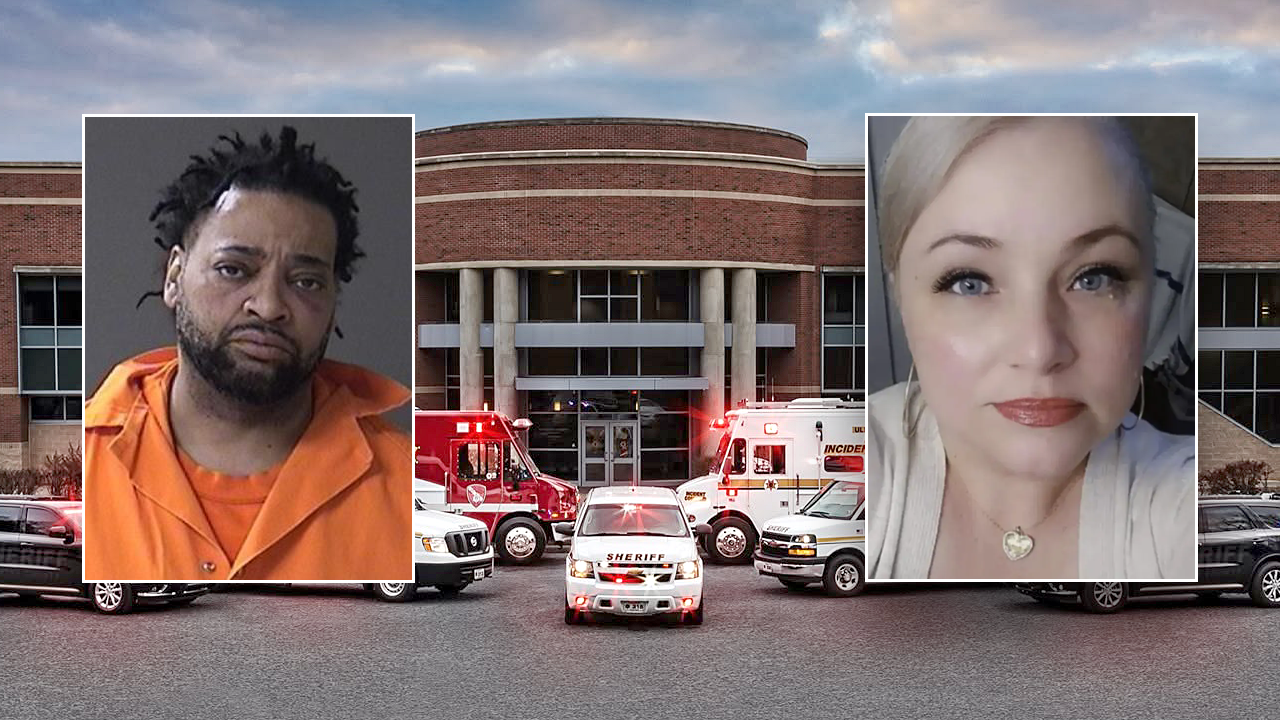
There is a detail in this case that refuses to fade: a severed head inside a suitcase, a flower placed beside it. It is an image so grotesque, so jarring, so full of contradiction, that the mind struggles to process it. How can someone place a flower next to the remains of a woman he claimed to love, after killing her, after dismembering her, after trying to erase her from the world? That is the horror at the center of what happened to Alberta Dale, a 44-year-old woman from Pennsylvania, and it is why the guilty plea of Damon Foy, 50, of Kerhonkson, New York, struck so many people so deeply. Foy pleaded guilty last week to second-degree murder in Dale’s death. Between March 31 and April 1, 2024, he killed her, dismembered her, and was in the middle of disposing of her body when law enforcement stepped in. The fact that anyone stepped in at all was due to the vigilance of her family, who called authorities in Pennsylvania because they were worried about her. She had simply disappeared. That worry saved nothing, but it led to answers. It led to a suitcase in a closet, and inside that suitcase, a partial discovery that no family should ever have to carry.
Alberta Dale had seen her death coming. That is one of the most devastating truths to emerge from the court documents. At some point before she was killed, Dale told authorities that if she went missing, it was because Foy had killed her. Think about that. A woman wakes up every day, goes about her life, maybe goes to work, maybe talks to family, but carries the knowledge that the man who once promised to care for her is capable of ending her life. And she said it out loud. She gave law enforcement the exact warning that should matter most in a domestic violence case. When her family reported her missing, deputies first conducted a welfare check. They went to Foy’s apartment on April 1, 2024, and found Dale’s car there. That alone should have been enough to sound every alarm. But in the quiet machinery of an investigation, things move slowly. The next day, a member of the public found Dale’s phone on the side of the road and turned it in to authorities. That discovery turned a missing person case into a suspected homicide. When deputies arrived at Foy’s home, he whispered something that would haunt them: “She’s in there. I killed her.” The words were quiet, almost confiding. But they were also the confession of a man who had already decided to treat another human being as disposable.
What makes Foy’s case so disturbing is not just the violence, but the way he explained it. In an interview, he told investigators he loved Dale. Then, in the next breath, he painted himself as the real victim. He said she had played him, played him like a fool, played him like a sucker, and taken advantage of the whole system. He complained about being told to leave his own home. He said he was told to get out, and then it all started coming clearer to him. In his mind, the murder was a response to being humiliated. In his mind, he was the wounded party. That kind of self-pity is familiar to anyone who has studied domestic violence. Abusers often see themselves as aggrieved, misunderstood, and entitled. They believe their emotions matter more than another person’s life. The flower placed in the suitcase with Dale’s remains makes this even more twisted. When asked about it, Foy said he was thinking about what had happened the night before that took things over the top. A flower, a severed head, a breakup, a rant about being played. It is the language of a man who wanted to control the narrative even after committing an unspeakable act. Investigators also noted Foy’s history of domestic violence against Dale, including a previous incident involving a gun. When they searched his property, they observed an axe. The picture is not of a man who snapped. It is of a man who had prepared, who had terrorized, who had shown his capacity for violence long before he acted on it.
The legal outcome, for all its finality, offers little comfort. Under the plea agreement, Foy is expected to receive 23 years to life in prison, a minimum sentence two years shorter than the maximum of 25 years to life. To some, that may seem too lenient. But the Ulster County District Attorney’s Office made clear that the recommendation was made with the full support of Alberta Dale’s family. Chief Assistant District Attorney Liz Culmone-Mills said the office would not be making that recommendation were it not for Dale’s family. What that means, in human terms, is that her family chose to spare themselves the agony of a trial. They chose certainty over the lottery of a verdict. They chose to accept the plea, to let Foy admit what he did, and to close the chapter as gently as possible. But some chapters cannot be closed. The remaining portions of Dale’s body were never found during the execution of the search warrant. Her loved ones will not get to bury all of her. They will not get to lay her to rest in the way they might have hoped. Instead, they will carry the knowledge that part of her remains unaccounted for, somewhere in the world, because of what Damon Foy did. Sentencing is scheduled for December 16. On that day, a judge will make it official. But no sentence, no matter how long, will bring back Alberta Dale.
District Attorney Emmanuel C. Nneji said something that deserves to be repeated. He spoke of the total selfish disregard for the life and dignity of another person that is at the heart of domestic violence. And then he said something even more important: that the law must recognize the rights of victims to be physically, psychologically, and emotionally safe from their tormentors, and that procedures must actually protect victims, not just on paper. Those words land with a heavy truth. Alberta Dale warned authorities. Her family warned authorities. There was a history of violence, including an incident with a gun. There was an axe in plain view. There was a car in the driveway. There was a phone on the side of the road. And still, the system could not outrun a killer. That is not an indictment of the deputies or investigators, who did act once suspicion was raised. It is an indictment of the broader culture, where domestic violence is still treated as a private matter until it becomes a murder case. We wait for bruises to become visible. We wait for victims to press charges. We wait for warnings to become proof. But in too many cases, the proof comes too late, in the form of a missing woman and a man whispering that he killed her. We need to do more than nod along when prosecutors talk about protecting victims. We need to change how we hear, how we respond, and how seriously we take the women who tell us they are afraid.
Alberta Dale was not a statistic. She was a person with a life, with people who loved her, with a home, with hopes, with a story that did not begin when Damon Foy put his hands on her. She was someone’s family. She was someone’s friend. She had a voice, and she used it to say, before she disappeared, that if she went missing, Foy was the one who killed her. That warning is her legacy. It is a message not just to the police, but to all of us. If a woman tells you she is afraid of the man in her life, do not dismiss her. If she says she believes he might kill her, do not tell her she is overreacting. If she disappears, do not wait. The flower that Foy placed beside Dale’s severed head is a mockery of tenderness. It was not a gesture of love. It was an attempt to turn a horror into a narrative, to soften the brutality with a prop. But Alberta Dale’s family has shown the world a truer form of love by holding him accountable, by supporting this plea, and by refusing to let her death be erased. On December 16, Damon Foy will learn how long he will spend behind bars. Alberta Dale will not be there to hear it. But her warning remains, and it demands something of all of us: believe victims before they become the reason a search begins.