

This is the story of a college football game that was supposed to be a triumphant milestone, a signature moment for a new coaching era, and a statement that the UCLA Bruins had arrived. It was, for a brief time, all of those things. The Bruins, under first-year head coach Bob Chesney, had clawed their way to a thrilling 17-15 victory over the Oregon Ducks on Saturday, improving to a perfect 5-0 on the season. The field rushed with gold and blue, the band played, and players embraced in the kind of euphoric chaos that makes autumn Saturdays so special. But beneath the celebration, a dark cloud was gathering. In the final moments of the second quarter, starting quarterback Nico Iamaleava had gone down with a knee injury, and as he lay on the grass, already wounded and vulnerable, something even more troubling occurred. The young quarterback’s season was over, but the moment was about to become a national controversy, one that would overshadow the scoreboard and raise uncomfortable questions about player safety, sportsmanship, and accountability in big-time college football. What should have been a glorious day for the Bruins was instead tainted by an ugly incident that left everyone, from coaches to fans to neutral observers, feeling a mix of anger, sadness, and disbelief.
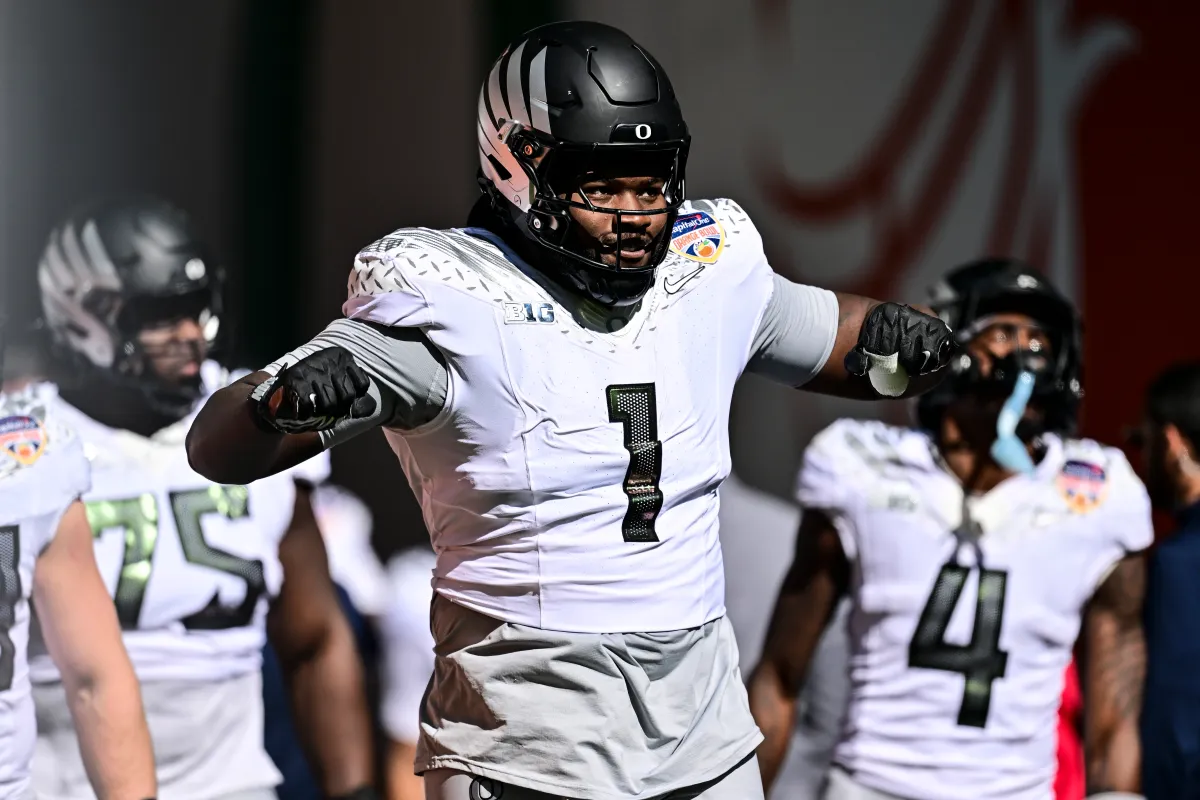
Let’s set the scene more clearly, because the sequence of events is crucial to understanding why this moment resonated so deeply. Iamaleava had been having a solid game, managing the offense, making throws, and keeping UCLA competitive against a formidable Oregon squad. With just under two minutes left in the first half, he was tackled on a routine play, brought down by an Oregon defender in a manner that, while physical, was not initially alarming. The injury to his knee, however, was severe enough that he stayed down, clearly in pain, and the medical staff rushed onto the field. As he lay on the turf, defenseless and distracted by the throbbing in his leg, Oregon defensive tackle Bear Alexander approached him. Instead of showing concern or walking away, Alexander delivered a deliberate, vicious blow to Iamaleava’s head. The sound was sickening, and the visual was unmistakable: a fully upright, healthy athlete clocking a downed, injured player square in the helmet. The officials, for whatever reason, missed it. There was no flag, no whistle, no immediate acknowledgment that anything untoward had happened. The game continued, but the moment was captured on camera and quickly spread across social media, where it was viewed millions of times. The collective outrage was immediate and visceral. How could anyone, let alone a fellow competitor, strike a player who was already down and injured? The fact that the hit occurred in the context of a hard-fought rivalry only made it feel more sinister, a breakdown of the unwritten code that says you don’t kick a man when he’s down, literally or figuratively.
In the aftermath, the focus naturally turned to consequences. Would the conference step in? Would Oregon coach Dan Lanning discipline his player? Would Alexander be suspended for a game or more, as many believed was warranted? The answers, when they came, were deeply unsatisfying to those who felt justice needed to be served. Oregon head coach Dan Lanning, when asked about the incident, essentially waved it off. According to On3, Lanning said that Bear Alexander would not face any punishment for his play on Iamaleava. He described the hit as a “ball shot,” a bizarre phrase that seemed to downplay the intentionality and brutality of the act. Lanning added that Alexander “feels bad about it.” That was it. No suspension, no reprimand, no acknowledgment that the game’s integrity had been compromised. The lack of accountability felt like a punch to the gut to everyone who saw the video. It suggested that in the hyper-competitive world of college football, a cheap shot can be excused if the player says sorry, or if the coach simply chooses not to see it as a problem. The message it sent was troubling: that winning and team loyalty can sometimes trump basic decency. It also put Alexander in an awkward position, making him the subject of national scorn, while his coach’s dismissive comments only poured fuel on the fire, ensuring the story would not fade away quietly.
UCLA head coach Bob Chesney, understandably, had a very different reaction. Speaking to reporters on Monday, Chesney revealed that he had spoken to Iamaleava on the sidelines immediately after the hit, and the quarterback told him exactly what had happened: Alexander had punched him in the head. Chesney, who had not seen the incident live because it occurred on Oregon’s sideline, said he initially thought he might review the footage and inform the officials. But when he finally saw the replay, his disappointment turned into something stronger. He called the play “egregious” and said it should not be allowed to occur in the sport. He expressed his frustration that the officials had missed it, emphasizing that a flag should have been thrown. There was a palpable sadness in his voice, too, because he knew that his quarterback’s season was already over, and now this ugly footnote would be forever attached to that final game. Chesney’s words were measured but powerful, reflecting a coach’s deep sense of responsibility for his players. He was not calling for revenge or demanding a suspension, but he was insisting that the sport be held to a higher standard. His reaction resonated because it came from a place of genuine care for a young man whose college football journey had been abruptly derailed, not just by injury, but by an act of disrespect that no athlete should have to endure.
The incident has opened up a much broader conversation about the culture of college football and the responsibilities of coaches, officials, and governing bodies. It is no secret that football is a violent sport, and players accept a certain level of risk every time they step onto the field. But there is a difference between the hard, clean hits that are part of the game and the kind of cheap shot that occurred on Saturday. Hitting an injured player who is already down is not a football play; it is an assault, pure and simple. The fact that the officials missed it is troubling, but the fact that the Oregon coaching staff chose not to discipline Alexander is even more concerning. It raises questions about what kind of behavior is being tolerated, and even implicitly encouraged, in the pursuit of victory. The NCAA and the Pac-12 Conference have a responsibility to protect players, and this was a prime opportunity to send a message that this kind of conduct has no place in the sport. By remaining silent, they are complicit in the perpetuation of a culture that often prioritizes toughness over safety and loyalty over morality. Social media, of course, has taken up the mantle that the officials and coaches have abandoned, with thousands of fans, analysts, and former players expressing their outrage and calling for consequences. But hashtags and hot takes are not the same as institutional change. The hope is that this incident serves as a wake-up call, a moment when everyone involved in college football takes a hard look in the mirror and asks themselves what kind of sport they want to be.
In the end, the Bruins are left to move forward without their starting quarterback, a heartbreaking blow for a team that had dreams of a special season. Nico Iamaleava’s injury is a reminder of how fragile a football career can be, how one play can change everything. The win over Oregon is still a win, and UCLA remains undefeated, but the joy has been tempered by a sense of loss and injustice. Bob Chesney and his staff will now have to rally the team around a backup quarterback, finding a way to channel their anger and frustration into positive energy on the field. The players, no doubt, will be motivated to win for their fallen leader, to prove that the Bruins are about more than just one player. But as they prepare for the next game, the image of Bear Alexander’s fist connecting with Iamaleava’s helmet will linger in their minds, and in the minds of everyone who watched. Alexander may not face any punishment from his coach, and the officials may never be held accountable for their missed call, but history will not be so forgiving. The video will live on, a permanent record of a moment when a player chose to take a cheap shot, a coach chose to look the other way, and the sport chose to protect its own rather than its players. Social media has a long memory, and this is one story that will not be forgotten. For Iamaleava, the road to recovery begins now, a long and difficult journey back from injury. He will need surgery, rehabilitation, and countless hours of hard work, but he will also need something else: the knowledge that the football community has his back, and that the sport he loves is committed to keeping him safe. On Saturday, that commitment was severely tested, and it failed. The only hope is that the outcry will lead to real change, ensuring that no other player has to suffer the same fate, and that no other coach can dismiss such a cowardly act with a shrug and a casual excuse. Until then, the Bruins will carry on, their hearts heavy but their resolve unbroken, determined to make sure that Nico Iamaleava’s sacrifice is not in vain.