


The Kindness That Became a Nightmare: A Workplace Ride Turns Deadly
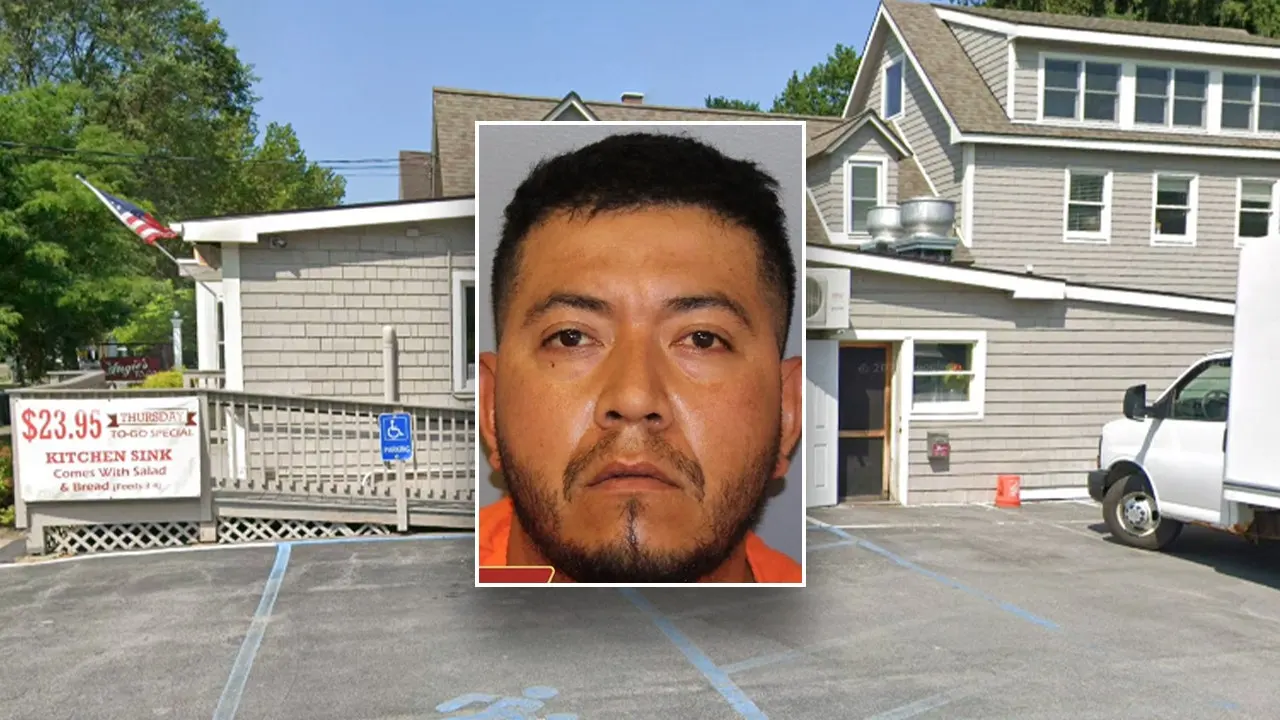
In the quiet, historic city of Saratoga Springs, New York, a simple act of workplace courtesy spiraled into a nightmare that has rattled a community to its core. What began as an ordinary Friday, the end of a shift for two coworkers, transformed in an instant into a scene of visceral horror—one that left emergency responders staring at a blood-soaked driver’s seat and a woman fighting for her life. According to police reports, a 36-year-old man named David Cruz Torres, originally from Michoacán, Mexico, asked his female coworker for a ride home as their day together came to a close. It would be the last act of professional kindness she would ever extend. Moments later, Cruz Torres allegedly pulled out a knife and slashed her throat as she sat helpless behind the wheel, shattering the assumption of safety that comes with knowing someone you work with every day)Skip.
The betrayal that unfolded inside that car on that fateful afternoon cuts deeper than the physical wound itself, because it involved a violation of fundamental trust. We like to believe that our colleagues—the people we share coffee breaks with, swap stories about weekend plans, and spend forty hours a week alongside—are safe, predictable, and benevolent. The very notion that one of them could be harboring a violent, deadly rage so deep that he would pack a knife for the ride home defies comprehension. The victim, a woman whose name has not been released, had no reason to fear the man sitting in her passenger seat. She was simply doing what decent people do: helping a colleague get home when he needed a ride. That decency was met with a cold, calculated, and nearly lethal act of violence that left her fighting desperately to escape her own vehicle as it careened out of control.
The physical details of the attack read like a horror film, yet they are tragically, undeniably real. As the woman drove along the streets of Saratoga Springs, completely unaware, Cruz Torres produced a knife and, without warning or provocation, reached over and cut her throat. The laceration was so severe that police later classified it as life-threatening, a devastating wound to one of the most vulnerable parts of the human body. In a moment of extraordinary courage and instinct, the victim threw herself from the moving car, choosing the violent impact of pavement over the certain death that awaited her if she remained in the vehicle with her attacker. Her car, driverless and hurtling forward, crashed into Augie’s To-Go, a beloved local Italian restaurant, the collision serving as a strange and jarring alarm bell for the community. When police arrived on the scene, they were confronted with a confusing tableau: a crashed car, a woman with a catastrophic neck wound, and an assailant who was trying to melt into the crowd.
The wound itself was so severe, so obviously the result of a knife rather than shattered glass, that responding officers immediately recognized the true nature of the situation. This was no traffic accident; this was a targeted act of attempted murder. As the adrenalineth surged through the scene, officers quickly identified Cruz Torres as the passenger and observed him attempting to flee the area. They detained him moments later, preventing him from disappearing into the neighborhood and leaving behind a trail of chaos, blood, and unanswered questions. Meanwhile, the victim lay gravely injured, having used her last reserves of strength to crawl to safetyand scream for help. Emergency medical personnel rushed to stabilize her, working feverishly to control the bleeding from her neck. Within a short time, it became clear that her injuries were beyond the capacities of a local hospital; she was airlifted by helicopter to a regional trauma center, her life hanging in the balance as surgeons prepared for the battle of their careers to save her.
As the victim fought for her survival in the sterile glow of an operating room, investigators began piecing together the grim puzzle of how a working relationship could end in such savagery. Detectives learned that the victim and Cruz Torres worked together in Saratoga Springs, sharing the same shift and the same workplace. There was no indication of a prior altercation, no reported threat, no whisper of impending violence that might have alerted the woman to her peril. It was, by all accounts, a complete and utter surprise—a random eruption of violence that has left her coworkers shaken and the broader community wondering what secrets people carry with them through their daily routine. Cruz Torres, a 36-year-old man from Michoacán, Mexico, now faces serious legal consequences, including second-degree attempted murder and fourth-degree criminal possession of a weapon. The involvement of the Department of Homeland Security in the case suggests that his immigration status may be under scrutiny, adding another layer of complexity to an already devastating situation.
In the days following the attack, Saratoga Springs has found itself grappling with the unsettling realization that violence can strike in the most ordinary of moments. A ride home after work, a gesture of goodwill, became the setting for a brutal assault that has forever altered the lives of everyone touched by it. The victim, who must now navigate a long and painful road to recovery, will carry not only the physical scar across her neck but also the emotional trauma of having looked into the face of a colleague and seen a killer. Her bravery in throwing herself from a moving vehicle, in fighting for her life with every ounce of strength she had, serves as a powerful testament to the resilience of the human spirit. As the legal process unfolds, we are reminded of the fragility of the social contracts we rely on daily—the quiet assumptions that our coworkers are kind, that our acts of generosity are safe, and that our communities are havens of predictability. David Cruz Torres now sits in custody, his life as he knew it over, while his victim begins the slow, agonizing journey of healing. For her colleagues, for the restaurant that is now damaged, and for a community forced to confront unspeakable violence, nothing will ever be quite the same. We hold out hope for the victim’s full recovery, and we trust that the justice system will deliver a swift and appropriate response to a crime that has shaken the very foundations of trust in Saratoga Springs.