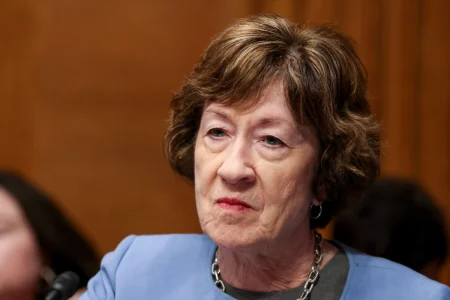



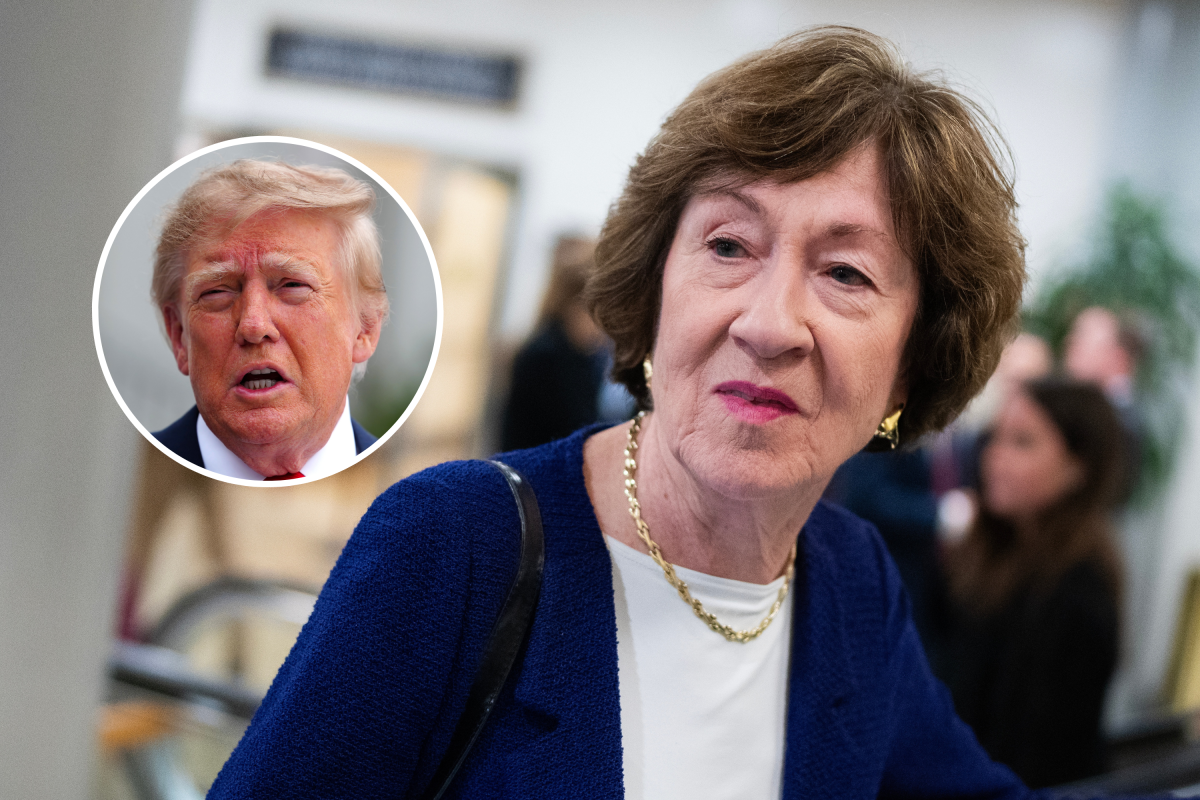
Picture this: you’re a senator from a rural state where people rely on diesel to heat their homes, run their farms, and keep their trucks moving. Prices are soaring, and a president from your own party announces a plan to ease the pain by letting Russian diesel flow into the country. Do you stay quiet, or do you speak out? Susan Collins chose the latter, and she did so with force. Over the weekend, Collins and six other senators—four Republicans and three Democrats—issued a joint statement urging the Trump administration to immediately reverse its decision to allow Russian diesel imports. The group argued that this move directly contradicts the 2022 law banning Russian energy imports, a statute meant to ensure that no American dollars end up financing Vladimir Putin’s war against Ukraine. Collins, who was a cosponsor of that original sanctions framework, made it clear that while high prices are a real problem, sacrificing moral leadership at the altar of short-term relief is not the answer. The statement didn’t mince words: “The United States should not provide Putin with a financial lifeline while Russia continues to kill Ukrainian civilians.” It was a powerful moment, especially for a senator often described as cautious and conciliatory. And it came at a time when Mainers are feeling the pinch at the pump like never before, with diesel averaging $6.45 a gallon—a staggering jump from $3.87 just a year ago, and slightly above the national average of $6.27. For Collins, this is not just political calculation; it’s a return to the kind of principled independence that has defined her career, even when it puts her at odds with the leader of her own party. Her critics will say she’s posturing for an election, but her allies see a senator who refuses to let economic anxiety be used as a justification for abandoning Ukraine in its darkest hour. The statement also chided the administration for failing to consult Congress or offer any legal explanation for the decision, suggesting that this wasn’t just a policy disagreement but a constitutional one. In a political world where so many are afraid to break ranks, Collins and her bipartisan coalition just reminded everyone that some lines are not meant to be crossed.
To understand why this is such a flashpoint, it helps to look at the proposal itself. President Trump took to Truth Social on Friday and announced that Russia would immediately supply over 300,000 tons of diesel fuel to the American and global marketplace, with another 500,000 tons arriving during November and a further 1,000,000 tons immediately after that. He added that Russia would eventually deliver up to three million additional tons, subject to refinery limitations, and promised that this flood of fuel would bring down diesel prices “IN RECORD NUMBERS, AND FAST!” On the surface, it sounds like a bold fix for a very real problem. Diesel prices have become a political lightning rod, and Trump has repeatedly pointed to global refining capacity and Ukrainian strikes on Russian energy infrastructure as the culprits, rather than the broader chaos of the Iran war or the effects of sanctions. A White House official confirmed to Newsweek that the Treasury had issued a license allowing Russian diesel to reach global markets, with the Office of Foreign Assets Control explicitly permitting the “sale, delivery, offloading, and importation of diesel fuel of Russian Federation origin” at the president’s direction. The administration argues that the additional 4.8 million tons of fuel expected to hit the market is aimed squarely at bringing prices down. But the move is jaw-dropping for anyone who remembers the bipartisan outrage that followed Russia’s full-scale invasion of Ukraine. The United States and its allies spent years trying to choke off Moscow’s energy revenue, and now the president of the United States was essentially opening the door to Russian diesel. Supporters say desperate times call for desperate measures, and that American families struggling with high heating bills and transportation costs cannot afford to wait for long-term solutions. But critics see a dangerous hypocrisy: a president who campaigned on being tough on Russia, now handing Putin an economic lifeline in exchange for the promise of cheaper fuel. The sheer speed of the decision—announced on social media, formalized by the Treasury, and defended as a magical market fix—left lawmakers on both sides of the aisle stunned. It also raised immediate questions about whether Russia, which has had its own export restrictions in place, can even deliver the promised volumes. But for the senators who signed the statement, the most important issue isn’t feasibility; it’s principle. You don’t ease one crisis by creating a moral one.
Collins’s opposition is rooted in both law and conscience. In her own statement, quoted by Maine’s WMTW-TV, she said: “I oppose President Trump’s decision to lift sanctions on the purchase of diesel from Russia. I was a cosponsor of the Russian sanctions law, which the president recently signed but is now not following.” She was referring to the Lindsey O. Graham Sanctioning Russia and Iran Act of 2026, a sweeping package designed to ramp up economic pressure on Moscow and one that Trump signed on September 18. That law was supposed to be a clear signal that America would not back down, and yet here was the same president, just weeks later, granting a license that undercut its central purpose. The joint statement from Collins and her colleagues hammered that point home, noting that Congress “explicitly banned Russian energy imports in 2022” to prevent American money from supporting the ongoing invasion. It went on to accuse the administration of failing to consult with Congress or provide any explanation as required by statute. This is not just a legal technicality; it’s a fundamental issue of how the branches of government are supposed to work. The senators demanded that the administration immediately reverse course, arguing that every dollar sent to Moscow is a dollar that can be used to kill Ukrainian civilians. Collins’s stance has also put her in line with international outrage. Ukrainian President Volodymyr Zelensky called the deal a “birthday present for Putin,” telling ABC News’s Jonathan Karl that any money that goes to Moscow is used to “kill us, kill our children.” The proposal has drawn scrutiny from European Union member states, who have pledged to keep their own sanctions on Russian energy regardless of Trump’s move. It’s a rare moment where a domestic policy decision has become an international crisis of trust, and Collins is right in the middle of it. Her willingness to speak out says a lot about her political instincts, especially in a state that has a proud tradition of independent-minded leadership. But it also reflects a deeper concern: if the United States abandons its own sanctions to chase lower prices, what message does that send to other countries, to our allies, and to the Ukrainian people who are fighting for their lives? The answer, for Collins, is that some things are worth more than a few cents at the pump.
Collins is far from alone in her opposition, and that’s part of what makes this story so striking. The bipartisan group that signed the statement includes Republican Senators Lisa Murkowski of Alaska, John Curtis of Utah, and Thom Tillis of North Carolina, along with Democrats Jeanne Shaheen of New Hampshire, Richard Blumenthal of Connecticut, and Ron Wyden of Oregon. These are not fringe voices; they are seasoned lawmakers with significant influence. And beyond this core group, several Republicans locked in competitive midterm races have also voiced their concerns. In Alaska, where diesel currently averages $6.55 per gallon, incumbent Senator Dan Sullivan’s spokesperson said that Sullivan “believes American energy dominance is the answer to high prices, and that means producing more of it in Alaska, for Alaskans, by Alaskans, not importing it from Russia.” That’s a carefully worded rebuke, but it’s still a rebuke. In Michigan, where diesel has climbed from $3.66 to $6.49 over the past year, Republican Senate candidate Mike Rogers has said the U.S. should not have given Putin “an inch.” Rogers is locked in a heated battle against Democrat Abdul El-Sayed for an open seat, and his willingness to break with Trump on this issue suggests just how toxic the Russian diesel plan has become. Even among Republicans who are generally loyal to the president, this proposal seems to cross a line. It’s one thing to argue about tariffs or immigration policy; it’s another to appear to reward an adversary who has been committing war crimes. The political calculus is tricky because high fuel prices are genuinely hurting people, and voters may not reward politicians who reject a potential price cut. But there is also a deep reservoir of public sympathy for Ukraine, especially among independent and suburban voters who could decide the midterms. By coming out against the plan, these lawmakers are betting that voters will respect their integrity more than they will resent them for not embracing a quick fix. It’s a gamble, but it may be the only way to hold onto a sense of moral authority in a political environment that often feels entirely devoid of it. The fact that both parties are represented in the opposition makes it harder for the administration to dismiss the criticism as partisan politics.
Beyond the moral and legal objections, there are serious questions about whether Trump’s plan would even work. Economists and energy analysts have been quick to poke holes in the promise of Russian diesel as a cure-all. Chris Kennedy, the Economic Statecraft Lead at Bloomberg Economics, pointed out that the 500,000 tons promised for November is roughly equivalent to just one day of U.S. diesel consumption. “It’s not a huge amount, and we don’t expect it’ll have much of an impact,” he said on the Bloomberg This Weekend podcast, adding that this assessment “puts aside all of the legal and logistical challenges of getting Russian diesel to the U.S.” Those challenges are enormous. Even with a Treasury license, shipping Russian fuel to American ports involves insurance, financing, tanker availability, and the risk of running afoul of other sanctions. Russia itself has had a nationwide export ban in place, and there are real doubts about whether its refineries can produce the volumes Trump promised, especially given Ukraine’s ongoing strikes on Russian energy infrastructure. Patrick De Haan, head of petroleum analysis at GasBuddy, described the proposal as “difficult to achieve.” He acknowledged that the “psychological impact” of the announcement could temporarily lower prices, simply because traders and markets might react to the news. But he warned that it would take longer to determine whether Russia actually has the ability to follow through. In other words, this might be a lot of noise with very little substance. The administration’s claim that 4.8 million tons of fuel will “bring prices down” may be based on an optimistic assumption that Russia can simply turn on the taps. But energy markets are complex, and a one-time influx of diesel—if it even arrives—will not fix the structural problems that have kept prices high. There’s also the uncomfortable reality that American consumers don’t want to be reliant on a hostile power for essential goods, no matter how cheap they might be. The long-term solution, as many lawmakers and analysts have argued, is to increase domestic refining capacity and energy production, not to create a new dependence on Moscow. For now, the whole episode feels less like a coherent energy policy and more like a political stunt designed to show voters that the president is doing something about prices. The problem is that the “something” might end up being counterproductive, embarrassing, and potentially dangerous.
The political timing of all this is hardly accidental. Collins is facing a tough reelection fight against Democrat Troy Jackson, and the race has become a referendum on her relationship with President Trump. Jackson has used her past support for Trump and his policies as a central theme of his campaign, casting her as an enabler of a president who, in his view, has hurt Maine families. During their debates, Jackson has repeatedly tried to paint Collins as someone who talks out of both sides of her mouth—willing to criticize Trump in public but often voting with him when it matters. Collins, for her part, has argued that she is capable of critical independence, and this break with the president over Russian diesel gives her a concrete example to point to. She can say, “Look, I’m willing to stand up to the president when he’s wrong, and this is wrong.” It’s a delicate balance, because Maine is a state that has a strong independent streak, and voters often appreciate politicians who defy party lines. But it’s also a state that is hurting economically, and Jackson will no doubt argue that Collins’s moral stance doesn’t help anyone at the pump. The polls have yet to show a decisive advantage. A Washington Post/Schar School poll published Friday had Jackson leading with 50 percent support to Collins’s 46 percent, a lead within the margin of error. That’s essentially a dead heat, and it explains why both campaigns are pulling out all the stops. Jackson has received high-profile backing from former President Barack Obama, who said he was “proud” to endorse the candidate and argued that “in this economy, we need a fighter like Troy.” Over the weekend, Jackson was joined by Vermont Senator Bernie Sanders at campaign events in Maine, with Sanders telling a crowd in Lewiston that the only way to hold Trump accountable is to elect a Democratic Senate. Collins, meanwhile, is hoping that moments like this one—where she puts principle above party—will remind voters why they’ve sent her to Washington again and again. The two candidates are set to meet again for their third of four planned debates, and this Russian diesel controversy is likely to come up. In a way, Collins’s stance on the issue is both a risk and an opportunity. It risks alienating voters who are desperate for lower prices, but it also reinforces her brand as a senator who won’t bow to the president when the stakes are too high. Whether that’s enough to save her remains to be seen, but one thing is certain: she just gave her campaign a powerful story to tell, and it’s one that might actually resonate far beyond the borders of Maine.